Category Archives: Legion Magazine

A good parade

An item from the Legion Magazine.


Front Lines
Front Lines

Stephen J. Thorne

A good parade

STORY BY STEPHEN J. THORNE

Who doesn’t love a good parade?

A jaunty march. Many feet and arms moving as one. Chins up. Shoulders back. The repetitive clack of heels on pavement. The stirring skirl of dozens of bagpipes rising. You feel it in the chest, the primordial stimulation of mechanoreceptors absorbing the rat-a-tat-tat and thump-thump of beating drums.

There is the odd satisfaction wrought by all that uniformity: dress (the more ostentatious the better), hats, footwear, accoutrements. All accentuated by discipline in execution and movement.

READ MORE

40% Off CUS back issues
10 under 10
Veterans Benefits Guide
Military Milestones
Military Milestones

WordPress

Celebrating history’s first nuclear-arms control agreement

STORY BY PAIGE JASMINE GILMAR

The coldest, the windiest, the highest, the driest; Antarctica is a land of extremes. Twice the size of Australia, Antarctica experiences temperatures as cold as -89 C and winds as strong as 322 km/h. Although only select creatures are tough enough to endure its killer climate, the continent remains a boon for scientific study and exploration. What’s more, this 5.5-million-square-mile frozen desert makes up the largest anti-military, anti-industrial zone—thanks to the Antarctic Treaty.

With 12,512 warheads and counting worldwide, it’s hard to imagine that more than 60 years ago the planet’s leaders signed an agreement that effectively bypassed the territorial sovereignty and military-industrial development of 10 per cent of the Earth’s land mass for the benefit of scientific achievement, environmental preservation and peace.

READ MORE

MBP Partner

Authorities struggle over what to do with Nazi relic

An item from the Legion Magazine.


Front Lines
Front Lines

Wikipedia

Authorities struggle over what to do with Nazi relic

STORY BY STEPHEN J. THORNE

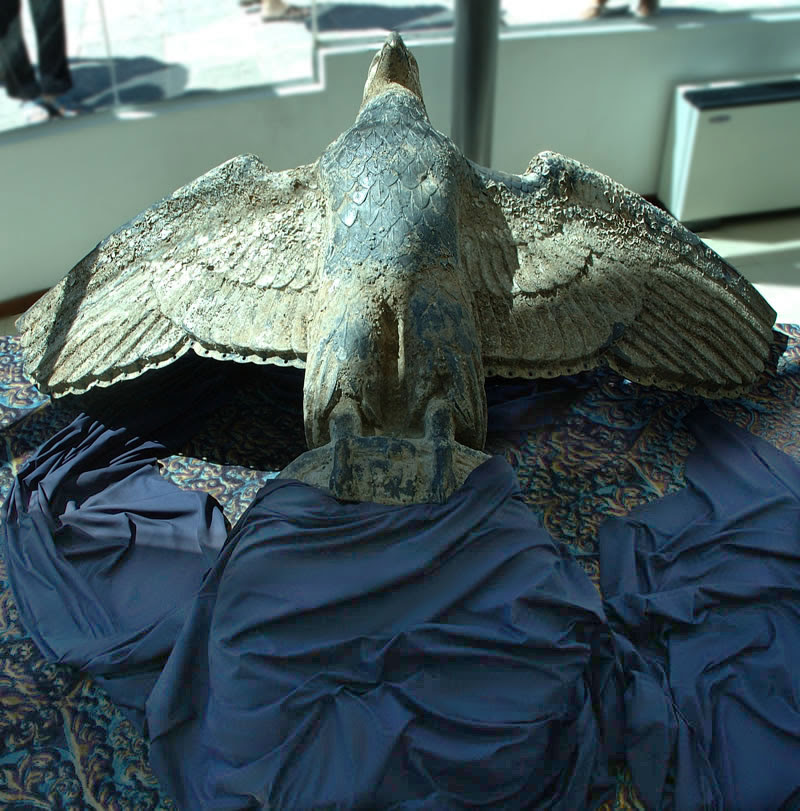
South American authorities are struggling over what to do with a Nazi relic from the first major naval battle of the Second World War.

Treasure-hunters recovered the 350-kilogram bronze eagle from the wreck of the German battleship Admiral Graf Spee in 2006, but it was not until last year that a court ruled it belonged to the country in whose waters it was found: Uruguay.

That left authorities with a conundrum—what to do with a two-metre-tall bronze eagle sporting a wingspan of 2.8 metres and clutching a large swastika. It had lain at the bottom of the River Plate since December 1939, when Kapitän zur See Hans Langsdorff scuttled his damaged ship to prevent it from falling into Allied hands.

READ MORE

10 under 10
Veterans Benefits Guide
Military Milestones
Military Milestones

WordPress

A gigantic job

STORY BY SERGE DURFLINGER

During the Second World War, the Royal Canadian Air Force was an English-language institution. The squadrons needed to be interoperable. In fact, many Canadian airmen served in British squadrons.

This did little to help the air force recruit French Canadians, even with the promise of language training. The RCAF simply did not have the equivalent of the army’s French-language battalions, in which members could operate in French and use English when dealing with other units. This changed 81 years ago, in 1942.

READ MORE

MBP Partner