
This story is a part of Branch 25’s on-going National Legion Week campaign.
It may come as a surprise to some that California is the location of one of the oldest Scottish gatherings/games in the world. With the forming of the Caledonian Club of San Francisco in November of 1866, a “games” has been held continuously to this date. This is testament to the strength of the Scottish community in the region. It should be no surprise then, to find that this Scottish community plays a big role in the Canadian and greater British Empire Veteran’s community. With this in mind, I’ll take a look at the presence of bagpipe bands in the Canadian Legion, and the vis-à-vis, the role of the Canadian Legion in piping in California.
With a large influx of Canadians and British heading to California, Royal Canadian Legion (then British Empire Service League, Canadian Legion) branches began forming in the early 1930s. San Francisco Branch 25 was chartered in 1931 with branches forming across California throughout the 1930s. The earliest note of a Royal Canadian Legion pipe band I could find is for Inglewood, California Post 13 in 1931. Marin Post 30 held a parade of officer’s lead by a Royal Canadian Legion band in 1932. This indicates pipe bands were a staple of the Legion life in California from the very beginning and likely represent some of the earliest pipe bands in the state. Looking through pictures and news clippings, pipe bands were a common staple of branch and civic functions.
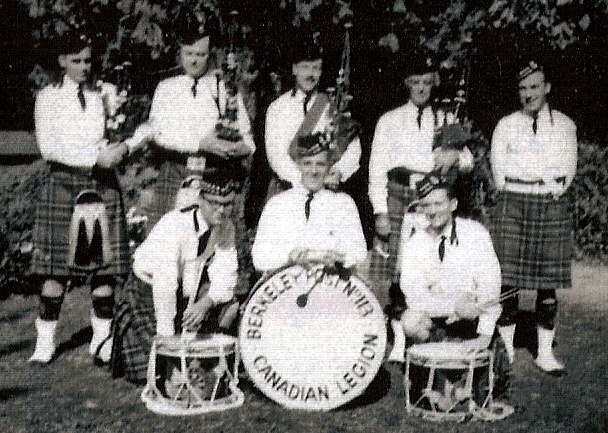
By 1939, Berkeley Post 113 was voting to form a pipe band (see National Legion Week: The Old Berkeley Branch 113 for more information). News articles mention pipe bands associated with branches up and down the state. Los Angeles Post 88 apparently had a large benefactor as they wore the Douglas tartan of the Donald Douglas aircraft firm. From the 1930s through the World War II years, piping was noted in newspaper articles whenever the Canadian Legion was mentioned.
Following the war, and with another influx of Canadian/Commonwealth service members, pipe bands came and went with the Royal Canadian Legion but some stayed the course. Berkeley Branch 113’s band is often noted in parades and events around the San Francisco Bay Area into the 1970s with Branch 25 Comrade Roger Weed noting they existed to the early 1980s. Sacramento’s Branch 19’s band is shown in a photo from 1947 and a news article mentions the Pipe Major as William Wallace. Southern California’s Palo Verde’s band shows up into the 1950s. The 1980 Festival of Canada at Disneyland notes the performance of the Royal Canadian Legion Pipe Band.

The Royal Canadian Legion Pipe Band of San Jose appears as one of the earliest Legion bands and longest running, by the 1960s the band seemed to shift around the Bay Area (likely Pleasant Hill, Concord, and Fremont) and was Royal Canadian Legion in name only from late 1970s into the late 1980s. The last mention I can find of Royal Canadian Legion pipers is of members playing for a wedding in Southern California in 1987. It seems about the time Royal Canadian Legion bands in California folded.
With so many bands, and reaching into the earliest bands in California, it is without a doubt that Royal Canadian Legion members played a big role in the development and teaching of piping and drumming in California. Descriptions of bands of the San Francisco Bay area often note members who were veterans. One name of a particular note came up of great interest to me. A 1939 picture of the Annual Convention in Stockton shows San Francisco Post 25 with a pipe band.

The pipe band is pictured again in a 1947 picture of the Annual Convention in Sacramento .

A 1948 news article mentions the band’s Pipe Major as J. Bigger. This would be John Bigger. John, and his brother Calvin, began their piping lives in the Boy Scout Troop 119 in 1935; a band in which my father, Keith Martin played snare drum. John and Calvin became staples of piping in California, serving in leadership roles in the best bands the state has fielded and the Western United States Pipe Band Association. John also founded and taught San Francisco Boy Scout Troup 90 where I got my own piping start. In 1963 John moved to British Columbia and retired from piping. In 1983, he began playing again with the Royal Canadian Legion South Burnaby Branch 83. The Bigger legacy continues through John’s nephew, also John, who is a leader in the Western United States Pipe Band Association and the San Francisco Caledonian Club. Another notable is Dr. A. McPherson who played with Berkeley Post 113 and started a small, but thriving piping hub in the Nevada City area.
While piping in California seemed to be well established within 16 years of its statehood, the post-World War I and World War II eras saw a boom in the growth of pipe bands. Through organizations such as the British Empire Service League, Canadian Legion, former military pipers found an outlet to practice their art and pass on their knowledge. This tradition continues today with players of my age group benefitting directly from these World War vets and now passing on that knowledge to the next generation of pipers.
Charles Martin, Pipe Major
Branch 25 (San Francisco)
 Both of Bart’s grandfathers were veterans of the United States Army (i.e., one serving in World War II and the other during the Korean War). However, he didn’t have a big history of military service or remembrance in our family. Growing up in Texas, Bart had an interest in military history (thanks to his father) and in Canada (thanks to his parents taking him to Expo 86 in Vancouver at a very impressionable age). He deepened the latter interest over the years with frequent trips to Canada and eventually graduating from the University of British Columbia.
 Bart recalls sitting in a coffee shop in Vancouver in 2010, and a specific conversation with a friend about how the Royal Canadian Legion combined both of his interests. As an affiliate member, Bart enjoys reading The Legion Magazine, which allows him to learn all manner of interesting things, and being a small part of helping the Legion achieve its mission. Simply put, Bart joined the Legion because of an initial interest in military history and Canada, and he has maintained his membership because the people and activities of the branch – even if he is physically distant from my “home” branch in San Francisco.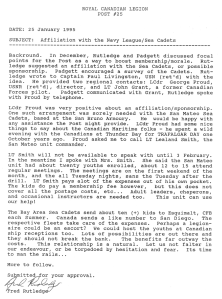

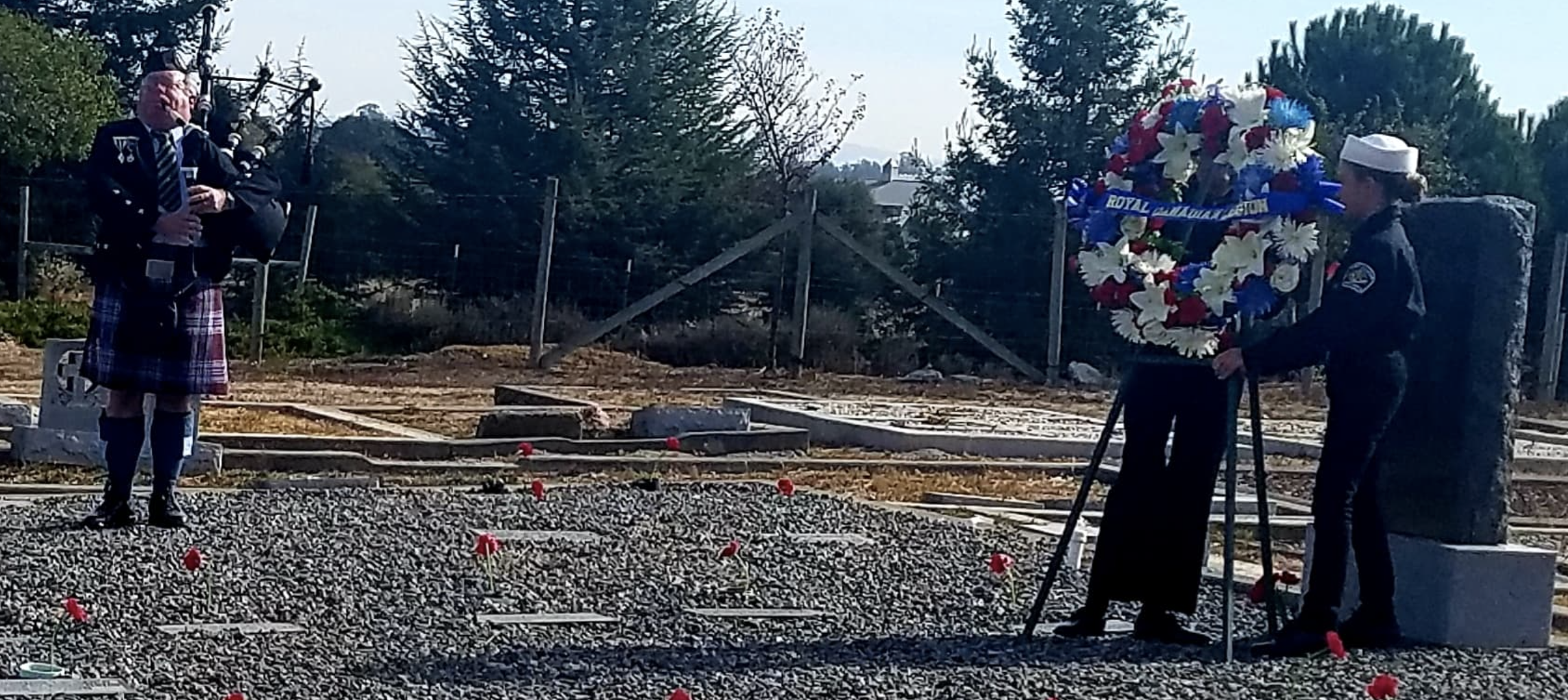
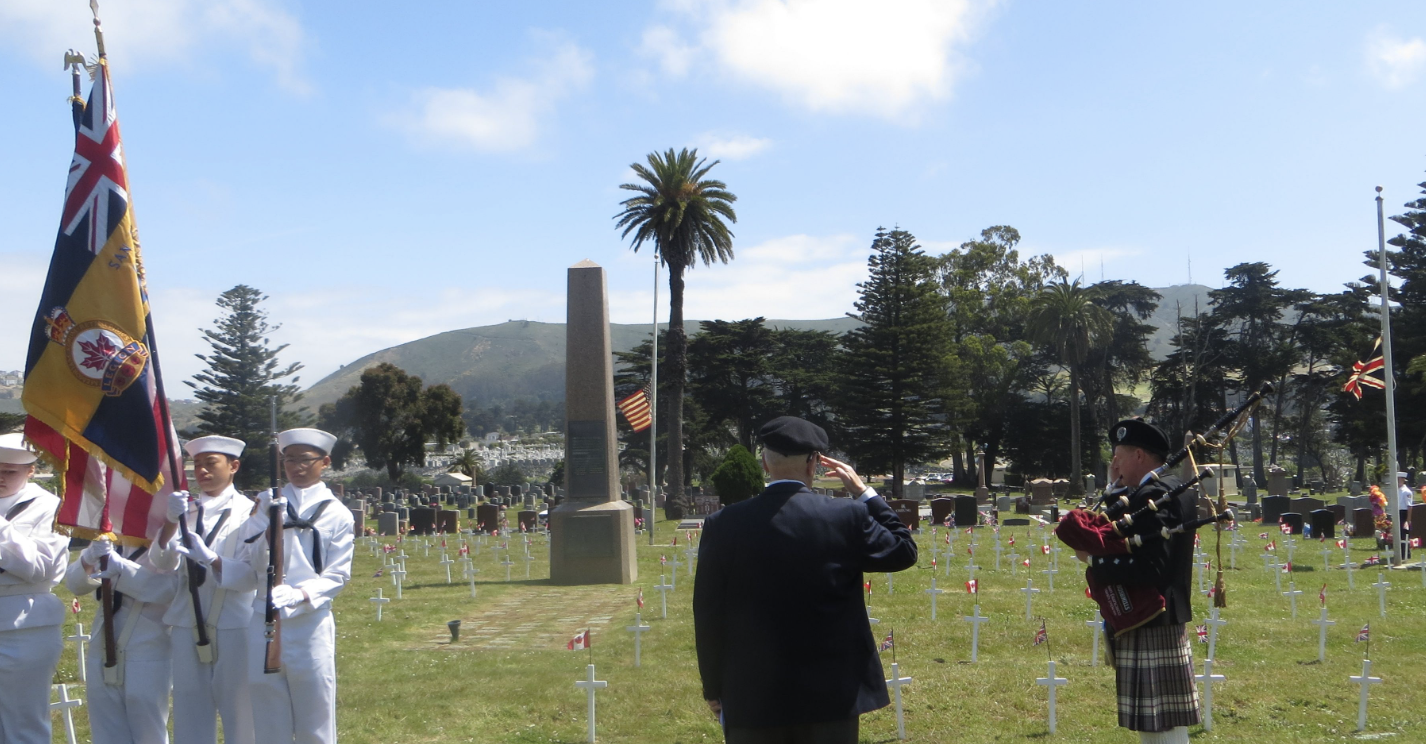



 Samuel (Sam) Barbour served as a Gunner (GNR) in “A” Battery of the 59th (Newfoundland) Heavy Regiment of Britain’s Royal Artillery during World War II. Along with his regiment, he fought through Belgium and into Holland, before the “Fighting 59th” were the only Allied heavy artillery that crossed the Rhine River into Germany when they were selected to take part in the Battle of the Rhine and the attack on Bremen. In the years that followed, Sam Barbour was one of many veterans who would attend the annual Remembrance Day service at the local school year after year. One year, as a part of the service the school’s English teacher said, “Every year on this most special day he dons the blue beret and navy jacket adorned with medals – the recognition of his service, courage and bravery. He and his beloved wife make the journey down the hill to our school. When they arrive, faces wreathed in smiles, they bring a card with a beautiful and thoughtful message of thanks and a gift for our students.”
 Royal Canadian Legion, US Branch #25