Tag Archives: Legion Magazine

WATCH NOW – The Dieppe Raid – Narrated by Alex Trebek

From the Legion Magazine.


Military Moments | The Dieppe Raid

Military Moments | The Dieppe Raid
Narrated by Alex Trebek

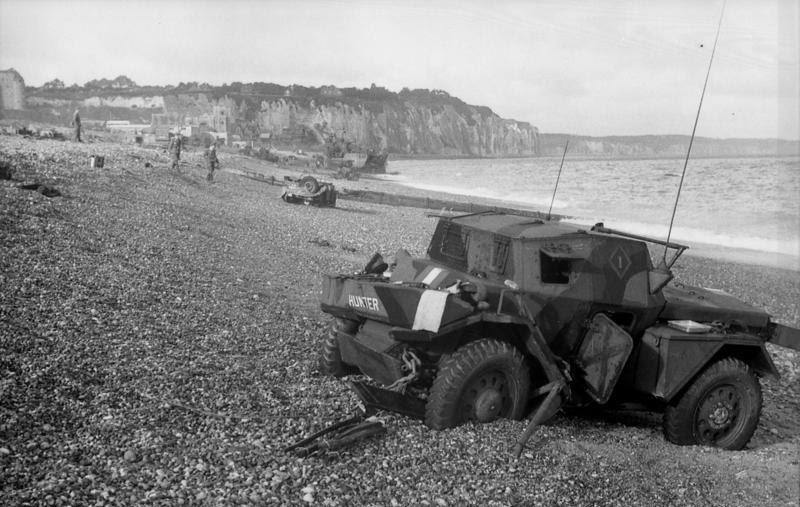
Released in time for the 76th anniversary of the Dieppe Raid on August 19, Legion Magazine and Canada’s Ultimate Story present Military Moments | The Dieppe Raid. Narrated by legendary Canadian television host Alex Trebek of Jeopardy, the video explores the disastrous Dieppe Raid of Aug. 19, 1942, which is most commonly remembered by a grim statistic—the greatest one-day losses sustained by the Canadian Army during the Second World War. Of the almost 5,000 Canadian soldiers who took part in this ill-fated raid on occupied France, more than half became casualties.

In all, Canadian casualties totaled 3,367, including 907 dead and 1,874 captured.

It was the Canadian Army’s costliest day of the war, and one that will forever be remembered with infamy and regret. #LestWeForget #DieppeRaid

WATCH VIDEO

Was the Dieppe Raid just a raid?

Face to Face
Was the Dieppe Raid just a raid?

In the July/August issue of Legion Magazine, authors Terry Reardon and David O’Keefe debate a dark period for the Allies in the Second World War. Was the Dieppe Raid just a raid? Read the full feature now and let us know what you think.

READ MORE

The Dieppe Raid Mailing Labels
Canada and the Second World War: The Battles

World War II Collection Now Available for $49.99!

From the Legion Magazine.


Free WWI Armistice Pin!
World War II Collection Deluxe 8-Volume Set
World War II Collection Deluxe 5-Volume Set
Canada and the Second World War: The Battles
The Dieppe Raid Mailing Labels
Military Moments | The Dieppe Raid

Military Moments | The Dieppe Raid
Narrated by Alex Trebek

Released today, ahead of the 76th anniversary of the Dieppe Raid on Sunday, August 19Legion Magazine and Canada’s Ultimate Story present Military Moments | The Dieppe Raid. Narrated by legendary Canadian television host Alex Trebek of Jeopardy, the video explores the disastrous Dieppe Raid of Aug. 19, 1942, which is most commonly remembered by a grim statistic—the greatest one-day losses sustained by the Canadian Army during the Second World War. Of the almost 5,000 Canadian soldiers who took part in this ill-fated raid on occupied France, more than half became casualties.

In all, Canadian casualties totaled 3,367, including 907 dead and 1,874 captured.

It was the Canadian Army’s costliest day of the war, and one that will forever be remembered with infamy and regret. #LestWeForget #DieppeRaid

WATCH VIDEO

Spitfire documentary soars with nostalgia 🇬🇧

From the Legion Magazine.


Best-Selling 5-Volume Set
Front lines
Spitfire documentary soars with nostalgia

Spitfire documentary soars with nostalgia

Story by Stephen J. Thorne

For its aerial cinematography alone, airplane geeks and war history buffs alike will love the new documentary Spitfire: The Plane That Saved the World.

Under the image direction of renowned aviation photographer John Dibbs, the aerial footage—set against dramatic cloudscapes, the pastoral English countryside, the English Channel and, of course, the white cliffs of Dover—is beyond compare.

READ MORE

Canada and the Second World War: The Battles

August 12-21, 1944
Battle of the Falaise Pocket

In August 1944, the fortunes of war opened an opportunity for the Allies to break out of Normandy, hastening the end of the conflict.

The Germans had severely depleted their reserves by the time Caen, France, was liberated by the Allies in July 1944, and Allied aircraft were preventing the movement of supplies and reinforcements.

Then the Americans blew a hole in the German lines and began an eastward advance through Brittany. Hitler ordered an ill-conceived counteroffensive. When it failed, German troops began fleeing eastward, and the Allies planned to use a pincer movement to ensnare them.

The 12th British Corps and First Canadian Army, along with the First Polish Armored Division, began hard-fought battles that pressed German troops southward, while the Americans kept up the eastward pressure.

Fighting was ferocious as trapped troops fought desperately to escape. The Canadians and Poles fought equally hard to contain them. It took two days and heavy casualties for the 2nd Canadian Division to clear SS troops from Falaise. The Poles suffered 2,300 casualties holding Hill 262. Although some Germans did manage to escape through a gap in the Allied front, they had to abandon their tanks, guns and vehicles.

The Falaise Gap was closed on Aug. 21. Nearly half of the 100,000 fleeing Germans were captured, while 10,000 to 15,000 were killed. The First Canadian Army suffered 18,444 casualties, including 5,021 deaths, in the Normandy campaign, and the Allied air forces saw 2,800 aircrew downed.

Paris was liberated on Aug. 25, but it took a few more weeks to free the rest of the country.

A grand hotel

A grand hotel

Story by Don Gillmor

Three of the Château’s most famous guests, Winston Churchill, Franklin D. Roosevelt and William Lyon Mackenzie King arrived in August 1943 to discuss the Allied invasion and defeat of Nazi Germany and Japan.

READ MORE

This week in history
This Week in History

August 17, 1943

Sicily is conquered.

READ MORE

Carlson Wagonlit Travel

Get a FREE – WW I Armistice Pin (1918-2018)

From the Legion Magazine.


Get a FREE PIN with your next purchase!

Special offer just for you!
Dear  MICHAEL K BARBOUR  Barbour,

2018 marks the anniversary of the First World War’s final year. Legion Magazine Shop is offering all customers a FREE Armistice pin to honour the service and sacrifice made by those who fought, 100 years ago. Minimum purchase of $30 before shipping and taxes.

Offer expires August 31, 2018.

Please have a look at the latest Legion Magazine SHOP items below that may be of interest to you.

WW I Collection - Deluxe Edition!
Lest We Forget Tribute Poster!
Canada and the Great War: The Battles
First World War Centenary Mailing Labels (Version 2)

Canada’s Final 100 Days of the First World War

From the Legion Magazine.


WW I Collection Deluxe Edition
Front lines
European Union re-evaluates defence capabilities

European Union re-evaluates defence capabilities

Story by Stephen J. Thorne

Canada has reaffirmed its support for the North Atlantic Treaty Organization (NATO) while the European Union weighs its limited options after United States President Donald Trump launched double-barreled criticisms of both the 69-year-old alliance and the EU.

READ MORE

The March to Victory: Canada’s Final 100 Days of the Great War
First World War Centenary Mailing Labels (Version 2)

August 8, 1918
Canada’s Hundred Days

The Hundred Days Offensive, the Allied advance from Amiens to Mons that ended the First World War, began with a move familiar to Canadians: deking out the opponent.

By the summer of 1918, Canadians had the reputation as the best attack troops on the Western Front, and were chosen to spearhead the offensive. But they were carefully observed by the Germans, who believed their movement heralded major offensives.

So, some Canadian troops were shifted to Ypres, Belgium, while the bulk of the force was secretly amassed 180 kilometres south, near Amiens. On Aug. 8, the Canadians joined the British, Australians and French in a successful surprise attack that not only broke German lines, but spirits as well. German General Erich Ludendorff called it “the black day of the German Army.”

In three days, the Canadians advanced 20 kilometres, liberating two dozen villages and towns and capturing about 9,000 prisoners, at a cost of nearly 12,000 casualties.

On Sept. 2, the Canadians breached the Drocourt-Quéant Line, near Arras, France, part of the 80 kilometres of fortified trenches making up the Hindenburg Line. Lieutenant-General Arthur Currie called it “one of the finest feats in our history.”

The main Hindenburg Line, protected by the Canal du Nord, was the next target, breached in a combined offensive on Sept. 27. Canadians shortly captured Bourlon Wood, which protected Cambrai, an important railway and supply hub.

After fierce fighting, Cambrai was liberated on Oct. 11. Though Canadian units fought through to the bitter end, the four divisions last attacked together that day at nearby Canal de la Sensée.

The Canadian success is credited to solid, sometimes audacious, planning, mobile infantry aided by rolling artillery barrages, support from the air force, and superb logistics, particularly from the engineers. Their surreptitious, night-built bridges permitted surprise troop movement, and tramways ensured fast delivery of battlefield supplies.

A series of running battles in the final month of the war saw the Germans retreat about 70 kilometres across France to Mons, Belgium, which Canadian troops liberated in the early hours of Nov. 11.

Canadians played a significant role in the ending of the First World War, but at a cost. In Canada’s Hundred Days, the 100,000 men of the Canadian Corps put the boots to about 50 German divisions, but suffered 45,835 casualties. The last, Private George Lawrence Price, was killed just minutes before the Armistice came into effect.


Four soldiers, four battles

Four soldiers, four battles

Story by Tim Cook

In the final 100 days of the First World War, Canada was called again and again to lead the offensive at Amiens, Arras, the Drocourt-Quéant Line and the Canal du Nord.

READ MORE

This week in history
This Week in History

August 9, 1945

Lieutenant Robert Hampton Gray leads an air attack against Japanese vessels in Onagawa Bay. Gray’s plane is damaged by heavy anti-aircraft fire, but he still scores a direct hit, sinking a Japanese destroyer. Gray is killed in the action and receives a posthumous Victoria Cross.

READ MORE

Medipac Travel Insurance