Monthly Archives: November 2022

Thank you for supporting Wreaths Across America and San Francisco National Cemetery at the Presidio of San Francisco (CAPNSF)

Another item about the Wreaths Across America event at the National Cemetery at the Presidio that may be of interest to members.


Thank you for supporting Wreaths Across America by sponsoring Veterans’ Wreaths through San Francisco National Cemetery at the Presidio of San Francisco (CAPNSF). For each wreath you sponsored, our volunteers will place a wreath on a headstone and say that veteran’s name out loud, continuing their story for the next generation.

If you would like to learn more about our effort to fulfill our mission to remember, honor, and teach, please visit our website by clicking the link below:

More Information

Or if you would like to volunteer to help place wreaths yourself or with your family and friends, please click the “Volunteer” link below:

San Francisco National Cemetery at the Presidio of San Francisco (CAPNSF)

Thank you again for your generous sponsorship. Each wreath brings us closer to our goal of placing a wreath on every veteran’s grave.

Prince Jordan
San Francisco National Cemetery at the Presidio of San Francisco (CAPNSF)

P.S. For your enjoyment, I’ve included some pictures of National Wreaths Across America below:

National Memorial Cemetery of Arizona
Posted by WAA’s Online Community

More Information
Wreaths Across America
Posted by WAA’s Online Community

More Information
Sea Scouts Ship 1808
Posted by WAA’s Online Community

More Information
219th Composite Squadron – Medina County Skyhawks
Posted by WAA’s Online Community

More Information
Mojave Cemetery
Posted by WAA’s Online Community

More Information
Crownsville WAA
Posted by WAA’s Online Community

More Information
Crownsville Veterans’ Cemetery
Posted by WAA’s Online Community

More Information
Elmwood Cemetery Association
Posted by WAA’s Online Community

More Information

Please share our mission to remember, honor and teach:

Sunken warship sews 80 years of environmental damage

An item from the Legion Magazine.


Stephen J thorne

Van Landuy et al/Frontiers in Marine Science

Sunken warship sews 80 years of environmental damage

STORY BY STEPHEN J. THORNE


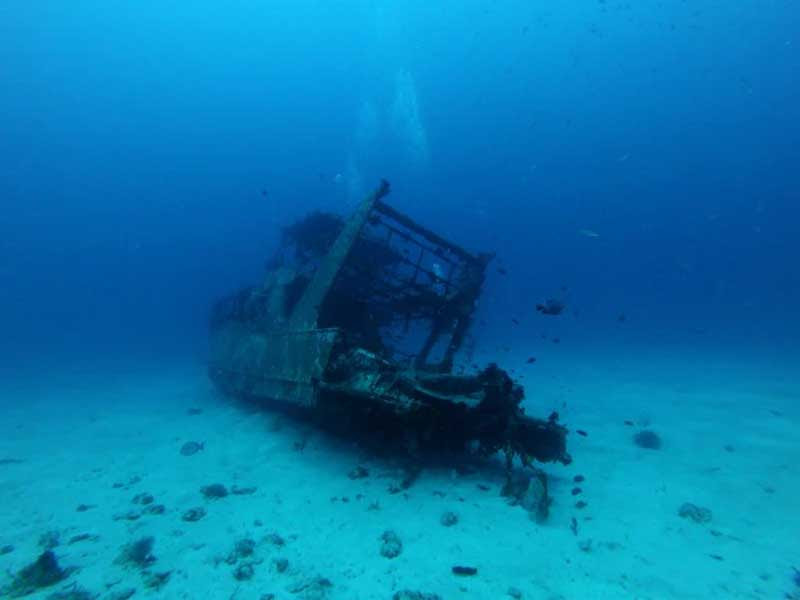
Shortly before 4 p.m. on Feb. 12, 1942, Royal Air Force planes attacked and sank V-1302—a German fishing trawler-turned-patrol boat—in Belgian waters of the North Sea.

The vessel formerly known as the John Mahn out of Hamburg was one of six auxiliary ships from the Kriegsmarine’s 13th flotilla that took up fixed positions during Operation Cerberus, more commonly known as The Channel Dash.

In what amounted to a convoy mission, some 200 vessels set out to escort the heavy cruiser Prinz Eugen and the battleships Scharnhorst and Gneisenau from Brittany in France through the English Channel to German ports.


READ MORE

5 Volume Collection

Life in the trenches

STORY BY SHARON ADAMS

Excerpts from a memoir written by First World War veteran Charles Henry Savage, born in 1892 in Eastman, Que., who served in Messines, Belgium, in 1915-16.

Our first trip in the trenches was a short one for instructional purposes…Although late in October, there had not been a great deal of rain and the front line and communication trenches were in almost perfect condition when compared with those we took over after the rains had begun.

Trenches in this sector were very difficult indeed. The water was so close to the surface that the “trench” really consisted of a built up fortification. To build up a trench of that sort you must have sand in bags, and to get sand into bags requires much labour with a shovel. We only called it sand because it went into sand bags. Actually it was the stickiest of clay in most places.


READ MORE

Safe Step Walk In Tubs

Save on insurance and win $1000 from our partner belairdirect. There are 36x $1000 cash prizes!
Enter at belairdirect.com/bonus. For a BONUS entry, call for a quote and mention you’re a RCL member.
1-833-294-2911 (BC, AB, ON, QC) or 1-866-473-9676 (NB, NS, PE). Good luck!

News & Events for the Bay Area Canadian Community

An item from another fellow Canadian organization in the Bay Area.  Some of these events may be of interest to our members.


Can’t see this message? View in a browser
You’ve received this email because you are a subscriber of this site.

Happy Thanksgiving (again!) 🦃 Why the US & Canada celebrate on different days

An item from a fellow Canadian organization in the Bay Area.


Canadian Studies Announcements

In This Issue:

Upcoming Events

  • “COVID-19 and Delayed Political Polarization in Canada”

US-Canada Connections

  • Happy Thanksgiving (again)! Here’s why the US and Canada celebrate Thanksgiving on different days

Research Opportunities

  • Applications open: Hildebrand Graduate Research Fellowship

External Events

  • World Cup Watch Party: Canada vs. Belgium
  • Lesher Center presents Canadian Brass

UPCOMING EVENTS

COVID-19 and Delayed Political Polarization in Canada

Wednesday, Nov. 30 | 12:30 pm PT | 223 Moses | RSVP here

The COVID-19 pandemic has been associated with large degrees of deep partisan polarization. In the US case, partisanship rapidly became associated with differences in the willingness to practice social distancing, to wear a mask, and eventually to get vaccinated. It was also associated with different risk perceptions about COVID and different relationships between COVID concern and evaluation of incumbents. The Canadian case is different. Partisan differences in evaluations of COVID and behavioural responses to it were small through the first year of the pandemic, but then began to widen. Drawing on more than 100,000 survey interviews with Canadians, we explore why political polarization over COVID was delayed.

Peter Loewen is the director of the Munk School of Global Affairs & Public Policy and a professor of political science at the University of Toronto. He is also the director of the Policy, Elections & Representation Lab (PEARL), associate director of the Schwartz Reisman Institute, a Senior Fellow at Massey College, and a fellow with the Public Policy Forum. He received his B.A. from Mount Allison University and his Ph.D. from l’Université de Montréal. Professor Loewen’s work has been published in numerous journals, and he is a regular contributor to the media, including the New York Times, Washington Post, Globe & Mail, Toronto Star and National Post.

This event is cosponsored by the Department of Political Science, the Goldman School of Public Policy, the School of Public Health, and the Institute of International Studies.

If you require an accommodation to fully participate in this event, please let us know with as much advance notice as possible.

US-CANADA CONNECTIONS

Happy Thanksgiving (Again)!

Here’s Why the US and Canada Celebrate Thanksgiving on Different Days

This week, our American friends will celebrate Thanksgiving just weeks after their Canadian neighbors. It’s one of many cultural similarities that are just a little bit different on the other side of the border. But have you ever wondered why? While both holidays have a shared origin and many shared customs, each has been uniquely imprinted by the history of its host nation.

The origins of Thanksgiving in North America are much disputed, with many places claiming to be the birthplace of the holiday depending on what “counts” as a real Thanksgiving. The modern celebration is a combination of two traditional celebrations. One is the traditional harvest festivals common throughout both European and Indigenous American cultures. These festivities combined with the Christian practice of declaring a topical “day of thanksgiving” to thank God for some specific blessing, such as a good harvest, a safe voyage, or a victory in battle.

In the United States, the holiday is indelibly linked to the so-called “First Thanksgiving”, which occurred in Plymouth, Massachusetts, in 1621. As the popular story goes, the settlers (usually called “Pilgrims”) had only barely survived a terrible winter thanks to the assistance of the Native Wampanoag people. In gratitude, they shared their first harvest with their Wampanoag allies in a three-day feast of friendship.

However, the Plymouth celebration was not actually the first “Thanksgiving” in the United States, much less North America. (In fact, it was not even called a day of thanksgiving at the time.) Other thanksgiving celebrations were recorded earlier in Virginia and other American colonies; and in Canada, the English explorer Sir Martin Frobisher celebrated a thanksgiving dinner as early as 1578, to give thanks for his arrival in Newfoundland. It should be noted that many Native people also object to the prominence of the romanticized “First Thanksgiving” narrative, which they argue whitewashes the relationship between Native peoples and early American colonists.

Nevertheless, the story persisted. In the 18th and early 19th century, Thanksgiving remained a regional celebration mostly confined to New England. Following the American Revolution, Loyalist refugees spread their Thanksgiving customs into Canada, among them the Thanksgiving turkey. But the holiday remained largely unknown outside the Northeast until the 1840s, when the writer Sarah Josepha Hale began a 17-year campaign to make Thanksgiving a national holiday, in the belief that it would strengthen a common American identity. Her campaign succeeded in 1863, when President Lincoln declared a National Day of Thanksgiving in commemoration of the Union victory at Gettysburg, to be celebrated annually. Lincoln fixed the date on the last Thursday of November, where it has remained (more or less) ever since.

In Canada, the same tradition was revived by the newly-confederated government. The first federal Thanksgiving was declared in 1872 to celebrate the recovery of the Prince of Wales. It was made an annual holiday in 1879; however, Parliament did not set a date for the celebration, as it was intended that a unique theme would be chosen each year. In 1908, railway companies successfully lobbied the government to observe Thanksgiving on a Monday, presuming that more people would travel if they had a three-day weekend. It was not until 1957 that Parliament finally fixed the date on the second Monday in October.

Today, Thanksgiving remains a highly popular holiday on both sides of the US-Canada border and a cultural touchstone for both countries. Regional differences persist (do you eat pumpkin, apple, or pecan pie? Butter tarts or Nanaimo bars?), yet much as Sarah Hale intended, a common appreciation for family and friends continues to unite people across the continent in gratitude and friendship.

Images: 1) Thanksgiving turkey by Freepik, freepik.com. 2) The First Thanksgiving, 1621 by Jean Leon Gerome Ferris.

RESEARCH OPPORTUNITIES

Applications open: Hildebrand Graduate Research Fellowship

Spring research deadline: December 9, 2022

The Canadian Studies Program is currently accepting applications for the Edward E. Hildebrand Graduate Research Fellowship for Spring and Summer 2023. The application is open to UC Berkeley graduate students in any discipline whose work focuses primarily or comparatively on Canada. This fellowship is meant to cover direct research costs, with a typical award maximum of $5,000.

The application deadline for Spring 2023 research is Friday, December 9; applications for Summer 2023 should be submitted by March 10.

Please visit our website for more information and full eligibility criteria, and help us share this information with your friends, students, and networks!

EXTERNAL EVENTS

World Cup Watch Party: Canada vs. Belgium

Wednesday, November 23 | 10:00 am – 2:00 pm | San Francisco | Learn more

Join the San Francisco Expat Canadian Meetup Group to cheer on Canada as they play Belgium in Group F’s first game! Enjoy the game and socialize over lunch with your fellow Bay Area Canadians. Learn more at Meetup.com.

Lesher Center Presents Canadian Brass

Friday, November 25 | 8:00 pm | Walnut Creek, CA

Buy tickets

Masters of concert presentations, Canadian Brass has developed a uniquely engaging stage presence and rapport with audiences. The concert will show the full range from trademark Baroque and Dixieland tunes to new compositions and arrangements created especially for them – from formal classical presentation to music served up with lively dialogue and theatrical effects. The hallmark of any Canadian Brass performance is entertainment, spontaneity, virtuosity and, most of all, fun – but never at the expense of the music. Whatever the style, the music is central and performed with utmost dedication, skill, and excellence.

With a discography of over 130 albums and an extensive world-wide touring schedule, Canadian Brass is an important pioneer in bringing brass music to mass audiences everywhere. Formed in Toronto in 1970, they have sold well over 2 million albums worldwide and are considered one of the world’s most popular brass ensembles.

Canadian Studies Program
213 Moses Hall #2308
Facebook  Twitter
Canadian Studies Program | Univ. of California, Berkeley213 Moses Hall #2308Berkeley, CA 94720