|
Canadian Studies Announcements
|
|
|
In This Issue:
Program News
- Canadian Studies welcomes historian Gregory Wigmore, expert in early Canada, as external affiliate
- Last chance to apply to be our student research assistant!
Upcoming Events
- Negotiating the “Double-Minded Vocabulaire”: Montreal’s Jewish Communities and Contemporary Quebec
- Slavery and Self-Emancipation in Colonial Canada
- Save the date: Proto-Algonquian Conference, March 2
External Events
- Eco Ensemble: The Music of Cindy Cox
|
|
|
Canadian Studies Welcomes Historian Gregory Wigmore, Expert in Early Canada, as External Affiliate
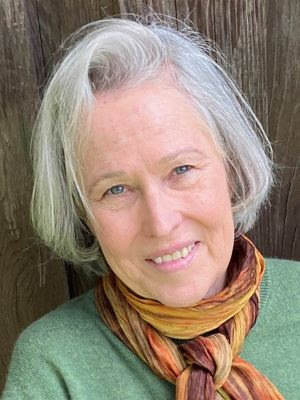
The Canadian Studies Program is pleased to announce that Dr. Gregory Wigmore has joined the program as an external academic affiliate. Dr. Wigmore is a lecturer in history at Santa Clara University, specializing in colonial and 19th-century North America.
Dr. Wigmore is a longstanding friend of Canadian Studies at Berkeley. He was awarded a Sproul Fellowship in 2014, and has been invited to speak at the Canadian Studies Colloquium several times, including an upcoming talk in February (see “Events” below.)
Dr. Wigmore was born in Ontario, Canada. He completed his bachelor’s in journalism and history at Carleton University in Ottawa, before moving to California to earn his Ph.D. in history at UC Davis. His research and teaching focus on the intersection of social and political history and foreign relations, especially the role of frontiers and borders. At Santa Clara, he teaches a broad range of courses in North American history, and he incorporates a significant amount of Canadian material into his classes.
Wigmore has contributed numerous op-eds to the Globe and Mail and the National Post. He is currently writing a book manuscript based on his dissertation, “The Limits of Empire: Allegiance, Opportunity, and Imperial Rivalry in the Canadian-American Borderland.”
Dr. Wigmore previously worked as a historical researcher on contract to the Government of Canada’s Office of Indian Residential Schools Resolution, and has collaborated with the California History-Social Science Project in developing K-12 curriculum. He currently serves as faculty advisor to Santa Clara’s History Club. |
|
| Last Chance to Apply to be Our Student Research Assistant!
Early applications close at 4 pm today!
Are you an undergrad interested in helping teach other Cal students about Canada? Do you know someone who is? The first-round submission deadline for our new student research position closes at 4 pm today – so make sure to get your application in on time!
This position is organized through the Undergraduate Research Apprentice Program (URAP), and will give an undergraduate student the chance to work with our program director, Dr. Richard A. Rhodes, and program staff on preparing teaching materials in preparation for a future DeCal course on Canada. Students will be able to develop research and synthesis skills while learning how to construct a course of their own.
This position will work closely with faculty, graduate students, and program staff on a variety of tasks, including writing, researching, and assisting with Program events. The student’s interests will shape specific project outcomes. A living stipend may be offered depending on time commitment and specific work required.
Students will be expected to be available about 3-5 hours per week, and should have strong writing and research skills as well as a basic knowledge of Canada. Interested students should click here to learn more about anticipated tasks and qualifications. |
|
|
Negotiating the “Double-Minded Vocabulaire”: Montreal’s Jewish Communities and Contemporary Quebec
Tues., January 30 | 12:30 pm | 223 Philosophy Hall | RSVP
Montreal’s 90,000-strong Jewish community presents unique features that differentiate it from the Jewish populations of other North American cities. Even those aspects that it shares – a large Ashkenazic immigration in the early 20th century, broad and successful upward mobility, and the development of strong educational, cultural, and service institutions – have been achieved in a city once divided by language, religion, and geography (the English-speaking, largely Protestant business west versus the French-speaking, overwhelmingly Catholic proletarian and lower middle-class east), now a secular, multicultural metropolis whose official language is French but with the highest rate of citizens who speak at least three languages of any North American city. The departure of many Ashkenazic Jews in the 1970s and 80s in the face of the Quebec independence movement has been partially offset by the arrival, since the 1950s, of Sephardic Jews, at first from North Africa, and more recently from Israel and France. At the same time, Montreal received one of the world’s largest populations of Holocaust survivors and has become a world center for Hasidic Judaism.
Today, Montreal Jewish institutions speak increasingly of the city’s Jewish communities, in recognition of this remarkable internal diversity. How do these developments challenge the vision and missions of Montreal’s historical Jewish institutions? How is the question of Jewish identity in Montreal shaped by the concern in Quebec for the flourishing of the French language and the codification into law of a concept of laïcité, or secularism, more in line with European views than with the prevailing notions of multiculturalism in North America? How do Montreal’s Jewish communities articulate their identities and sentiments of belonging in response to the range of ways, variously inclusive and exclusive, that Quebec identity is asserted in the linguistic, cultural, and political spheres?
ABOUT THE SPEAKER
Dr. Robert Schwartzwald is a professor in the Département de littératures et de langues du monde at the Université de Montréal, where he directed the graduate certificate program in Jewish studies from 2016-2022. He received his M.A. in comparative literature from the University of Toronto, and a Ph.D. in Québécois literature from Université Laval. His publications explore interfaces between literary and national articulations of modernity with special attention to issues of sexual representation and intercultural relations. He is a former editor of the International Journal of Canadian Studies / Revue internationale d’études canadiennes and a recipient of the Governor-General’s International Award for Canadian Studies.
This event is cosponsored by the Center for Jewish Studies and Department of French. |
|
| Slavery and Self-Emancipation in Colonial Canada
Tuesday, February 13 | 12:30 pm | 223 Philosophy Hall | RSVP
The US-Canada border played a central role in the history of slavery in North America. Yet, while Canada is remembered as a haven for those fleeing slavery in the United States via the Underground Railroad, it is less well known that for the hundreds of people enslaved in Canada, crossing into the United States paradoxically also meant freedom. Early Canadian and American antislavery laws did nothing to free existing slaves within their respective jurisdictions, but their enactment – and the proximity of a permeable border between rival regimes – afforded an unprecedented opportunity to the enslaved. Laws on both sides of the Great Lakes inadvertently established free spaces where fugitives from the opposite side could find sanctuary. By passing from one jurisdiction to another, enslaved people could exploit competing slavery laws to emancipate themselves simply by crossing the border, a development that destabilized and ultimately destroyed slavery in the borderlands.
In this talk, Dr. Gregory Wigmore will draw on his research into the history of slavery in the US-Canada borderlands. His article, “Before the Railroad: From Slavery to Freedom in the Canadian-American Borderland”, published in the Journal of American History, reveals how enslaved men, women, and children in early Canada and the United States exploited the new international boundary to seize their own freedom, decades before the emergence of the Underground Railroad. The article received the Bernath Prize from the Society for Historians of American Foreign Relations and the Ontario Historical Society’s Riddell Award.
ABOUT THE SPEAKER
Dr. Gregory Wigmore is a lecturer in the Department of History at Santa Clara University and an external academic affiliate of Canadian Studies. Fore more information, please see the biography above. |
|
| Save the Date: Proto-Algonquian Conference, March 2
Saturday, March 2 | 9:30 am – 4:00 pm | 223 Philosophy Hall | Learn more
The Canadian Studies Program is pleased to announce a one-day conference honoring the late David Pentland on the occasion of the posthumous publication of his Proto-Algonquian Dictionary. The conference will bring together scholars from across the United States and Canada to celebrate this significant milestone in Algonquian scholarship, and to celebrate Dr. Pentland’s life and career as a prominent scholar in the field of Algonquian studies.
Ever since Leonard Bloomfield published his groundbreaking 1946 sketch outlining the sound system and basic morphology of Proto-Algonquian, refinements of the details of sound change and the reconstruction of Proto-Algonquian has been a central part of Algonquian linguistics. But the close similarities among most of the languages has led to a plethora of proposed reconstructions that are often not fully consistent with one another. Pentland’s dictionary has been a long-awaited step forward, bringing a new level of rigor and consistency to the field. Of course, it will also be a springboard to a range of new questions about methodology, classification, and borrowing. And we cannot discount the window on Algonquian culture such a comprehensive work provides. Speakers at the conference will address these questions and more.
Details about the conference, including the speaker schedule, will be posted on our website as they become available. The conference is at no cost, but attendees must register by emailing canada@berkeley.edu. |
|
|
Eco Ensemble: The Music of Cindy Cox
Saturday, February 3 | 8:00 pm | Hertz Hall | Buy tickets
UC Berkeley’s acclaimed ensemble in residence pays tribute Music Department faculty member and eminent composer Cindy Cox, whose compositions are inspired by the invisible laws of nature. The program presents a kaleidoscopic portrait of Cox’s chamber music over several decades, including 2014’s Hishuk ish ts’ awalk (All Things are One), a piece for clarinet, strings, and piano, inspired by the rainforest and native inhabitants of Canada’s Pacific Rim National Park Reserve. “Her music…is always buoyant, puckish, rhythmically alive and crisply engaging” (San Francisco Chronicle). Tickets are available through Cal Performances. |
|
|
|
|






.jpeg?1706126685529)



























 Royal Canadian Legion, US Branch #25