Happy Earth Day & Passover; Seeking a lost Canadian nationalist perfume

A newsletter from one of our fellow Canadian organizations in the Bay Area.


Canadian Studies Announcements

In This Issue:

Program News

  • Happy Earth Day, and happy Passover from Canadian Studies!
  • Hildebrand Fellow Madeleine Morris follows the scent of artist Joyce Wieland’s Canadian nationalist perfume

Upcoming Events

  • Student Research Showcase: Canadian Identities in Art

External Events

  • Ronnie Burkett Theatre of Marionettes: Wonderful Joe
  • Mykalle Bielinski: Warm Up (US premiere)
  • MSNBC’s Ali Velshi: A Legacy of Endurance and the Fight for Democracy

PROGRAM NEWS

Happy Earth Day…


Earth Day celebrates our planet and our pledge to preserve it for future generations. This year’s theme, “Planet vs. Plastics”, recognizes the challenge of a global plastic pollution crisis. All eyes are on Canada, as international leaders gather in Ottawa this week to discuss a global treaty on plastic waste. Canada is one of 60 countries proposing to end all plastic pollution by 2040. Meanwhile, a Canadian scientist hopes to reshape the future of plastic with a new material made from fish oil. We encourage our friends in the United States and Canada to learn more about ways that they can lower their environmental impact and reduce plastic waste, to keep our planet clean and healthy.

… and Happy Passover!

Canadian Studies wishes a very happy Passover to our Jewish friends across the United States and Canada. The eight-day long festival celebrates the Biblical Exodus of the Israelites from slavery in Egypt. As Prime Minister Trudeau’s official statement notes, this Passover comes at a difficult time for many Jews; nevertheless, while the holiday acknowledges the many persecutions of the Jewish people, it also affirms their resilience. We wish a peaceful celebration to all: Chag Pesach sameach! Images by Freepik.

Hildebrand Fellow Madeleine Morris Follows the Scent of Artist Joyce Wieland’s Canadian Nationalist Perfume

Madeleine Morris is a second-year PhD student in the History of Art Department. She holds a BA in Studio Art and Italian from Vassar College and an MA in Art History from the Institute of Fine Art, NYU. Her research focuses on twentieth century North America, modernisms, and olfactory art. She received a Hildebrand Graduate Research Fellowship in Summer 2023 to study Canadian nationalist artist Joyce Wieland’s landmark exhibition True Patriot Love with an emphasis on her olfactory artwork Sweet Beaver.

Joyce Wieland was a groundbreaking Canadian multimedia artist active in the 1960s and ’70s. The Hildebrand Fellowship helped me make significant strides in understanding Wieland and her Canadian nationalism through access to archives, artworks, and in location context. I was particularly interested in Wieland’s only olfactory artwork, a homemade perfume titled Sweet Beaver. I had previously undertaken several unsuccessful projects to find visual evidence of the artwork’s existence, and its importance to the artist. The Hildebrand Fellowship allowed me to visit Canadian art institutions, where I found more documentation than I had hoped for. I travelled to several different archives and museums to access non-digitized records that offered details about this understudied and powerful artwork.

Through my evolving research on North American olfactory art, aesthetics, and modernism, Wieland’s perfume stands out as a potent intervention in the museum space. She used it to change the tone and environment of her landmark 1971 exhibition True Patriot Love, the first ever solo show of a living female Canadian artist at the National Gallery of Canada. The work and the exhibition together form a unique and potent collision of nationalism and olfactory aesthetics. Sources in publication and online were scant. But at the National Gallery’s archives in Ottawa, I was granted access to numerous boxes on this exhibition. The documents provided information I had not encountered about other sensory elements in the exhibition, including a pond with live ducks; the details of the Arctic Passion Cake, a cake she commissioned that sat in the exhibition to droop and melt over time; and archival images of her interacting with the work, attending the show opening, and interviews about her process. Stationary emblazoned with “Sweet Beaver” and photographs from press clippings demonstrated the importance of this olfactory artwork to the artist and its impact on the public experience of True Patriot Love.

The Hildebrand Fellowship also gave me access to another rich trove of archival materials at the Art Gallery of Ontario in Toronto. In this archive I discovered the rare exhibition book for True Patriot Love (an artwork in itself) and found documents about the continued existence of Sweet Beaver and its whereabouts up to 2003, as well as some of the art collections it entered.

At the AGO, I was able to delve more deeply into unpacking Wieland’s Canadian nationalism, and the inspiration she took from noted landscape painter and father of the Group of Seven, Tom Thomson. Wieland’s obsession with Thomson, as evidenced by her drawings and photographs of him in the True Patriot Love book and his role in her film The Far Shore, came more clearly into light when I saw the extensive collection of his paintings at both the AGO and National Gallery. His small yet muscular sketches, searching lines, and carefully observed landscapes captured a vision of the Canada that captivated the nation, Wieland, and me.

I found more of his paintings and those of his contemporaries at the Musée des Beaux-Arts in Montreal. This museum offered more of Thomson’s works. It also contained works by the Beaver Hall Group, the Quebecois answer to Ontario’s Group of Seven, providing more insight into the art historical landscape across the English-French divide. Examining this aspect of Canadian culture helped shed light on Wieland’s efforts to grapple with Pierre Elliot Trudeau’s nationalist unifying endeavor. This permitted expanded opportunities for visual analysis of Thomson’s artworks and connections to Wieland’s reinterpretation of the Canadian landscape. Both artists’ ecocritical depictions of landscape stake quiet claims for preservation of Canadian wilderness, even as Thomson’s body of work helped spark interest in expanding development further North to tap into the potential of the available, “untouched” North (a fallacy that excludes Indigenous populations and prioritizes human industry above all other land uses). At these art institutions, I also encountered several Wieland artworks and films I had not been able to view previously, including Rat Life and Diet in North America, a pivotal film in her oeuvre, and Confedspread, a multimedia collage work whose plastic textures and hidden Canadian flags do not read as easily in reproduction.

UPCOMING EVENTS

Student Research Showcase: Canadian Identities in Art

Tues., April 30 | 12:30 pm | 223 Philosophy Hall | RSVP

Learn about the research Canadian Studies funds through our Edward E. Hildebrand Graduate Research Fellowships, as recipients present overviews of their projects. This panel will explore how Canadian artists grapple with themes of “identity” in their work.

“Settler Colonial Wellness Fantasies and Transpacific Korean Diasporic Critique”

Claire Chun, PhD candidate, Ethnic Studies

Claire’s research explores how modern conceptualizations of “Korean” and “Asian” beauty, wellness, and aesthetics are shaped by overlapping forces of militarism, tourism, and humanitarianism. Her Hildebrand Fellowship field research in Toronto and Vancouver examined how Korea-born and Vancouver-based artist Jin-me Yoon’s work addresses and responds to ongoing colonial frontier-building violences that link the transpacific militarized geographies of Korea and Western Canada together.

“Seeking Sweet Beaver: On the Hunt for Joyce Wieland’s Canadian Nationalist Musk”

Madeleine Morris, PhD student, History of Art

Last summer, Madeleine traveled to three Canadian cities to track Canadian nationalist artist Joyce Wieland’s olfactory work Sweet Beaver. Looking at the context of Wieland’s 1971 exhibition True Patriot Love, Madeleine accessed archival documents to examine the use of the sensory in her exhibition. At Canadian art institutions, she also studied artworks by Group of Seven father Tom Thomson, a point of obsession for Wieland and important link for her ecocritical understanding of landscape amid her concerns over Canadian national identity that incorporated both anglophone and francophone Canadians.

If you require an accommodation to fully participate in an event, please let us know at least 7 days in advance.

EXTERNAL EVENTS

Ronnie Burkett Theatre of Marionettes: Wonderful Joe

May 1-4 | 8:00 pm | Stanford University | Tickets

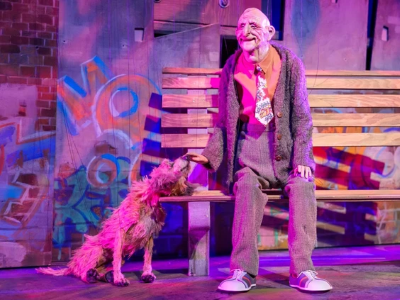
Canadian puppeteer Ronnie Burkett returns to the Bay Area with a new Stanford Live-commissioned work examining the feelings of isolation and loneliness. When they are forced out of their home by gentrification, Wonderful Joe and his dog Mister go on a fantastic journey into the world in search of home. Dark and poetic, yet magical, the show exhibits Burkett’s mastery of his craft. In a review for the show’s world premiere in Edmonton earlier this month, the Edmonton Journal proclaimed “Wonderful Joe is, true to its name, wonderful. It’s pure magic from a veteran puppeteer bringing to life some fantastical characters to tell an important story.”

Mykalle Bielinski: Warm Up (US Premiere)

May 2-4 | 7:30 pm | San Francisco, CA | Tickets

When faced with a climate crisis, how do you stage an eco-responsible show? By producing your own electricity using a bike. Warm Up explores our relationship with nature through the lens of overconsumption by rethinking the act of making art. Drawn into a system that exploits her, Québécoise multidisciplinary artist Mykalle Bielinski explores the principles of de-growth and resilience through a ritual laden with mythological and political overtones. In this athletic and musical piece, science and fiction collide to inspire a paradigm shift on both the personal and societal level, and to offer paths of reconciliation for our world.

This show is presented by the San Francisco International Arts Festival, in collaboration with the San Francisco Bicycle Coalition. Members of the Canadian community can use the code CanQue20 for a 20% discount on tickets.

MSNBC’s Ali Velshi: A Legacy of Endurance and the Fight for Democracy

Tuesday, May 14 | 12:00 pm | San Francisco, CA | Tickets

Small acts of courage matter—and sometimes they change the world. More than a century ago, MSNBC host Ali Velshi’s great-grandfather sent his seven-year-old son to live at Gandhi’s ashram in South Africa. From childhood, Velshi’s grandfather was imbued with an ethos of public service and social justice, and a belief in absolute equality among all people – ideals that his children carried forward as they escaped apartheid, moving to Canada and the United States.

Velshi’s new book Small Acts of Courage taps into 125 years of family history to advocate for social justice as a living, breathing experience: a way of life more than an ideology. In a conversation with Canadian Consul General Rana Sarkar, Velshi will relate the stories of regular people who made a lasting commitment to fight for change, even when success seemed impossible, and explore how we can breathe new life into the principles of pluralistic democracy. This event will also be webcast live.

Canadian Studies Program

213 Philosophy Hall #2308

WEBSITE | EMAIL | DONATE

Facebook  Twitter
Canadian Studies Program | Univ. of California, Berkeley213 Philosophy Hall #2308Berkeley, CA 94720

Leave a comment

This site uses Akismet to reduce spam. Learn how your comment data is processed.