NEWS & EVENTS
FOR THE BAY AREA
CANADIAN COMMUNITY
|
|
|
Sweet! Things we love about being Canadian in the Bay Area:
-
Canadian candy that came home on that last trip, and is hidden somewhere in a cupboard (where did you go, coffee crisp?)
-
Sunny weather (sorry about that today – and in SF, all summer, eh).
-
How Canadians work at every tech company, and live in every community.
-
Our friends know all about poutine, Tim Hortons, pineapple on pizza, and that our Maple Syrup is superior… And they still think we’re really nice.
-
International Orange (which is the paint colour on the Golden Gate Bridge) is closer to Canadian flag red, and DML RED than orange
|
|
|
Event details and links are below, along with other news
for the Bay Area Canadian community.
|
|
|
* Digital Moose Lounge Events are listed in RED *
|
|
|
Just ahead…
FEB 16 (Oakland)
Learn to Curl 🥌
FEB 28 (San Francisco)
Panel: Seeing It All: Women
Photographers Expose Our Planet
MAR 2 (Berkeley)
Conference: David Pentland’s Proto-Algonquian Dictionary
MAR 12 (Berkeley)
Agricultural economist Catherine Keske
MAR 25 (To be confirmed)
AI & Climate Change Panel
|
|
Plan ahead…
MAR 9 (San Jose)
Ottawa Senators vs. SJ Sharks
MAR 9 (San Jose)
Vancouver Whitecaps vs. SJ Earthquakes
MAR 15 (San Francisco)
Comedian Russell Peters
APR 9 (San Jose)
Calgary Flames vs. SJ Sharks
APR 17 (San Rafael)
Dominican : Michael Ondaatje
MAY 1-4 (Stanford)
Stanford Live: Ronnie Burkett
|
|
|
JUN 29 (Coyote Point)
DML Canada Day Picnic NEW LOCATION!
|
|
SEPT 15 (TBD)
Terry Fox Run
|
|
OCT 6 (UC Berkeley)
DML Canadian Thanksgiving Dinner
|
|
|
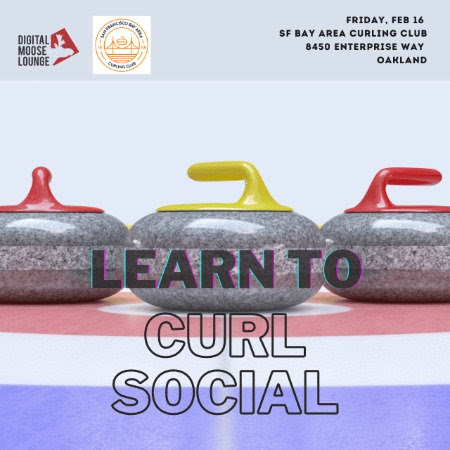
Learn to Curl & Social
Friday, February 16th, 2024
6:30 PM – 9:00 PM
SF Bay Area Curling Club (Oakland)
Stay out of the storm this weekend – down to the last few spots – come join us for a curling lesson, mini game and social fun!
-
Orientation to curling terms and history before you hit the ice
-
On-ice instruction for delivering a stone and sweeping
-
A mini-game
-
Après-curl with refreshments and snacks
All are welcomed! No experience or special equipment is needed. Join individually, or join as a group. DML special rate offered, so let’s take over the sheets! $40 adults / $20 junior (21 & under).
|
|
|
Panel on AI and Climate Change
SAVE THE DATE!
Monday, March 25, 2024
Time and Location to be confirmed
Watch our website and our socials to sign-up soon. The Digital Moose Lounge is bringing together an engaging panel discussion around AI and Climate Change.
Speakers:
David Rolnick, Assistant Professor and Canada CIFAR AI Chair
McGill and Mila – Québec AI Institute
Sergei Isaaev, AI Scientest
Vooban (Quebec AI firm)
Sponsors:
Délégation du Québec
Consulate General of Canada SF
Mila – a Quebec AI research network
Fusion Fund
|
|
|
Seeing It All: Changing the World One Photo at a Time
Wednesday, February 28, 2024
5:30 PM
The Commonwealth Club of California (San Francisco)
Join three Canadian women in conversation about the power of images to change how we see the world, raise awareness about the most urgent environmental issues, and spark action.
Speakers:
Rhonda Rubenstein
Exhibit Curator for the California Academy of Sciences, and co-founder of the BigPicture photography competition.
Indre Viskontas
Neuroscientist, writer and stage director; Associate Professor of Psychology at the University of San Francisco, with a cross-appointment at the San Francisco Conservatory of Music.
Jo-Anne McArthur
World-renowned photographer from Toronto.
|
|
|
Conference:
The late Dr. David Pentland’s Proto-Algonquian Dictionary
Saturday, March 2, 2024
9:30 a.m. to 4 p.m.
223 Philosophy Hall, UC Berkeley
Speakers will celebrate the release of the late Dr. David Pentland’s Proto-Algonquian Dictionary with papers and commentary on the linguistics and history of the language.
|
|
Colloquium:
Come from Away: Newfoundland and Labrador’s Food Security Dilemma
Tuesday, March 12, 2024
12:30 p.m. to 2 p.m.
223 Philosophy Hall, UC Berkeley
Agricultural economist Dr. Catherine Keske (UC Merced) will discuss her research on creating a secure, sustainable, and just food system in the boreal ecosystems of Newfoundland and Labrador.
|
|
|
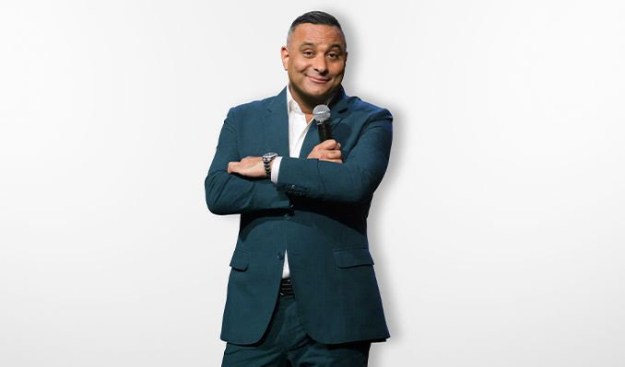
Russell Peters – Comedian
Friday, March 15, 2024 (Rescheduled from October 2023)
Doors open at 6pm – Show starts at 7pm
The Warfield (San Francisco)
From The Warfield website:
Russell Peters was recently named as one of Rolling Stone’s 50 Best Comics of All Time. He started doing stand-up at the age of nineteen at open mics in his native Toronto, and spent the next fifteen years honing his craft at clubs across Canada and the UK.
|
|
|
Michael Ondaatje – Writer/Poet
Wednesday, April 17, 2024
7 PM
Dominican University of California (San Rafael)
From Book Passage Website:
From one of the most influential writers of his generation, a gorgeously surprising poetry collection about memory, history, and the act of looking back.
Following several of his internationally acclaimed novels, A Year of Last Things is Michael Ondaatje’s long-awaited return to poetry. In pieces that are sometimes witty, sometimes moving, and always wise, we journey back through time by way of alchemical leaps, unearthing writings by revered masters, moments of shared tenderness, and the abandoned landscapes we hold on to to rediscover the influence of every border crossed.
Moving from a Sri Lankan boarding school to Molière’s chair during his last stage performance, to Bulgarian churches and their icons, to the California coast and his beloved Canadian rivers, Michael Ondaatje casts a brilliant eye that merges memory with the present, in the way memory as the distant shores of art and lost friends continue to influence everything that surrounds him.
|
|
|
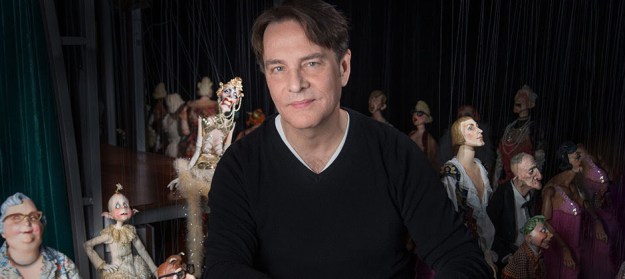
Ronnie Burkett – Puppeteer
Wednesday, May 1st to Saturday May 4th, 2024
8 PM nightly
The Studio at Stanford Live (Stanford)
Wonderful Joe
Canadian puppeteer Ronnie Burkett (Little Willy, The Daisy Theatre) returns with a new Stanford Live commissioned work examining the feelings of isolation and loneliness. Dark and poetic, yet magical, Wonderful Joe and his dog Mister go on a fantastic journey into the world in search of home.
|
|
|
@connect2canada
Follow the Canadian Embassy in Washington, DC
@beaufille
Beaufille is a Canadian fashion label founded by sisters Chloé Gordon and Parris Gordon. Both sisters studied at the Nova Scotia College of Art and Design.
Beaufille (pronounced bo-fee) is a nonsensical French word meaning “handsome girl” or “one who presents an effortless chic demeanor.” The brand symbolizes the marriage of masculine and feminine and an allusion to their French names and heritage
@highvalleyofficial
High Valley is a Canadian country band originally from Blumenort, Alberta, a small community near the hamlet of La Crete.
Small Town Somethin Tour February 2024
|
|
|
Keep your antlers to the ground
with all the latest news, updates & fun!
|
|
|
|
|



























 Royal Canadian Legion, US Branch #25