Author Archives: Michael K. Barbour

Unknown's avatar

About Michael K. Barbour

Michael K. Barbour is the Director of Faculty Development and a Professor of Instructional Design for the College of Education and Health Sciences at Touro University California. He has been involved with K-12 online learning in a variety of countries for well over a decade as a researcher, teacher, course designer and administrator. Michael's research focuses on the effective design, delivery and support of K-12 online learning, particularly for students located in rural jurisdictions.

The U.S., Britain and the WW II bombing campaign in Europe

An item from the Legion Magazine.


Front Lines
Front Lines

Cologne Cathedral stands tall at war’s end, surrounded by devastation wrought by the Allied bombing campaign. (Wikimedia)

The U.S., Britain and the WW II bombing campaign in Europe

STORY BY STEPHEN J. THORNE

The finale of a Second World War television trilogy has arrived on Apple TV+ and early episodes of the graphic and visually stunning of Masters of the Air have already made some questionable claims about the U.S. bombing campaign over Nazi-occupied Europe.

Produced by Steven Spielberg and Tom Hanks, the nine-part series comes 26 years after Saving Private Ryan (1998) hit theatres and set the standard for HBO TV’s subsequent series, Band of Brothers (2001) and The Pacific (2010).

READ MORE

Warbirds Mug
Military Milestones
Military Milestones

The Golden Hawks during a performance. (NEW BRUNSWICK AVIATION MUSEUM)

Remembering Canada’s first national aerobatics team—and its legendary aircraft

STORY BY PAIGE JASMINE GILMAR

From 1951 to 1963, the CL-13 Sabre was the Royal Canadian Air Force’s front-line “dog-fighter.” But the Canadian-built aircraft is best remembered for its five years of service in domestic airspace, where its flashy gilt became symbolic of the RCAF’s first official national aerobatics team. Sixty years ago today, the Golden Hawks were disbanded.

Enchanting more than 15 million Canadians and Americans during 317 performances, the Golden Hawks set the bar for their successor, the Snowbirds, all while inspiring countless young people to enlist in the air force.

READ MORE

Member Benefit Partner

Safestep

We all have unique interests and hobbies. How well we hear plays a big role in how we experience the world around us. That’s why it’s important to find the hearing aids that fit your lifestyle and budget. To help you find the hearing aid that is right for you, we are offering all Legion members and their family a free trial of our top-of-the line hearing aids for 30 days.

Happy Black History Month! A Black BC pioneer; “Self-Emancipation” in Colonial Canada

A newsletter from one of our fellow Canadian organizations in the Bay Area.


Canadian Studies Announcements

In This Issue:

Program News

  • Happy Black History Month!
  • Retracing the steps of a Black BC pioneer with faculty affiliate Cecil S. Giscombe

Upcoming Events

  • Slavery and Self-Emancipation in Colonial Canada

External Events

  • Homelessness in Canada: A Complex Policy and Governance Landscape
  • Native Studies, Public Intellectualism, and Seizing Opportunity in Crisis

PROGRAM NEWS

Happy Black History Month!

February is Black History Month in both the United States and Canada. Officially celebrated in the US since the 1970s, and in Canada since 1995, the month recognizes the contributions African-descended people have made to both societies. In Canada, this year’s theme is “Black Excellence: A Heritage to Celebrate; a Future to Build”. While Black American history is better known, Canada also has a long Black presence that intertwines with the US in interesting – and complex – ways.

Black people have been present in Canada since the beginning of the colonial era. The first Black person known to have set foot in modern Canada was a freeman, Mathieu da Costa, who worked as a translator. Arriving in Nova Scotia in the early 1600s, he is believed to have known about six languages, and helped French explorers communicate with local Mi’kmaq communities.

Since then, Canada has seen various waves of Black migration, creating a community with particularly diverse origins. A small portion of Black Canadians trace their ancestry to enslaved Africans brought to the country in the 18th century, including some transported by Loyalists fleeing the American Revolution. Others descend from Black Loyalists, men who escaped slavery and fought for the British after being guaranteed freedom. When slavery was abolished in Canada in 1833, the country became the destination for tens of thousands of enslaved people seeking freedom along the Underground Railroad. During the later 19th century and early 1900s, still more Black Americans escaped Jim Crow conditions by moving to Canada during the Great Migration. Then, in the 20th century, Canada began to accept more immigrants from the Caribbean and Africa. The number of Black Canadians burgeoned once the country removed racial immigration quotas in the 1960s, and today, about 60% of Black Canadians are immigrants. While historically a small minority, the number of African-descended Canadians has grown in recent years, and today they comprise 4.3% of the country’s total population.

Visit Canadian Heritage to learn more about famous Black Canadians and their contributions to the country. Curated pages include notable events in Black Canadian history, facts about the contemporary Black community, and organizational resources for educators. The Prime Minister’s Office also released a statement marking Black History Month, which can be read here. The Prime Minister promised additional resources to combat anti-Black racism and support for Black community organizations.

Retracing the Steps of a Black BC Pioneer with Faculty Affiliate Cecil S. Giscombe

About 800 miles north of Vancouver, just outside Prince George, is the small hamlet of Giscome, BC. Few people are aware of the remarkable story of its namesake, the prospector John Robert Giscome; and many would be surprised to discover that Giscome, an early pioneer in this part of British Columbia, was in fact a Black man from Jamaica.

Yet one Canadian Studies affiliate is intimately familiar with this story. Cecil S. Giscombe is the Robert Haas Chair in English at UC Berkeley, and an award-winning poet and essayist. As the CBC reported yesterday, Giscombe has spent decades spreading awareness of Giscome’s story. This fascination began when he first learned about the town of Giscome over 30 years ago. Since then, Giscombe has been searching for answers about the man he calls John R., who remains just out of focus in historical sources. His trips have taken him from Jamaica, where he interviewed Giscome’s family, to multiple trips into the BC interior. He’s published several books, poems, and essays about the pioneer, with whom he feels a strong personal connection. And in 1991, Giscombe recreated his ancestor’s journey, biking and hiking from Vancouver to Prince George.

But what makes Giscome such a transfixing subject? Giscombe’s work interrogates that very question, by examining his own relationship to the pioneer. This relationship is unclear on a genetic level: while Giscombe believes is a distant relative of John’s, he has never been able to prove it. But intellectually, Giscombe is intrigued by what John R. represents as a Black man occupying a prominent role where the archetypal “pioneer” is white. How was John R. able to achieve such success in British Columbia? And does his story challenge traditional narratives of settlement, as well as the way Canadians think about diversity in the Pacific Northwest?

Painting of John R. Giscome by Richard Estell.

Courtesy of the Huble Homestead/Giscome Portage Heritage Society via the CBC.

The basic facts of John R. Giscome’s life are well-documented. He was born in Jamaica, but moved away as a young man in search of work. In 1854, he moved to California to work on the railways, but he quickly found the state to be hostile to Black residents (in fact, California, inspired by Oregon, once considered banning free Black people from settling in the state.)

Meanwhile, Sir James Douglas, the first governor of British Columbia, wanted to encourage settlement of his frontier province to discourage potential American annexation. Douglas, whose own mother was a free woman of color from Barbados, learned of the situation in California, and invited San Francisco’s Black community to settle in Canada, with the promise of equal rights as British subjects. Giscome joined nearly 600 Black people who accepted the offer.

Once in Canada, Giscome caught gold fever, and joined in the Cariboo Gold Rush along with another Black prospector, Henry McDame. While traveling north of Prince George, an Indigenous guide showed Giscome a shortcut through the woods; Giscome popularized the trail, which today bears his name. Unlike many other miners, Giscome not only found success in the gold fields, but managed to keep his earnings, leaving the equivalent of $500,000 to his landlady upon his death in 1907.

For his distant cousin in Berkeley, Giscome’s story had a special resonance. Giscombe’s work has frequently centered to themes of identity, race, nature, and place, all of which are central to John R.’s story. Giscombe has returned to the subject several times. His 1998 poetry collection Giscome Road won the Carl Sandburg Award for Poetry. And his 2000 memoir, Into and Out of Dislocation, follows the writer’s family through a winter in British Columbia as he interrogates his preoccupation with “otherness” and the meaning of national, racial, and psychological borders. As quoted in a book review by John Harris, published in The Capilano Review, what fascinates Giscombe is how John R. got “all outside the lines that geography, race, and the languages of white people had made for him.” Giscome’s story, raised from obscurity, says much about how shifting narratives of Canadian history can complicate well-worn stories, and shine light on what unusual cases can reframe how we talk about the familiar – and the extraordinary.

UPCOMING EVENTS

Slavery and Self-Emancipation in Colonial Canada

Tues., Feb. 13 | 12:30 pm | 223 Philosophy Hall | RSVP

The US-Canada border played a central role in the history of slavery in North America. Yet, while Canada is remembered chiefly as a haven for those fleeing slavery in the United States via the Underground Railroad during the mid-nineteenth century, it is less well known that many people enslaved in colonial Canada during the late eighteenth and early nineteenth centuries gained their freedom by crossing the border into the United States. Early Canadian and American anti-slavery laws did remarkably little to free people enslaved within their respective jurisdictions. But their enactment – and the proximity of a permeable border between rival regimes – afforded an unprecedented opportunity to enslaved men, women, and children. Laws on both sides of the Great Lakes inadvertently established free spaces, where fugitives from the opposite side could find sanctuary. By passing from one jurisdiction to another, enslaved individuals could exploit competing slavery laws and emancipate themselves simply by crossing the border, a development that destabilized and ultimately destroyed chattel slavery in the borderlands.

In this talk, Dr. Gregory Wigmore will provide a broad overview of slavery in early Canada, especially in the Great Lakes region. His talk will explain how both slaveholders and the enslaved, along with British and American authorities, responded to the emergence of the new Canadian-American border after the American Revolution. While slaveholders in Upper Canada (now Ontario) begged the colonial government to help them protect their valuable human property, their enslaved laborers were among the first people in North America to understand the political significance of the new international boundary, using it as a portal to freedom.

ABOUT THE SPEAKER

Dr. Gregory Wigmore is a lecturer in the Department of History at Santa Clara University. He received his B.A. in journalism and history from Carleton University, and his Ph.D. in history from UC Davis. His research and teaching focus on the intersection of social and political history and foreign relations, especially the role of frontiers and borders. His article, “Before the Railroad: From Slavery to Freedom in the Canadian-American Borderland”, received the Bernath Prize from the Society for Historians of American Foreign Relations and the Ontario Historical Society’s Riddell Award. He is currently working on a book manuscript based on his dissertation, “The Limits of Empire: Allegiance, Opportunity, and Imperial Rivalry in the Canadian-American Borderland.”

EXTERNAL EVENTS

Homelessness in Canada: A Complex Policy and Governance Landscape

Thursday, February 8 | 12:00 pm | Online | RSVP

Western Washington University’s Center for Canadian-American Studies invites you to the inaugural talk of their new series, “Populations Rendered ‘Surplus’ in Canada”. Anna Kopec, an assistant professor at the School of Public Policy and Administration at Carleton University, will discuss the challenges in addressing the homelessness crisis in Canada. Homelessness includes a complex policy landscape that requires integrated and cooperative policy approaches. Unfortunately, Canada’s current approach often includes fragmented and siloed responses that lead to a patchwork of services and policies. Using comparative findings from Melbourne, Australia, and Toronto, this interactive seminar will present the effects of Canada’s current policies and assert the need for integrated, collaborative responses.

This talk is sponsored by the WWU Center for Canadian-American Studies, The Ray Wolpow Institute, and the Foundation for WWU & Alumni.

Native Studies, Public Intellectualism, and Seizing Opportunity in Crisis

Thursday, February 8 | 1:30 PM | Multicultural Community Center / Online | Learn more

Dr. Kim TallBear (University of Alberta) will discuss her work in building up an effective Native Studies intellectual ecosystem. Dr. TallBear (Sisseton-Wahpeton Oyate) is a public intellectual and commentator on Indigenous peoples, science, sexuality, and environmental topics. She has always understood research as a vehicle for social change. At the University of Alberta, she founded two Native Studies research groups that prioritize deliberately interventionist and public-facing approaches. This unique approach to research and training has helped the programs weather fast-tracked and traumatic restructurings in public higher education. This talk highlights how she finds opportunities to center Native Studies theory and Indigenous peoples’ analytical frameworks (as well as feminist and queer theory analyses) to disrupt traditional knowledge silos and hierarchies.

Canadian Studies Program

213 Philosophy Hall #2308

WEBSITE | EMAIL | DONATE

Facebook  Twitter
Canadian Studies Program | Univ. of California, Berkeley213 Philosophy Hall #2308Berkeley, CA 94720

War graves, battlefield tours and Canadian Steve Douglas’ little shop of horrors

An item from the Legion Magazine.


Front Lines
Front Lines

STEVE DOUGLAS COLLECTION/STEPHEN J. THORNE/LM

War graves, battlefield tours and Canadian Steve Douglas’s little shop of horrors

STORY BY STEPHEN J. THORNE

Two decades ago, a passion for the history of conflict brought Steve Douglas from London, Ont., to Ieper, Belgium, a mecca of First World War history where he has made a career running battlefield tours and a shop brimming with books and artifacts.

But at the heart of Douglas’ fervour is an epic endeavour he started long before he owned Salient Tours or the British Grenadier Bookshop in the medieval town once known as Ypres. It’s called the Maple Leaf Legacy Project, a 27-year-old effort to procure and post photographs of each and every Canadian war grave.

READ MORE

Scarf rings
Military Milestones
Military Milestones

CITIZEN SAILORS VIRTUAL CENOTAPH PROJECT

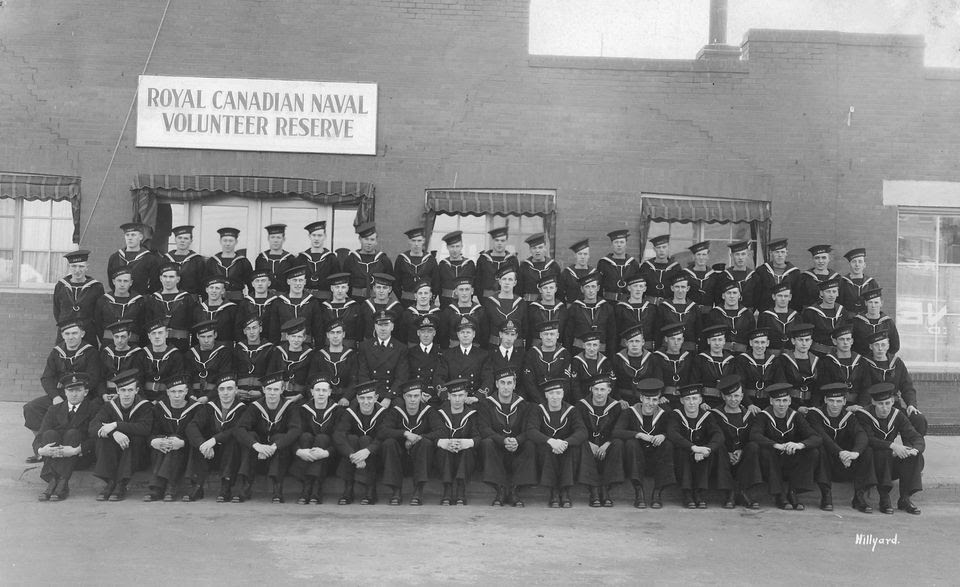
How Canadian volunteer sailors helped win the Battle of the Atlantic

STORY BY PAIGE JASMINE GILMAR

The Royal Canadian Navy Volunteer Reserve (RCNVR) was comprised of seafaring novices who not only helped to win the Battle of the Atlantic during the Second World War, but became a foundation for Canada’s present-day navy. Marking the 101th anniversary since its creation, the largely little-known history of the RCNVR is one of endurance and strength, which ultimately helped ensure western Europe’s survival during the war.

Rear-Admiral Walter Hose created the RCNVR on Jan. 31, 1923, a time when the Navy was dealing with drastic budget cuts. Hose, however, believed volunteers could be the force’s lifeblood, and established Naval Reserve Divisions in cities throughout Canada. The RCNVR’s utility was put to the test come September 1939.

READ MORE

Member Benefit Partner

Safestep

Tomorrow: Jewish identity in Quebec; URAP deadline extended

An item from a fellow Canadian organization in the Bay Area.


Canadian Studies Announcements

In This Issue:

Program News

  • URAP deadline extended to noon tomorrow

Upcoming Events

  • Negotiating the “Double-Minded Vocabulaire”: Montreal’s Jewish Communities and Contemporary Quebec
  • Slavery and Self-Emancipation in Colonial Canada

External Events

  • Eco Ensemble: The Music of Cindy Cox
  • Homelessness in Canada: A Complex Policy and Governance Landscape

PROGRAM NEWS

URAP Application Deadline Extended

Extended Deadline: Tuesday, January 30, 12 pm

The deadline for Canadian Studies’ student assistant position has been extended to noon tomorrow. We’ll begin interviewing this week, so this is your last chance to help teach other Berkeley undergrads about Canada!

This position is organized through the Undergraduate Research Apprentice Program (URAP), and will give an undergraduate student the chance to work with our program director, Dr. Richard A. Rhodes, and program staff on preparing teaching materials in preparation for a future DeCal course on Canada. Students will be able to develop research and synthesis skills while learning how to construct a course of their own.

This position will work closely with faculty, graduate students, and program staff on a variety of tasks, including writing, researching, and assisting with Program events. The student’s interests will shape specific project outcomes. A living stipend may be offered depending on time commitment and specific work required.

Students will be expected to be available about 3-5 hours per week, and should have strong writing and research skills as well as a basic knowledge of Canada. Interested students should click here to learn more about anticipated tasks and qualifications.

UPCOMING EVENTS

Negotiating the “Double-Minded Vocabulaire”: Montreal’s Jewish Communities and Contemporary Quebec

Tues., January 30 | 12:30 pm | 223 Philosophy Hall | RSVP

Montreal’s 90,000-strong Jewish community presents unique features that differentiate it from the Jewish populations of other North American cities. Even those aspects that it shares – a large Ashkenazic immigration in the early 20th century, broad and successful upward mobility, and the development of strong educational, cultural, and service institutions – have been achieved in a city once divided by language, religion, and geography (the English-speaking, largely Protestant business west versus the French-speaking, overwhelmingly Catholic proletarian and lower middle-class east), now a secular, multicultural metropolis whose official language is French but with the highest rate of citizens who speak at least three languages of any North American city. The departure of many Ashkenazic Jews in the 1970s and 80s in the face of the Quebec independence movement has been partially offset by the arrival, since the 1950s, of Sephardic Jews, at first from North Africa, and more recently from Israel and France. At the same time, Montreal received one of the world’s largest populations of Holocaust survivors and has become a world center for Hasidic Judaism.

Today, Montreal Jewish institutions speak increasingly of the city’s Jewish communities, in recognition of this remarkable internal diversity. How do these developments challenge the vision and missions of Montreal’s historical Jewish institutions? How is the question of Jewish identity in Montreal shaped by the concern in Quebec for the flourishing of the French language and the codification into law of a concept of laïcité, or secularism, more in line with European views than with the prevailing notions of multiculturalism in North America? How do Montreal’s Jewish communities articulate their identities and sentiments of belonging in response to the range of ways, variously inclusive and exclusive, that Quebec identity is asserted in the linguistic, cultural, and political spheres?

ABOUT THE SPEAKER

Dr. Robert Schwartzwald is a professor in the Département de littératures et de langues du monde at the Université de Montréal, where he directed the graduate certificate program in Jewish studies from 2016-2022. He received his M.A. in comparative literature from the University of Toronto, and a Ph.D. in Québécois literature from Université Laval. His publications explore interfaces between literary and national articulations of modernity with special attention to issues of sexual representation and intercultural relations. He is a former editor of the International Journal of Canadian Studies / Revue internationale d’études canadiennes and a recipient of the Governor-General’s International Award for Canadian Studies.

This event is cosponsored by the Center for Jewish Studies and Department of French.

Slavery and Self-Emancipation in Colonial Canada

Tues., Feb. 13 | 12:30 pm | 223 Philosophy Hall | RSVP

The US-Canada border played a central role in the history of slavery in North America. Yet, while Canada is remembered chiefly as a haven for those fleeing slavery in the United States via the Underground Railroad during the mid-nineteenth century, it is less well known that many people enslaved in colonial Canada during the late eighteenth and early nineteenth centuries gained their freedom by crossing the border into the United States. Early Canadian and American anti-slavery laws did remarkably little to free people enslaved within their respective jurisdictions. But their enactment – and the proximity of a permeable border between rival regimes – afforded an unprecedented opportunity to enslaved men, women, and children. Laws on both sides of the Great Lakes inadvertently established free spaces, where fugitives from the opposite side could find sanctuary. By passing from one jurisdiction to another, enslaved individuals could exploit competing slavery laws and emancipate themselves simply by crossing the border, a development that destabilized and ultimately destroyed chattel slavery in the borderlands.

In this talk, Dr. Gregory Wigmore will provide a broad overview of slavery in early Canada, especially in the Great Lakes region. His talk will explain how both slaveholders and the enslaved, along with British and American authorities, responded to the emergence of the new Canadian-American border after the American Revolution. While slaveholders in Upper Canada (now Ontario) begged the colonial government to help them protect their valuable human property, their enslaved laborers were among the first people in North America to understand the political significance of the new international boundary, using it as a portal to freedom.

ABOUT THE SPEAKER

Dr. Gregory Wigmore is a lecturer in the Department of History at Santa Clara University. He received his B.A. in journalism and history from Carleton University, and his Ph.D. in history from UC Davis. His research and teaching focus on the intersection of social and political history and foreign relations, especially the role of frontiers and borders. His article, “Before the Railroad: From Slavery to Freedom in the Canadian-American Borderland”, received the Bernath Prize from the Society for Historians of American Foreign Relations and the Ontario Historical Society’s Riddell Award. He is currently working on a book manuscript based on his dissertation, “The Limits of Empire: Allegiance, Opportunity, and Imperial Rivalry in the Canadian-American Borderland.”

EXTERNAL EVENTS

Eco Ensemble: The Music of Cindy Cox

Saturday, February 3 | 8:00 pm | Hertz Hall | Buy tickets

UC Berkeley’s acclaimed ensemble in residence pays tribute Music Department faculty member and eminent composer Cindy Cox, whose compositions are inspired by the invisible laws of nature. The program presents a kaleidoscopic portrait of Cox’s chamber music over several decades, including 2014’s Hishuk ish ts’ awalk (All Things are One), a piece for clarinet, strings, and piano, inspired by the rainforest and native inhabitants of Canada’s Pacific Rim National Park Reserve. “Her music…is always buoyant, puckish, rhythmically alive and crisply engaging” (San Francisco Chronicle). Tickets are available through Cal Performances.

Homelessness in Canada: A Complex Policy and Governance Landscape

Thursday, February 8 | 12:00 pm | Online | RSVP

Western Washington University’s Center for Canadian-American Studies invites you to the inaugural talk of their new series, “Populations Rendered ‘Surplus’ in Canada”. Anna Kopec, an assistant professor at the School of Public Policy and Administration at Carleton University, will discuss the challenges in addressing the homelessness crisis in Canada. Homelessness includes a complex policy landscape that requires integrated and cooperative policy approaches. Unfortunately, Canada’s current approach often includes fragmented and siloed responses that lead to a patchwork of services and policies. Using comparative findings from Melbourne, Australia, and Toronto, this interactive seminar will present the effects of Canada’s current policies and assert the need for integrated, collaborative responses.

This talk is sponsored by the WWU Center for Canadian-American Studies, The Ray Wolpow Institute, and the Foundation for WWU & Alumni.

Canadian Studies Program

213 Philosophy Hall #2308

WEBSITE | EMAIL | DONATE

Facebook  Twitter
Canadian Studies Program | Univ. of California, Berkeley213 Philosophy Hall #2308Berkeley, CA 94720