Canadian Studies Announcements
|
|
|
In This Issue:
News from Berkeley
- Berkeley representatives attend national Canadian studies conference
- Canadian Studies cosponsors international workshop on managing flood risk
- PM Trudeau visits California for APEC summit, pledges closer cooperation in meetings with Governor Newsom & foreign leaders
Upcoming Events
- From “Tarktuk” (Darkness) to “Qaumajuk” (Light): Transformations in Canadian Inuit Arts
|
|
|
Berkeley Representatives Attend National Canadian Studies Conference
The Canadian Studies Program was pleased to have a robust group in attendance at this year’s 26th biennial conference of the Association for Canadian Studies in the United States (ACSUS), held from November 16-19 in Washington, DC. Over the course of four days, the conference brought together dozens of academics, scholars, and students from across the United States and Canada to discuss the latest in Canadianist research.
The theme of this year’s conference was “Canada: Near and Far”. The concept of “Canadian identity” is regularly questioned both domestically and internationally, and the conference convened speakers who brought diverse perspectives to address this conundrum. In over 80 talks and panels spread across 11 sessions, speakers addressed topics ranging from diplomacy, the arts, Indigenous cultures, history, politics, and education (with one even dedicated to Canadian curling culture!) The event also celebrated ACSUS’ 50th anniversary, and the organization’s work in facilitating academic discussion around Canada and its place in the world.
After a hiatus of several years due to COVID, we at Berkeley were pleased to reintroduce our program to the broader Canadian Studies community. The conference provides an opportunity for scholars across the country to meet with other Canadianists, and learn about the latest developments in the field. The Program was officially represented by program coordinator Tomás Lane. However, other affiliates also presented independently during several sessions, showcasing the quality and variety of work that our program underwrites.
The conference opened Thursday with a reception and interview with deputy ambassador Arun Alexander hosted by Christopher Sands, director of the Wilson Center’s Canada Institute and an advisory board member of Berkeley’s Canadian Studies Program. Dr. Sands also participated in other sessions as a panelist on US-Canadian security cooperation, and as a contributor to the book Canada and the United States: Differences that Count.
On Saturday, David Stewart, Advisory Board chair at Berkeley Canadian Studies and an ACSUS Executive Board member, gave a presentation titled “Cross-border Perspectives on Canada: Expat Memoirs”. Stewart’s talk examined the complexity of Canadian identity as seen through the eyes of Canadians outside the country. Through a close reading of several memoirs, he explored the ways that expats are forced to define (and refine) their Canadian identity when living abroad, and revealed common themes he found woven throughout the books.
Haikun Liu, a Berkeley undergraduate who has received funding from Canadian Studies, gave a presentation titled “Altruism of Aid: Analysis of Canadian Official Development Assistance (ODA)”. The presentation, based on original research which won our 2023 Ross Prize, sought to quantify the extent to which Canada’s foreign aid is based on self-interest or genuine altruism. Haikun’s research was also awarded ACSUS’ 2023 Martin Lubin Prize at the organization’s award luncheon on Friday, a highlight for the Program.
With the conference now ended, we feel that we succeed creating valuable new connections with our colleagues across North America. These will help us not only advance our Program’s recognition across North America, but connect more effectively with a network of scholars that can help us generate more dynamic research. We look forward to partnering further with ACSUS, to advance our shared goal of generating knowledge of and interest in Canada.
Lead photo: Haikun Liu receives the Martin Lubin Award from outgoing ACSUS president Dr. Christina Keppie. Bottom left: Berkeley board member Dr. Chris Sands interviews Canadian deputy ambassador Arun Alexander. Bottom right: Berkeley Canadian Studies representatives Haikun Liu, Tomás Lane, and David Stewart. |
|
| Canadian Studies Cosponsors International Workshop on Managing Flood Risk
Last week, Canadian Studies cosponsored a workshop dedicated to the increasingly pressing risks presented by flooding around the world. Titled “Managing Flood Risk: The Role of Insurance, Maps and Regulations – International Approaches”, the workshop ran from November 13-15. A select group of researchers and policy-makers from the United States, Canada and the European Union were invited to review the state of the art in flood risk management approaches, with emphasis on the interface between insurance, mapping and land use planning regulations. The workshop was organized by Dr. Anna Serra-Llobet (Center for Catastrophic Risk Management) and Canadian Studies affiliate Professor Matt Kondolf (Landscape Architecture & Environmental Planning).
Flood losses are increasing worldwide because of expanding urbanization in flood-prone lands and more intense weather caused by climate change. While most destructive in the global south, these disasters have also hit wealthy, developed nations with increasing frequency. This workshop looks at advanced approaches from a variety of global jurisdictions, to encourage best practices and inform mitigation in North America. |
|
|
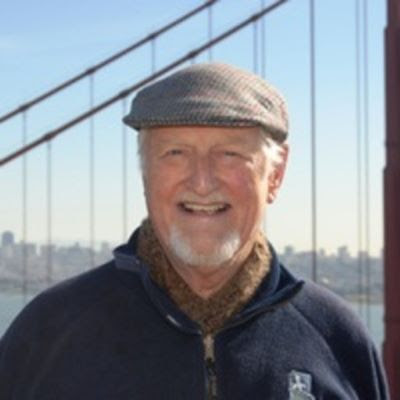
Canadian Studies helped bring a Canadian perspective to the discussion by sponsoring the attendance of Robin Bourke, a senior engineering advisor and the manager of the Data Science and Engineering Team at Public Safety Canada. Robin joined the federal government after 10 years as a consulting engineer and manager focusing on technical work including large-scale hydrology projects. In a joint presentation with Public Safety manager Jessica Strauss, he presented on exicitng new Canadian experiments in this field. Robin has focused on quantitative flood risk assessment, including technical analysis supporting policy decisions and federal risk and disaster relief programs. Recently, his team completed a financial flood risk assessment for all residential addresses in Canada in support of the Flood Insurance and Relocation Program and a climate-impacted financial flood risk analysis for the Bank of Canada.
Image of Robin Bourke courtesy of Anna Serra-Llobet. |
|
|
PM Trudeau Visits California for APEC Summit, Pledges Closer Cooperation in Meetings with Governor Newsom & Foreign Leaders
Canadian Prime Minister Justin Trudeau travelled to San Francisco last week to attend the 2023 Asia-Pacific Economic Cooperation (APEC) summit. At the meeting, Trudeau met with other world leaders to advocate for the importance of the Canadian economy and deepen mutual trade.
The conference provides a forum for economies in the Pacific region, from Asia, the Americans, and Oceania, to cooperate on trade and economic issues for mutual benefit. The region is critically important to both the United States and Canada, and the Prime Minister emphasized the importance of increasing Canada’s integration into the trans-Pacific economy. In a statement issued by his office, Trudeau positioned Canada as a “reliable trade partner and a destination of choice for investment” for both US and overseas companies. He drew particular attention to Canada’s clean energy, agriculture, and AI sectors, while encouraging ecologically sensitive, inclusive growth.
During his visit, Trudeau met with California governor Gavin Newsom. The two pledged closer ties as they reviewed progress on a number of bilateral initiatives, including the climate action plan the leaders signed at a meeting last year. The agreement addressed several key priorities for the two leaders, including lowering emissions and addressing wildfire preparedness. They also reaffirmed the shared values and strong trade ties between California and Canada, and pledged closer cooperation on other areas of mutual benefit. Trudeau took advantage of the summit’s location near Silicon Valley to invite global tech leaders to a roundtable with Canadian innovators and food producers focused on improving supply chain resilience to lower food costs for consumers.
Trudeau also held bilateral meetings with the leaders of several Asian countries and Mexico. However, he did not meet with Chinese premier Xi Jinping. Relations between Canada and China have been strained in recent years following a series of diplomatic controversies. While Trudeau expressed interest in meeting with Xi eventually, he acknowledged that would not happen without a long diplomatic process.
Image of Prime Minister Trudeau and Governor Newsom courtesy of the Government of Canada. |
|
|
From “Tarktuk” (Darkness) to “Qaumajuk” (Light): Transformations in Canadian Inuit Arts
Tues., Nov. 28 | 12:30 pm | 223 Philosophy Hall | RSVP
During the more than sixty years that Nelson Graburn has been visiting the Canadian North, studying and experimenting with Canadian Inuit arts, and living and communicating with Inuit artists, life in the region has undergone major changes. The North has not only become increasingly “urbanized”, with schools, electricity in permanent housing, and communications by plane, phone, and internet; Inuit artists have also become aware of their global context and the international art world. Today, many have undertaken professional arts education and moved to live in the South.
The original generation of artists – Kananginak, Qirnuajuak (Kenojuak), Charlie and Aisa Shivuarapik, Jessie Oonark – were proud to share their world with outsiders. With the arrival of new forms of communication, those living in the North became more aware of the significance of their arts, their place as icons of Canadianness, as well as their relative poverty and formerly very localized world view. A new generation arose who incorporated views of and from the outside world. They increasingly visited the South, whether to sell their works, attend openings and exhibitions, attend schools and colleges, or just to spend time. They also became aware of their cultural and linguistic relatives in Greenland and Alaska and, like them, have won political rights and degrees of self-government. Many even settled away from their homeland to practice and sell their arts in the South.
Today, almost one-third of Canadian Inuit live in the South, and younger artists practice many art forms, like Qallunaat (white) and other Indigenous contemporary artists. Theirs is no longer “tourist art” but it remains an ethnic art, expressing their contemporary identities, struggles, and views of their ancestral culture. Their arts remain proud – and exploited – icons of Canadian identity, but also express strong Circumpolar and postcolonial feelings.
About the Speaker
Dr. Nelson Graburn first lived in the North in 1959 and again in 1960, as a student at McGill and an employee of the Federal Government of Canada. He was struck by the creativity of Inuit artists and the importance of their sanasimayangiit (things we made) in their personal, cultural, and economic lives. After completing his Ph.D. at the University of Chicago, he returned to live in the North eight times, along with many smaller trips. He first published about Inuit art, as “Airport Art” in Canada (1967) and examined comparable movements among the world’s other Indigenous peoples, in Ethnic and Tourist Arts (1976). He has continued to research, teach, and publish about contemporary art, heritage, identity, and tourism – and he communicates almost daily with the Inuit, their children, and grandchildren in the North via the Internet.
This event is co-sponsored by the Department of Anthropology. |
|
|
|
|

















.jpg?1700494590752)



 Royal Canadian Legion, US Branch #25