Category Archives: Canadian Studies Program UC Berkeley

Indigenous Canadians are leading a clean energy boom; Arctic archaeology; Housing & urbanism

A newsletter from a fellow Canadian organization in the Bay Area.


Canadian Studies Announcements

In This Issue:

Upcoming Events

  • “Fragility and Resilience: Climate Change and Arctic Archaeology”

Local News

  • UToronto / UC Berkeley urbanist Karen Chapple featured on KQED Forum

News From Canada

  • Indigenous Canadians lead country’s green energy boom

External Events

  • “Antiquities and the Far Right in Settler Colonies: A View from Canada”
  • “A New Horizon of Opportunity: Canada in the Indo-Pacific”

UPCOMING EVENTS

If you require an accommodation to fully participate in an event, please let us know at least 10 days in advance.

Fragility and Resilience: Climate Change and Arctic Archaeology

Wed., April 5 | 12:30 pm PT | 223 Philosophy | RSVP

The human history of the North American Arctic has been a cycle of expansions and contractions, of mobility and migration, and of fragility and resilience. Archaeology brings a long-term perspective to the relationship between humans and the arctic environment. More recently, however, the face of archaeological research and knowledge production has undergone rapid change, particularly in the past decade. Just as geneticists and isotopic chemists have discovered the wealth of information locked in the archaeological record of the arctic, these formerly frozen sites are rapidly melting or eroding into the sea. In addition, Inuit scholars and communities are redefining their relationship with archaeology and archaeologists. Based on the author’s own field work, this talk focuses on the historical ecology of Smith Sound at the northern edge of what is now Canada and Greenland. New questions and new methods have enhanced our understanding of a place that exemplifies both isolation and long-distance social bonds, precariousness and resilience.

Note: The speaker will share artifacts from excavations in Greenland at the in-person presentation.

About the Speaker

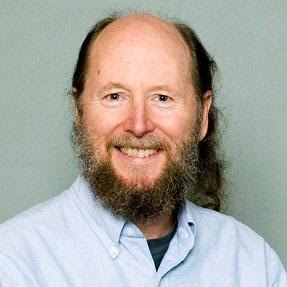
Dr. Christyann Darwent is a professor of anthropology at UC Davis. She is originally from Calgary, where she completed her undergraduate degree in archaeology and undertook her first of several field seasons in the Canadian High Arctic 30 years ago. After receiving her M.A. at Simon Fraser University in Vancouver, and a Ph.D. from the University of Missouri, she started her career at UC Davis in 2001. Since then, she has conducted NSF-sponsored archaeological excavations in Kotzebue Sound, Alaska and Inglefield Land, Greenland. For the past decade her lab has also been conducting archaeological research near the Native village of Shaktoolik in Norton Sound, Alaska. In addition to studies of past subsistence practices and social organization among Inuit, Inughuit, Inupiaq, and Yup’ik occupants of the Arctic over the past 1000 years, she has published on the history of Inuit sled dogs using ancient and modern DNA.

This event is co-sponsored by the Department of Anthropology and the Archaeological Research Facility (ARF).

LOCAL NEWS

UToronto / UC Berkeley Urbanist Karen Chapple Featured on KQED Forum

Dr. Karen Chapple, director of the School of Cities at the University of Toronto, was a featured guest on an episode of KQED Forum that aired last week. Professor Chapple, who studies economic development, housing, and inequality in North American cities, was invited to address the future of downtown San Francisco following the recent collapse in demand for office space. In a perspective informed by Toronto’s similar housing issues, she discussed challenges facing the conversion of old office buildings to housing, as well as issues of broader regional planning currently facing the greater Bay Area.

In addition to her appointment at the University of Toronto, Dr. Chapple is a professor emerita of city and regional planning at UC Berkeley’s College of Environmental Design. She has served as an advisor to Hildebrand Fellow Taesoo Song, who is studying the effects of Ontario’s Non-Resident Speculation Tax on immigrant communities in Toronto.

NEWS FROM CANADA

Indigenous Canadians lead country’s green energy boom

Canada is well-known as among the world’s largest energy economies, with the sector forming over 10% of the country’s GDP. At the same time, the country is globally recognized as an advocate for climate change solutions. While Canada’s energy industry has traditionally been dominated by oil and gas, both ordinary Canadians and their leaders have recently prioritized greening the sector. Earlier this year, Prime Minister Trudeau announced a national net-zero emissions by 2050, and thanks to both strong government support and public interest, Canada has seen an explosion of green energy projects in recent years.

What’s less well known is that much of this “green” sea change is being led by Indigenous communities across the nation. Over the last few years, Native entities have become key investors in this field. According to a 2020 report by advocacy group Indigenous Clean Energy Social Enterprise (ICE), Indigenous groups have meaningful involvement in over 197 medium-to-large projects across the country, a number that’s only grown in the last three years. These investments are now so substantial that ICE estimates that Indigenous groups have some level of ownership or defined benefit agreement for over 20% of Canada’s energy infrastructure.

This heavy investment by band governments into renewables isn’t accidental. It addresses two key priorities for these communities, and it comes at a time when their interests dovetail with Federal policies around the environment and Reconciliation. For one, these projects advance with the values of sustainability and environmental stewardship that Indigenous peoples have long espoused. But these projects also advance their goals of sovereignty and economic self-reliance. Indigenous communities are increasingly pushing for greater control over new projects on their lands. For many, this includes a partial stake in new infrastructure, if not outright ownership, in lieu of the employment agreements or financial compensation typical in past projects.

A recent Canadian Studies Hildebrand Fellow, Aaron Gregory, received research funding to study one of these projects in 2021. Gregory, now an assistant professor of Native American Studies at Cal Poly Humboldt, traveled to British Columbia to study a sea energy project developed through cooperation between the Scia’new First Nation and the provincial government. Typical of this push for Native self-empowerment, the project challenges a provincial energy monopoly and increases the band’s economic self-sufficiency, all while providing a better quality of life to local residents. As Indigenous communities develop greater experience in the sector, experts predict that similar projects will only increase their share of Canada’s energy production in coming years.

Image: St. Leon Wind Farm, Manitoba. Photo by Loozrboy on Wikimedia Commons.

EXTERNAL EVENTS

Antiquities and the Far Right in Settler Colonies: A View from Canada

Tuesday, March 21 | 5:30 pm PT | Online | RSVP

The “Freedom Convoy” protestors who occupied Ottawa and several Canadian locations in the winter 2022 raised millions of dollars via online platforms, most notably GiveSendGo. In mid-February 2022, a list of these donors was leaked to journalists and researchers, providing a glimpse at the motivations of those who give financial support to white nationalism. It also gives us a window into the uses and abuses of ancient-to-modern history by individuals (c)overtly supporting such movements, and, thereby, poses serious questions regarding the political impacts of historical illiteracy.

In this presentation, Dr. Katherine Blouin (associate professor of Ancient History and Classics, University of Toronto) will present the preliminary results of an ongoing research project dedicated to the use of historical references in the Freedom Convoy fundraising campaign.

This event is sponsored by the Archaeological Institute of America San Francisco as part of their Ellen And Charles S. La Follette Lecture Series.

A New Horizon of Opportunity: Canada in the Indo-Pacific

Thurs., March 30 | 6:00 pm PT | San Francisco, CA | Buy tickets

The Indo-Pacific is rapidly becoming the global center of economic dynamism and strategic challenge. Encompassing 40 economies, more than 4 billion people and more than one-third of all economic activity worldwide—what happens in the region will play a critical role in shaping the future of the international order.

Join the Consulate General of Canada at the Commonwealth Club in San Francisco for a thought-provoking discussion examining the role and significance of Canada’s enhanced engagement in building a peaceful, prosperous and sustainable Indo-Pacific region. Consul General Rana Sarkar and Dr. Yves Tiberghien, professor of political science, Konwakai Chair in Japanese Research, and director of the Center for Japanese Research at the University of British Columbia in Vancouver, Canada, will hold a fireside chat exploring this new horizon of opportunity, as well as the importance of the Bay Area as an international cultural, commercial and financial hub and vital gateway to the Indo-Pacific region. The discussion will be moderated by Ian McCuaig, chair of Asia-Pacific Affairs Forum for the Commonwealth Club of California.

Tickets are available to attend either in person or online.

Canadian Studies Program
213 Moses Hall #2308
Facebook  Twitter
Canadian Studies Program | Univ. of California, Berkeley213 Moses Hall #2308Berkeley, CA 94720

Wed: How acceptance changes LGB voting; Big Give results; More events

A newsletter from one of our fellow Canadian organizations in the Bay Area.


Canadian Studies Announcements

In This Issue:

Program News

  • Early results show another record Big Give – all thanks to you!

Upcoming Events

  • “The Lesbian, Gay and Bisexual Vote in a More Tolerant Canada”

External Events

  • “Post OPT/Practical Training Options Workshop for Students and Exchange Visitors”
  • “The Future of Work: Attracting Talent in a Post-Pandemic World”
  • “The Future of AI with Dr. Rich Sutton”
  • “Monique Wittig: Twenty Years Later / Vingt ans après”
  • “Antiquities and the Far Right in Settler Colonies: A View from Canada”
  • “A New Horizon of Opportunity: Canada in the Indo-Pacific”

Early Results Show Another Record Big Give – All Thanks to You!

Canadian Studies is pleased to announce that early results show that this year’s Big Give was another big success! With $24,300 already counted, and at least another $12,000 on the way, donors like you gave over $36,300! That’s about 14% of all Big Give donations for UC Berkeley’s entire Research Division!

Canadian Studies is a small unit with an outsized impact, thanks to the strength of our community. Your support sends an unmissable message about the value of Canadian Studies. We’re incredibly grateful for all you do, and look forward to sharing some of the exciting new initiatives your generosity is funding over the next few months!

Fun fact: Canada placed second for most international donors during Big Give!

UPCOMING EVENTS

If you require an accommodation to fully participate in an event, please let us know at least 10 days in advance.

The Lesbian, Gay and Bisexual Vote in a More Tolerant Canada

Wed., March 15 | 12:30 pm PT | 223 Philosophy | RSVP

Research on the political preferences of lesbian, gay and bisexual (LGB) voters shows that they are more progressive than heterosexuals. However, few studies consider differences between heterosexual, gay/lesbian, and bisexual men and women. Furthermore, little is known about how these preferences have changed as society has become more accepting of diverse sexualities.

This presentation analyzes original research on Canadian LGB voters’ political preferences a decade and a half after same-sex marriage was legalized. Consistent with prior research, gay men, and, to a lesser extent, bisexual men, are more left-wing than heterosexual men. A more novel finding is that bisexual women are the most left-wing group. Lesbian women are only slightly to the left of heterosexual women. While left-wing bisexual women are growing in number, the overall gap between LGB and heterosexual voters has remained stable across generations, because marriage narrows some of the preference gaps.

About the Speakers

Dr. Eric Guntermann is a John A. Sproul Research Fellow in the Canadian Studies Program, and a Banting Postdoctoral Fellow in the Department of Political Science at UC Berkeley. His research focuses on the representation of citizens’ preferences by governments, as well as public attitudes towards political parties and related voting behaviour.

Dr. Edana Beauvais is an assistant professor of political science at Simon Fraser University. Her research explores how inequalities shape communication and action, producing unequal political influence between different social group members.

This event is cosponsored by the Departments of Political Science and Sociology.

EXTERNAL EVENTS

Post OPT/Practical Training Options Workshop for Students and Exchange Visitors

Tuesday, March 14 | 4:00 pm | Online | RSVP

Are you a Canadian student at Berkeley planning to work in the U.S. after graduation? Are you wondering what your options may be after finishing your post-completion work authorization? Attend this workshop to understand what other visa options may be available to you as a next step after completing your F-1 OPT or J-1 post-completion Academic Training. This event will be hosted by Bernie Wolfsdorf, California State Bar Certified Immigration Law Specialist and past president of the American Immigration Lawyers Association. It will include details on the TN-Canada visa.

The Future of Work: Attracting Talent in a Post-Pandemic World

Tuesday, March 14 | 6:30 pm | Palo Alto, CA | RSVP

The Digital Moose Lounge and Trade and Invest British Columbia present a special panel discussing current trends in B.C.’s growing tech industry. As tech firms lay off workers and embrace flexible work-from-home options, they are also re-evaluating plans for job growth and corporate locations. Opportunities persist for B.C. to attract third-country nationals pinched by the U.S.’s restrictive immigration policies, tech workers who’ve recently been laid off (including Canadians who may be considering returning to Canada) and hiring / managing remote workers.

The panelists will consider trends in cross-border business planning and growth; how tech firms are leveraging cross-border opportunities to optimize their talent strategies; and current cross-border tax and immigration policies and considerations.

Panelists include The Honourable Brenda Bailey, Minister of Jobs, Economic Development, and Innovation for the Province of B.C., and two Canadian Studies board members: immigration attorney Pavan Dhillon, and Dr. Kathrine Richardson, an associate professor of urban and regional planning at San José State University. The panel will be moderated by Canadian Studies board chair David Stewart.

The Future of AI with Dr. Rich Sutton

Thursday, March 16 | 5:30 pm | Palo Alto, CA | RSVP

You are invited to join Bill Flanagan, President and Vice-Chancellor of the University of Alberta, and Cam Linke, CEO of the Alberta Machine Intelligence Institute (Amii), at a reception to learn about the future of artificial intelligence (AI) being advanced by the University of Alberta. Hear University of Alberta researcher Dr. Rich Sutton, pioneer of the field of Reinforcement Learning, Fellow of the Royal Society, and Amii’s Chief Scientific Advisor speak on the ‘Alberta Plan for AI’ and his upcoming research projects.

Monique Wittig: Twenty Years Later / Vingt ans après

March 17-18 | UC Berkeley | RSVP

On Friday 17 and Saturday 18 March, the UC Berkeley Department of French will mark the twentieth anniversary of the passing of the lesbian activist, writer and philosopher Monique Wittig (1935-2003), as well as the fiftieth anniversary of the publication of her Corps lesbien, with a two-part international conference: “Monique Wittig: Twenty Years Later / Monique Wittig : Vingt ans après.”

This workshop convenes an international group of scholars to discuss Wittig’s activism and the lesbian feminist philosophy developed by her circle in France and Quebec. Canadian participants will include Dr. Louis-Thomas Leguerrier and Loïs Crémier (Université de Montréal) and Félix L. Deslauriers (University of Ottawa). View the full roster of speakers and panels here.

This event is cosponsored by the Department of French and the Institute of Gender Studies at the University of Geneva, with support from the Canadian Studies Program. Organizational leadership for the conference was provided by Canadian Studies faculty affiliate Dr. William M. Burton (French).

All events (except the film screenings) are free and open to the public and will be simulcast on Zoom. Questions about the Berkeley side of the conference? Contact Professor Burton at wmb@berkeley.edu.

Antiquities and the Far Right in Settler Colonies: A View from Canada

Tuesday, March 21 | 5:30 pm PT | Online | RSVP

The “Freedom Convoy” protestors who occupied Ottawa and several Canadian locations in the winter 2022 raised millions of dollars via online platforms, most notably GiveSendGo. In mid-February 2022, a list of these donors was leaked to journalists and researchers, providing a glimpse at the motivations of those who give financial support to white nationalism. It also gives us a window into the uses and abuses of ancient-to-modern history by individuals (c)overtly supporting such movements, and, thereby, poses serious questions regarding the political impacts of historical illiteracy.

In this presentation, Dr. Katherine Blouin (associate professor of Ancient History and Classics, University of Toronto) will present the preliminary results of an ongoing research project dedicated to the use of historical references in the Freedom Convoy fundraising campaign.

This event is sponsored by the Archaeological Institute of America San Francisco as part of their Ellen And Charles S. La Follette Lecture Series.

A New Horizon of Opportunity: Canada in the Indo-Pacific

Thurs., March 30 | 6:00 pm PT | San Francisco, CA | Buy tickets

The Indo-Pacific is rapidly becoming the global center of economic dynamism and strategic challenge. Encompassing 40 economies, more than 4 billion people and more than one-third of all economic activity worldwide—what happens in the region will play a critical role in shaping the future of the international order.

Join the Consulate General of Canada at the Commonwealth Club in San Francisco for a thought-provoking discussion examining the role and significance of Canada’s enhanced engagement in building a peaceful, prosperous and sustainable Indo-Pacific region. Consul General Rana Sarkar and Dr. Yves Tiberghien, professor of political science, Konwakai Chair in Japanese Research, and director of the Center for Japanese Research at the University of British Columbia in Vancouver, Canada, will hold a fireside chat exploring this new horizon of opportunity, as well as the importance of the Bay Area as an international cultural, commercial and financial hub and vital gateway to the Indo-Pacific region. The discussion will be moderated by Ian McCuaig, chair of Asia-Pacific Affairs Forum for the Commonwealth Club of California.

Tickets are available to attend either in person or online.

Canadian Studies Program
213 Moses Hall #2308
Facebook  Twitter
Canadian Studies Program | Univ. of California, Berkeley213 Moses Hall #2308Berkeley, CA 94720

An appeal from our director; Hildebrand funding deadline; Tech in BC

A newsletter from one of our fellow Canadian organizations in the Bay Area.


Canadian Studies Announcements

In This Issue:

General Updates

  • A message from our director about Big Give

Upcoming Events

  • “The Lesbian, Gay and Bisexual Vote in a More Tolerant Canada”

Program News

  • Advisory Board member Chris Lorway appointed new president and CEO of Banff Centre

Research Opportunities

  • Summer Hildebrand Fellowship deadline is this Friday!

External Events

  • “The Future of Work: Attracting Talent in a Post-Pandemic World”
  • “How Vancouver Became a Global City”

A Message from Our Director

Dear friends,

This Thursday is Big Give, Berkeley’s annual day of giving. It’s one of the most important days of the year for Canadian Studies. Our donors fund the heart of our program, allowing us to operate one of the most vibrant and active programs of our kind in the United States.

This year is especially important, as your donation will help us pilot a few exciting new projects. You’ll help provide more support to our faculty affiliates across the state through expanded research grants; nurture the next generation of Canadianists with new undergraduate research funding; and sponsor community outreach through public events, like our upcoming conference examining the influence of the tech industry on several major North American cities.

At Canadian Studies, we aim to inspire curiosity about America’s northern neighbour. For over 40 years, we’ve done so in partnership with friends like you – friends who share our vision of making Berkeley a hub for Canadian research not just for the Bay Area, but for the entire country.

Your donation affirms the value of that mission.

On behalf our students, faculty, and friends, my thanks in advance for your support.

Sincerely,

Irene Bloemraad

Program Director

Thomas G. Barnes Chair in Canadian Studies

UPCOMING EVENTS

If you require an accommodation to fully participate in an event, please let us know at least 10 days in advance.

The Lesbian, Gay and Bisexual Vote in a More Tolerant Canada

Wed., March 15 | 12:30 pm PT | 223 Philosophy | RSVP

Research on the political preferences of lesbian, gay and bisexual (LGB) voters shows that they are more progressive than heterosexuals. However, few studies consider differences between heterosexual, gay/lesbian, and bisexual men and women. Furthermore, little is known about how these preferences have changed as society has become more accepting of diverse sexualities.

This presentation analyzes original research on Canadian LGB voters’ political preferences a decade and a half after same-sex marriage was legalized. Consistent with prior research, gay men, and, to a lesser extent, bisexual men, are more left-wing than heterosexual men. A more novel finding is that bisexual women are the most left-wing group. Lesbian women are only slightly to the left of heterosexual women. While left-wing bisexual women are growing in number, the overall gap between LGB and heterosexual voters has remained stable across generations, because marriage narrows some of the preference gaps.

About the Speakers

Dr. Eric Guntermann is a John A. Sproul Research Fellow in the Canadian Studies Program, and a Banting Postdoctoral Fellow in the Department of Political Science at UC Berkeley. His research focuses on the representation of citizens’ preferences by governments, as well as public attitudes towards political parties and related voting behaviour.

Dr. Edana Beauvais is an assistant professor of political science at Simon Fraser University. Her research explores how inequalities shape communication and action, producing unequal political influence between different social group members.

This event is cosponsored by the Departments of Political Science and Sociology.

Advisory Board Member Chris Lorway Appointed New Director of Banff Centre

The Banff Centre for Arts and Creativity recently announced that Canadian Studies board member Chris Lorway has been appointed as the 8th president and CEO of the 90-year-old performing and fine arts institution.

Chris was confirmed unanimously by the school’s Board of Governors following an international search. The Board lauded his deep connections throughout the global arts community, as well as his work promoting Canadian artists in his current role as executive and artistic director at Stanford Live.

Prior to his work at Stanford, Chris held leadership roles at Toronto’s Massey Hall and Roy Thomson Hall. He has also worked with or consulted for numerous other major cultural organizations around the world, including New York’s Lincoln Center, Carnegie Hall, the Royal Shakespeare Company, and the San Francisco Opera.

The Banff Centre was founded in 1933 and is located in the heart of Banff National Park in the Canadian Rockies. The institution is affiliated with the University of Calgary, and offers arts education in dozens of disciplines. It also it hosts numerous public performances, festivals, and exhibitions throughout the year.

Chris will officially assume his new position on April 10. The Canadian Studies Program extends our warmest congratulations to him, and wishes Chris the best in his new role.

RESEARCH OPPORTUNITIES

Summer Hildebrand Fellowship Deadline is This Friday!

The deadline to submit an application for a Summer 2023 Edward E. Hildebrand Graduate Research Fellowship is fast approaching! Applications are open to UC Berkeley graduate students in any discipline whose work focuses primarily or comparatively on Canada. This fellowship is meant to cover direct research costs, with an award maximum of $5,000.

The application deadline for Summer 2023 projects is this Friday, March 10, 2023.

Please visit our website for more information and full eligibility criteria, and help us share this information with your friends, students, and networks!

EXTERNAL EVENTS

The Future of Work: Attracting Talent in a Post-Pandemic World

Tuesday, March 14 | Palo Alto, CA | 6:30 pm | RSVP

The Digital Moose Lounge and Trade and Invest British Columbia present a special panel discussing current trends in B.C.’s growing tech industry. As tech firms lay off workers and embrace flexible work-from-home options, they are also re-evaluating plans for job growth and corporate locations. Opportunities persist for B.C. to attract third-country nationals pinched by the U.S.’s restrictive immigration policies, tech workers who’ve recently been laid off (including Canadians who may be considering returning to Canada) and hiring / managing remote workers.

The panelists will consider trends in cross-border business planning and growth; how tech firms are leveraging cross-border opportunities to optimize their talent strategies; and current cross-border tax and immigration policies and considerations.

Panelists include The Honourable Brenda Bailey, Minister of Jobs, Economic Development, and Innovation for the Province of B.C., and two Canadian Studies board members: immigration attorney Pavan Dhillon, and Dr. Kathrine Richardson, an associate professor of urban and regional planning at San José State University. The panel will be moderated by Canadian Studies board chair David Stewart.

How Vancouver Became a Global City

On-demand | Online | Watch here

Vancouver has transformed itself from a small, homogeneous city largely dependent on exports of timber, minerals and fish into a modern city with a diverse population and economy. From Expo ’86 to the 2010 Olympics to the upcoming 2026 World Cup, Vancouver has been a success story in selling itself to the world. But the city faces enormous challenges dealing with the consequences of that success, including sky-high housing costs, crowded roads and crime.

The speaker, Frances Bula, covers Vancouver and the region for the Globe & Mail, and is an adjunct professor at the University of British Columbia’s School of Journalism. She has written about urban issues and city politics in B.C.’s Vancouver region since 1994, covering a broad range of issues.

This talk is part of the “Why Canada Matters” speaker series hosted by Western Washington University’s Center for Canadian-American Studies. It is co-sponsored by WWU’s Departments of Economics and History; the Ross Distinguished Visiting Professor Fund; and the College of Humanities and Social Sciences. It is delivered in partnership with the WWU Alumni Association.

Canadian Studies Program
213 Moses Hall #2308
Facebook  Twitter
Canadian Studies Program | Univ. of California, Berkeley213 Moses Hall #2308Berkeley, CA 94720

A quilt’s journey from Canada to Berkeley; What Canada can teach California about growth

A newsletter from one of our fellow Canadian organizations in the Bay Area.


Canadian Studies Announcements

In This Issue:

Upcoming Events

  • “The Lesbian, Gay and Bisexual Vote in a More Tolerant Canada”

Program News

  • Opinion: California can take lessons from Canada if it wants to promote growth, says program director Irene Bloemraad
  • Reminder: Big Give is next Thursday!

Local News

  • Century-old quilt found in East Bay dumpster is heirloom for rural Ontario town

Research Opportunities

  • Last call for papers: ACSUS 26th Biennial Conference
  • Summer Hildebrand Fellowship deadline is next week!

External Events

  • I-House Canadian DiversiTea and Coffee Hour

UPCOMING EVENTS

If you require an accommodation to fully participate in an event, please let us know at least 10 days in advance.

The Lesbian, Gay and Bisexual Vote in a More Tolerant Canada

Wed., March 15 | 12:30 pm PT | 223 Philosophy | RSVP

Research on the political preferences of lesbian, gay and bisexual (LGB) voters shows that they are more progressive than heterosexuals. However, few studies consider differences between heterosexual, gay/lesbian, and bisexual men and women. Furthermore, little is known about how these preferences have changed as society has become more accepting of diverse sexualities.

This presentation analyzes original research on Canadian LGB voters’ political preferences a decade and a half after same-sex marriage was legalized. Consistent with prior research, gay men, and, to a lesser extent, bisexual men, are more left-wing than heterosexual men. A more novel finding is that bisexual women are the most left-wing group. Lesbian women are only slightly to the left of heterosexual women. While left-wing bisexual women are growing in number, the overall gap between LGB and heterosexual voters has remained stable across generations, because marriage narrows some of the preference gaps.

About the Speaker

Dr. Eric Guntermann is a John A. Sproul Research Fellow in the Canadian Studies Program, and a Banting Postdoctoral Fellow in the Department of Political Science at UC Berkeley. His research focuses on the representation of citizens’ preferences by governments, as well as public attitudes towards political parties and related voting behaviour.

Dr. Edana Beauvais is an assistant professor of political science at Simon Fraser University. Her research explores how inequalities shape communication and action, producing unequal political influence between different social group members.

This event is cosponsored by the Departments of Political Science and Sociology.

PROGRAM NEWS

Opinion: California Can Take Lessons from Canada if It Wants to Promote Growth, Says Program Director Irene Bloemraad

On Sunday, the Los Angeles Times published an opinion piece by Canadian Studies Program director Irene Bloemraad. Titled “No, California Doesn’t Have a Population Crisis“, the piece addresses popular, but misdirected, narratives about an “exodus” of out California. Many pundits have declared that the Golden State has lost its shine, soon be eclipsed by up-and-coming Sun Belt rivals like Texas. However, Bloemraad argues that these explanations don’t capture the whole story, and offers some solutions out of the Canadian policy handbook.

Professor Bloemraad, a sociologist specializing in migration and citizenship, first examines the facts surrounding the “exodus” story. California recently reported two consecutive years of population decline, and lost a US house seat for the first time ever. The state faces a declining birthrate and aging population, which make it unlikely that natural growth will sustain it going forward. Many counties are already facing population loss; however, contrary to popular anecdotes about citizens fleeing high-tax coastal areas, these declines are proportionally worst in rural northern and mountain communities that have been essentially drained of young, working-age people.

In the face of these facts, Bloemraad argues that immigration will be the key to keeping California’s economy strong. The state could soon face a situation like Canada’s, where immigrants accounted for 85% of labor force growth in the 2010s. As more wealthy countries face population stagnation, there could be increased global competition for migrant labour in coming years. Luckily, California remains an attractive destination of international migrants. Following two years of essentially zero migration to the US during COVID-19, immigration numbers are again increasing. This is good news for the state, as immigrants are more likely to be working than native-born citizens.

Of course, this doesn’t necessarily benefit the whole state: immigrants tend to cluster in large metros, like the San Francisco Bay Area. Bloemraad suggests that the state could follow the Canadian model of offering new immigrants incentives to settle in depopulating rural communities. These programs would not only benefit long-time residents by injecting new dynamism into stagnant local economies; they could also offer new residents with better opportunities than large cities plagued by housing shortages and a high cost of living. Such policies will be essential to promoting healthy, balanced growth in the state going forward.

Reminder: Big Give is Next Thursday!

Just ten days left until the big day! On March 9, show your support for Canadian Studies by making a donation on Big Give, Berkeley’s annual day of giving. Almost all of our funding comes from donors like you: your generosity supports our public programs and student scholars, from our monthly events to our new undergraduate research grants, right down to this newsletter! So mark your calendars, and see you March 9!

LOCAL NEWS

Century-old Quilt Found in East Bay Dumpster is Heirloom for Rural Ontario Town

The saying “one man’s trash is another man’s treasure” has again proven true, when a Berkeley woman’s unexpected find in a local dumpster turned out to be a lost heirloom from a tiny Ontario town, nearly 2,500 miles away. The object, a nearly century-old antique quilt, was returned home last month, where it created a flurry of interest among local residents eager to connect it to their town’s and families’ histories.

As reported in Berkeleyside, Berkeley resident and author Leslie Buck found the quilt on top of a pile of garbage while taking a walk in 2021. She took it to a local quilt shop for examination, where workers discovered that the inside was covered with around 240 embroidered names and the words “Echo Bay United Church 1930”. Such quilts were often made as church fundraisers, with churchgoers paying a small fee to have their names embroidered on the back.

Buck traced the quilt back to the small rural township of Echo Bay, Ontario, near Sault Ste. Marie. With a population of just 1,600, the town is best known for hosting the world’s largest loonie, a tribute to former resident Robert-Ralph Carmichael who designed the iconic coin.

Buck immediately contacted the church, which was astonished and excited by the discovery of the 93-year-old quilt so far from home. Buck arranged to return the quilt to Canada, where it arrived safely last month. Echo Bay residents were delighted to find the names of relatives, local notables, and even MP’s on the quilt. Many were excited to make personal connections to the names, and share anecdotes about their lives.

It remains a mystery how the quilt ended up in California. Locals suspect that it was taken west by a resident who moved to the United States during the Depression. Local historians are hopeful that as they learn more about the people listed on the quilt, they may uncover more about this long-ago Bay Area Canadian.

In the meantime, the quilt will likely be donated to the Echo Bay Museum, where its extraordinary journey will be recorded for future generations.

Photograph of quilt by Leslie Buck, reproduced in Berkeleyside.

RESEARCH OPPORTUNITIES

Last Call for Papers: ACSUS 26th Biennial Conference and Student Colloquium

Main conference deadline: March 1, 2023

Student submission deadline: April 15, 2023

The deadline to submit papers for the Association for Canadian Studies in the United States (ACSUS) 26th Biennial Conference is this Wednesday, March 1.

The conference is scheduled for November 16-19, 2023 at the Hyatt Regency Crystal City in Washington, D.C. All proposals with a significant Canadian focus are eligible for submission. ACSUS welcomes papers and panel proposals from students, professors, independent scholars, and practitioners on all diverse and critical perspectives related to the conference theme, “Canada: Near and Far”.

ACSUS also welcomes strong proposals from students at both the graduate and undergraduate level, individual submissions as well as group proposals. Students accepted to the colloquium will receive funding support from ACSUS in the form of: 1) $125 USD to cover registration and a 2-year ACSUS membership and 2) $1,000 USD to assist with travel and accommodation costs.

Learn more about applying to the conference or student colloquium here.

Summer Hildebrand Fellowship Deadline is Next Week!

The Canadian Studies Program is currently accepting applications for the Edward E. Hildebrand Graduate Research Fellowship for Summer 2023. The application is open to UC Berkeley graduate students in any discipline whose work focuses primarily or comparatively on Canada. This fellowship is meant to cover direct research costs, with an award maximum of $5,000.

The application deadline for Summer 2023 projects is Friday, March 10, 2023.

Please visit our website for more information and full eligibility criteria, and help us share this information with your friends, students, and networks!

EXTERNAL EVENTS

I-House Canadian DiversiTea and Coffee Hour

Wednesday, March 1 | Great Hall, I-House | 8:30 pm

Canadian students at UC Berkeley (or those with an interest in Canada) are invited to join their fellow Berkeley Canadians for a social hour Wednesday evening in I-House’s Great Hall. Organized by I-House’s Canadian residents, this special event is a great opportunity to get to know your fellow classmates while you enjoy some specialty Canadian drinks and snacks!

Canadian Studies Program
213 Moses Hall #2308
Facebook  Twitter
Canadian Studies Program | Univ. of California, Berkeley213 Moses Hall #2308Berkeley, CA 94720

Check out these upcoming events!

A newsletter from one of our fellow Canadian organizations in the Bay Area.


Canadian Studies Announcements

In This Issue:

Upcoming Events

  • “The Lesbian, Gay and Bisexual Vote in a More Tolerant Canada”

External Events

  • Friends of Canada Reception
  • Canadian Heritage Night: Habs vs. Sharks
  • “Converging Empires – Pacific Histories of the West”

UPCOMING EVENTS

If you require an accommodation to fully participate in an event, please let us know at least 10 days in advance.

The Lesbian, Gay and Bisexual Vote in a More Tolerant Canada

Wed., March 15 | 12:30 pm PT | 223 Philosophy | RSVP

Research on the political preferences of lesbian, gay and bisexual (LGB) voters shows that they are more progressive than heterosexuals. However, few studies consider differences between heterosexual, gay/lesbian, and bisexual men and women. Furthermore, little is known about how these preferences have changed as society has become more accepting of diverse sexualities.

This presentation analyzes original research on Canadian LGB voters’ political preferences a decade and a half after same-sex marriage was legalized. Consistent with prior research, gay men, and, to a lesser extent, bisexual men, are more left-wing than heterosexual men. A more novel finding is that bisexual women are the most left-wing group. Lesbian women are only slightly to the left of heterosexual women. While left-wing bisexual women are growing in number, the overall gap between LGB and heterosexual voters has remained stable across generations, because marriage narrows some of the preference gaps.

About the Speaker

Dr. Eric Guntermann is a John A. Sproul Research Fellow in the Canadian Studies Program, and a Banting Postdoctoral Fellow in the Department of Political Science at UC Berkeley. His research focuses on the representation of citizens’ preferences by governments, as well as public attitudes towards political parties and related voting behaviour.

Dr. Edana Beauvais is an assistant professor of political science at Simon Fraser University. Her research explores how inequalities shape communication and action, producing unequal political influence between different social group members.

EXTERNAL EVENTS

Friends of Canada Reception

Wednesday, Feb. 22 | 5:00 pm | Sacramento, CA | RSVP

The Consulate General of Canada in California is hosting a reception at the California Museum in Sacramento to celebrate the rich relationship between California and Canada. Please join them for networking, drinks, and appetizers. Attendees can enter a drawing to win two Economy Class roundtrip tickets for travel to any Air Canada scheduled destination in North America!

Canadian Heritage Night: Habs vs. Sharks

Tuesday, Feb. 28 | 5:30 pm | San José, CA | Buy tickets

The Digital Moose Lounge and Consulate General of Canada in San Francisco and Silicon Valley invite you to join them for a special Canadian Heritage Game Night! Get your hockey gear ready as the San Jose Sharks face off against the Montreal Canadiens. Tickets get you VIP access plus seating in a dedicated Canadian zone. Don’t miss this fun, family-friendly event!

Converging Empires – Pacific Histories of the West

On-demand | Online | Listen here

Last week, historian Andrea Geiger gave a virtual presentation at the University of Southern California on her recent book Converging Empires: Citizens and Subjects in the North Pacific Borderlands, 1867-1945. The book examines how inhabitants of the Pacific Northwest, particularly Indigenous people and Japanese immigrants, navigated a complex web of boundaries and identities. Professor Geiger is joined in conversation by Dr. Elizabeth Logan, associate director of the Huntington-USC Institute on California and the West.

Dr. Geiger is a professor emerita of history at Simon Fraser University. She gave a presentation on this book to Canadian Studies at Berkeley last semester. For those who were unable to attend her event, or are interested in learning more, we highly recommend listening to this recorded conversation.

Canadian Studies Program
213 Moses Hall #2308
Facebook  Twitter
Canadian Studies Program | Univ. of California, Berkeley213 Moses Hall #2308Berkeley, CA 94720