Category Archives: World War One Centennial Commission

WWI DISPATCH February 19, 2019

From the World War One Centennial Commission.


View this in your browser

Dispatch header 800 - 061217

February 19, 2019

Letters home from African American soldiers share details of their separate and unequal treatment in World War I

African American letter

During Black History Month, we have been bringing forward a number of little-known, unique stories about the experiences of African Americans in World War I. Today, we offer a remarkable article, created by Mr. Calvin Mitchell, that gives a broad, insightful overview of the experiences of those 360,000 African Americans who served — based on their letters home. Mr. Mitchell is Research Associate, and former Assistant Curator of Philately, at the Smithsonian’s National Postal Museum. Click here to read the entire thoughtful article on the African American experience in WWI.


Making of the Novel “Anumpa Warrior: Choctaw Code Talkers of World War I”

Sarah Elisabeth Sawyer

Sarah Elisabeth Sawyer had always known the story of the handful of Choctaws who used the tribal language to save lives and help bring a swifter end to the First World War. However, over the years she discovered that this “fantastic and monumental part of our American and military history was still unknown to the public.”  So she decided to write the novel Anumpa Warrior: Choctaw Code Talkers of World War I. to make the story more accessible. But when Sarah began educating herself on WWI doing research for the novel, she quickly “learned how little I knew about it beyond the black and white Sergeant York movie, a staple in my home when I was growing up.”  Click here to read more about the research that spanned years and continents to help bring the story of the Choctaw Code Talkers alive again in 21st Century America.


A Coast Guardsman At Sea in WWI

Foulkes

A Coast Guardsman’s photos and letters home provide a ‘from-the-deckplates’ view of patrol service in the Atlantic, in this article from Naval History Magazine by Commander Stephen Surko, USN (Ret).  Frederick Richard Foulkes, just four days after enlisting in the U.S. Coast Guard in 1917, wrote home to ask his family to send him his new camera. Thereafter, Foulkes wrote frequently to his family in Philadelphia and made ample use of the camera he had requested—the result being a rich trove of letters and photographs. Click here to read excerpts from his letters, along with a sampling of his dozens of photographs, that provide an up-close look a century later at wartime duty on board a heralded cutter of Squadron 2, Division 6, Atlantic Fleet Patrol Forces.


Troopship Rescue from Fire Island!

SIgnal flag to grounded troop ship

In the early morning of January 1st 1919 Surfman Roger Smith reported sighting the U.S.S. Northern Pacific a few miles southeast of Fire Island, Coast Guard Station #83. Unbeknownst to Smith, the initial report was the beginning of an 18 day saga that remains one of the most amazing, yet often forgotten, rescue stories of World War I. Harry Kidd is a volunteer at the U.S. National Archives working on textual and photographic digitization projects, and a former Navy photographer.  He came across this story while researching military photographers. Click here to read the entire story of why the troopship carrying wounded soldiers back from Europe got stuck on a Fire Island sandbar, and how a potential disaster was averted.


Harder than the War: Disabled Doughboys Fight for Recognition

Wounded

Dr. Ed Lengel, noted author & historian, explores on his blog some of the post- World War I reminiscences of veteran Harry Zander, who in his memoir of wartime and postwar experiences, Thirteen Years in Hell, published in 1933, chronicled what Lengel describes as the  “many thousands” of disabled WWI veterans who “would die young from war-related illnesses in shelters, flophouses and small hospitals, their sacrifices unacknowledged and forgotten.” Click here to read the entire article regarding how America’s WWI wounded and disabled too frequently became casualties a second time in the postwar nation.


From the World War I Centennial News Podcast

A Teacher on Teaching WWI:
Michael Sandstrom

Michael Sandstrom

On February 1st’s edition of the WWI Centennial News Podcast, Episode 108, host Theo Mayer spoke with high school teacher and National History Day’s Legacies of World War I participant Michael Sandstrom about his experiences teaching history, especially World War I history, to the current generation of high school students. Sandstrom is a Social Science teacher at Chadron High School in northwestern Nebraska, about 20 minutes from the South Dakota border. Click here to read a transcript of the entire interview.

The Civil War and Beyond:
the Connection Between Reconstruction and the Great War

Carol Mosley Braun

On February 8th’s edition of the World War I Centennial News Podcast, Episode 109, host Theo Mayer observes that in telling the story of African Americans in World War I, in order to put the history into context, we really need to go back an additional generation to what is known as the Reconstruction Era. With the help of Senator Carol Mosley Braun (right), this episode explores how changes to the U.S. Constitution and in American society set the stage for African Americans to serve gallantly in World War I. Click here to read the transcript of this episode of the podcast.


WWI Centennial NEWS Podcast

Podcast Logo New

The WW1 Centennial News Podcast is about WW1 THEN: 100 years ago this week, and it’s about WW1 NOW: News and updates about the centennial and the commemoration.  Available on our web siteiTunesGoogle Play, PodbeanTuneInStitcher Radio on Demand.  Spotify  listen on Youtube. New – Comment and ask questions via twitter @TheWW1podcast

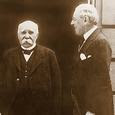
Georges Clemenceau and Woodrow Wilson

Episode #110
Highlights: The League of Nations

Host: Theo Mayer

Wilson Explains The League of Nations – Host | @02:10

A Seat at the Table: Japan – Host | @14:55

Turmoil at the Conference – Mike Shuster | @18:45

Formation of the American Legion – David Rehbein | @23:25

James Reese Europe – Jason Moran | @30:05

Fort Des Moines & Black Medical Officer Training – Doug Fisher | @35:55

Speaking WWI: GI – Host | @43:10

Articles & Posts: The Dispatch – Host | @45:20


Literature in WWI This Week

Wwrite Blog Logo

First I Said No

By Mary L. Doyle

When Army veteran Mary L. Doyle was first asked to help write the 100-year-old history of Ft. George G. Meade, a history that began with WWI, she said no.

Primarily a fiction writer, Doyle had only co-authored two works of nonfiction: memoirs of African American women in uniform because she felt compelled to bear witness their untold raw, honest experiences. When she did agree to write about Ft. Meade, she discovered that she had developed a knack for uncovering what had been forgotten.

In this post, Doyle discusses the journey she took to bring 100 years of a rich, diverse history together, a journey in which she discovered African American doctors who volunteered during WWI. Read Doyle’s Ft. Meade adventure at WWrite this week!


Official WWI Centennial Merchandise

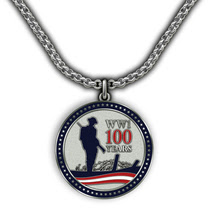
Charm Pendant

Charm Pendant

Proudly wearing the WWI 100 Years charm pendant is a fantastic way to let folks serving in the military, along with veterans, know that we still honor those who served our country one hundred years ago. This satin nickel charm, worn on a necklace or bracelet, is a simple, yet meaningful, way to display your pride and remember those who sacrificed throughout our nation’s great history. A portion of the proceeds from the sale of this item goes towards funding the building of the national World War One Memorial in Washington, D.C.

A Certificate of Authenticity as Official Merchandise of the United States World War One Centennial is included.

This and many other items are available as Official Merchandise of the United States World War One Centennial.


African American Soldiers


Tolkien

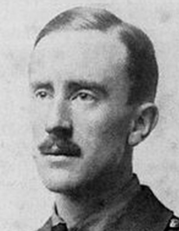
On the heels of his enormously successful World War I documentary They Shall Not Grow Old, director Peter Jackson has released the first trailer for his upcoming J. R. R. Tolkien biographic film. The new movie will explore how the horrors of World War I that Tolkien (in his British army uniform above) witnessed were eventually channeled into “a fantastical adventure story about good and evil, destiny and prophecy,” which we know as his Lord of the Rings trilogy. In a recent article on the Sovereign Nations web site, author Desmond Berg looks at the effects of the Great War on Tolkien and his lifelong friend author, C.S. Lewis, and how “both used the experience of war to shape their Christian imaginations” and produce fantastic works of literature. Click here to view the trailer for the new Tolkien movie, and read the insightful article on how World War I is still shaping popular culture today.


you can help - shop using amazon smile


Poppy Seed Side Ad


Doughboy MIA


Pershing Sponsors

Pershing level sponsors post 11.18


email us


websitefacebooktwitter


Joseph Thomas Hughes

A Story of Service from the Stories of Service section of ww1cc.org

Joseph Thomas Hughes

Submitted by: Gerald Hathaway (Grandson} 

Joseph Thomas Hughes born around 1895. Joseph Hughes served in World War 1 with the United States Army. The enlistment was in 1917 and the service was completed in 1919.

Story of Service

Joseph Thomas Hughes (1895 – 1933)

By Gerald Hathaway, October 9, 2018

It was a hundred years ago today, or maybe tomorrow, that Pvt. Joseph Thomas Hughes was wounded in action, in France. If today is that anniversary, the casualty was incurred while attacking the Germans for control of Hill 269 in the Meuse-Argonne, 80 kilometers east of Reims, not far from the Belgian and Luxembourg borders. If the hundredth anniversary of his wound is instead tomorrow, he was wounded while successfully defending Hill 269 from being retaken by the Germans. The uncertainty of the date of the wound is due to conflicting reports. After all: the fog of war.

Joseph Thomas Hughes was born in Philadelphia in 1895, of Irish immigrant parents, who met in Philadelphia. His father, Thomas Hughes, died when Joseph was nine years old. When America joined the Great War, Joseph, then not quite 22, said goodbye to Philadelphia and enlisted, on May 5, 1917, reporting at Fort Slocum, in New Rochelle, New York. He was assigned to the newly formed First Engineers, First Division, American Expeditionary Forces. On August 7, he boarded the SS Finland in Hoboken, New Jersey and set sail for Saint-Nazaire, France, arriving August 20, 1917. His ship’s convoy fended off U-Boat attacks.

Read Joseph Thomas Hughes’ entire Story of Service here.

Submit your family’s Story of Service here.


The League of Nations: Episode #110

From the World War One Centennial Commission.


View as a webpage

WW1 Centennial News Logo

The League
of Nations

Episode #110

Georges Clemenceau and Woodrow Wilson

Georges Clemenceau and Woodrow Wilson

The League of Nations

Highlights

Episode #110

Host: Theo Mayer

  • Wilson Explains The League of Nations – Host | @02:10
  • A Seat at the Table: Japan – Host | @14:55
  • Turmoil at the Conference – Mike Shuster | @18:45
  • Formation of the American Legion – David Rehbein | @23:25
  • James Reese Europe – Jason Moran | @30:05
  • Fort Des Moines & Black Medical Officer Training – Doug Fisher | @35:55
  • Speaking WWI: GI – Host | @43:10
  • Articles & Posts: The Dispatch – Host | @45:20

Listen To The Podcast NOW

All about WW1 THEN and NOW while you drive, work or play.


Coming up next week:

African American Nurses that Served

369th Experience concert

and much more…

Subscribe on iTunes

Subscribe on iTunes and listen anytime on your mobile device.
Also available on Google Play  Podbean TuneIn Stitcher Radio On Demand , Spotify and now you can listen on Youtube
For smart speakers say: “play W W One Centennial News Podcast”


Join live recording

Register to join us as we record and produce the show. Ask questions of the guests. Let us know what you think. Get the link list right during the show. Most Wednesdays at Noon, Eastern.

New Twitter Handle for Podcast:

 @TheWW1Podcast

Use our research and publish the stories. Join our live recording sessions and get ALL THE LINKS TO STORY SOURCES before we publish the podcast.


WW1CC logo 400 wide

Pershing level sponsors post 11.18

WWI DISPATCH February 12, 2019

From the World War One Centennial Commission.


View this in your browser

Dispatch header 800 - 061217

February 12, 2019

NCPC approves image

NCPC Approves Preliminary Plans for National World War I Memorial in DC

At its February 7 meeting the National Capital Planning Commission (NCPC) approved preliminary site development plans for the National World War I Memorial submitted by the National Park Service in collaboration with the World War I Centennial Commission. The memorial, proposed for downtown Washington’s Pershing Park, will honor the service of members of the United States Armed Forces in World War I. The primary memorial components are a freestanding memorial wall with a sculptural element on one side and an inscription on the other, and a pool with a central plaza. The Commission found that the design of the memorial wall’s inscription side is improved and noted that it is reminiscent to the park’s original fountain. Click here to read more about the NCPC findings, and how they move the Memorial closer to completion.

National Park Service

Meanwhile, The National Park Service (NPS) is seeking comments on the proposed enhancements to Pershing Park for the national World War I Memorial. The project, including a comparison of the two alternatives, is available online at http://go.nps.gov/WWI-DEA. The public comment period is open February 6 – 27, 2019. The comment period, which originally ended on January 18, has been extended due to the partial government shutdown. Click here to find out more about how the public can comment online through the NPS Planning, Environment, and Public Comment (PEPC) website.


The World War I ‘Harlem Hell Fighters’

Harlem Hellfighters

It’s African-American History Month and a fitting time to recall the black soldiers of the New York National Guard’s 15th Infantry Regiment. 100 years ago, on Feb. 17, 1919, when those 2,900 soldiers came home as the “Harlem Hell Fighters” of the 369th Infantry Regiment, New York City residents, both white and black, packed the streets as they paraded up Fifth Avenue. Click here to read more about the big parade, and what it meant for the unit whose performance in battle, and band’s music, made dramatic impacts on America and the world.

Sometimes overlooked is the fact that of the 44 members of the Hellfighters’ band, 18 were recruited from Puerto Rico. James Reese Europe visited Puerto Rico looking for musicians. The island was a haven for musical talent, with a tradition of municipal bands that resembled military ones. Click here to read more about the role and influence of these island musicians on the most famous military band of World War I.


New exhibition seeks to connect WWI’s “staggering losses” to modern medicine

Micaela Sullivan-Fowler

Drawing on the Ebling Library for the Health Sciences’  vast collection of health sciences materials, including early 20th century nursing journals and medical books, as well as the University of Wisconsin’s archives, a new exhibition seeks to tell the story of World War I, its impact on modern medicine, and the forgotten people who fought in it. “Staggering Losses: World War 1 & the Influenza Pandemic of 1918” officially opened Thursday, February 7, and runs through May. Micaela Sullivan-Fowler, a librarian at Ebling who curated the exhibition, talks about what she learned while preparing the exhibition, and why people should still care about World War I.


The Fictions of World War I: 7 Novels Inspired by The Great War

Rhys Bowen

When compared to World War II, says author Rhys Bowen, World War I has been largely overlooked in literature, possibly because so many of the stories tend to be dark and tragic. However, writing in the CrimeReads web site, Bowen highlights what she considers the standouts in the WWI genre, the “books that show the horror, the bravery, and the difficult aftermath of what was called ‘The War to End All Wars.’” Click here to read Bowen’s list of the seven most important novels written about the First World War and its aftermath.


National World War I Museum and Memorial’s 2018 Symposium Now Available on YouTube

NWWIM&M YouTube 2018 Symposium

Last November, scholars and attendees from across the world gathered to explore the irrevocable changes years of cataclysmic conflict wrought on the global stage at the National World War I Museum & Memorial in Kansas City, MO for the presentation of Symposium – 1918: Crucible of War.  If you weren’t present, you can now view the incredible presentations from Mike Hankins, James Holmes, David Kennedy, Robert Laplander, Adriane Lentz-Smith, Brian Steed, Graydon Tunstall, Kara Vuic and Geoffrey Wawro via the Museum and Memorial YouTube channel. Click here to read more about the Symposium, and get the link for the YouTube presentation of the historic event.


From the World War I Centennial News Podcast

Historian’s Corner: Jennifer Keene

Keene

On February 1st’s edition of the WWI Centennial News Podcast, Episode 108, host Theo Mayer spoke with Professor Jennifer Keene about the experience of the African American community during the Great War. Dr. Keene is the former Department of History Chair at California’s Chapman University.  Some of her publications include The Long Journey Home, African American World War I Veterans and Veteran’s Policies, The Memory of the Great War in the African American Community, A comparative study of White and Black American Soldiers during the First World War, Wilson and Race Relations, among others. Click here to read the entire transcript of this informative podcast that sets the scene for Black History Month.

In the News 100 Years Ago: The Official Bulletin

Official Bulletin poster

From January 25th’s edition of the World War I Centennial News Podcast, Episode 107,  Host Theo Mayer brings you some headlines from the U.S. Government’s official wartime publication, The Official Bulletin, published 100 years ago. Right after America declared war in 1917, President Wilson asked a gentleman named George Creel to set up and publish a daily newspaper in which the Administration could inform America about its news, policies, programs and initiatives for the war effort. In other words, it is the Administration’s daily propaganda gazette. Click here to read a transcript of this discussion about what was making news in the Official Gazette a century earlier.


WWI Centennial NEWS Podcast

Podcast Logo New

The WW1 Centennial News Podcast is about WW1 THEN: 100 years ago this week, and it’s about WW1 NOW: News and updates about the centennial and the commemoration.  Available on our web siteiTunesGoogle Play, PodbeanTuneInStitcher Radio on Demand.  Spotify  listen on Youtube. New – Comment and ask questions via twitter @TheWW1podcast

Officer Candidate trainees at Fort Des Moines, Iowa vs2

Episode: #109
Fort Des Moines, Iowa

Host: Theo Mayer
From a Civil War, to a World War and Beyond – Host | @02:20
With Ambassador Carol Moseley Braun & Dan Dayton

Wilson’s Push for a League of Nations – Mike Shuster | @10:35

First into Germany: Sgt. Roy Holtz Part 5 – Host | @14:40
(Courtesy of Robert Laplander)

The Neglected Disabled Doughboys – Dr. Edward Lengel | @23:10

A Century in the Making: Interpretive Elements – Dr. Libby O’Connell | @30:20

Remembering Veterans: Fort Des Moines, IA – Dr. Hal Chase | @35:50

Education e-Newsletter – Liesl Christman Agan | @43:20

Articles & Posts: Dispatch Highlights – Host | @47:15


Literature in WWI This Week

Wwrite Blog Logo

A New Look at Anne Frank, Her Father, and WWI Through Literature and History

By David Gillham and Peter de Bourgraaf

The Diary of Anne Frank has always been known as a story of the Holocaust and of WWII. But it is also, in part, a story about WWI.

This week at WWrite, New York Times bestselling writer of City of Women, David Gillham discusses a little-known yet important event his newly released book, Annalies, a novel that imagines a scenario in which Anne Frank survives the Holocaust: the Nazi officer, a veteran of WWI, who arrested the Frank family decided to be nice to them because he discovered that Otto Frank, Anne’s father had also served in WWI.

As a historical complement to Gillham, Dutch historian Peter de Bourgraaf, from the Anne Frank Foundation in Amsterdam, talks about his research on the shortcomings of the Versailles Treaty, shortcomings be believes were the cause of WWII. Read this dual literary-historical new perspective of the one the Diary of Anne Frank, one of the world’s most important accounts of the Holocaust at WWrite this week.


Doughboy MIA for week of Feb. 11

Vernon Fenton Webb Jr.

A man is only missing if he is forgotten.

Monday’s MIA this week is Private Vernon Fenton Webb Jr. Born 04JULY1895 and generally known by his middle name of Fenton, Pvt. Webb was a resident of Union County, Lanes Creek Township, North Carolina and working on his family farm when he was inducted into the army on 19SEPT1917. He received his induction training at Camp Jackson before being sent to Camp Sevier and assigned as a member of Company D, 119th Infantry, 30th Division. With that unit he departed from Boston, MA aboard the transport Laomedon for overseas service on 12MAY1918. The 30th ‘Old Hickory’ Division was one of two US divisions permanently brigaded with the British during the war. Killed in action on 29SEPT1918 in the Somme Valley sector during the great ‘Final Offensive’, word of his death was received on November 5th and his father, Vernon Sr., was so brokenhearted that he died that December at the age of just 46. Pvt. Webb is memorialized on the Tablets of the Missing at The Somme American Cemetery, Bellicourt, France. Nothing else is known about his case at this time.

Want to help solve Pvt. Webb’s case? Give ‘Ten For Them’ to Doughboy MIA and help us make a full accounting of the 4,423 American service personnel still listed as missing in action from WW1. Make your tax deductible donation now, with our thanks.


Official WWI Centennial Merchandise

Coin Display

United States Mint WWI Commemorative Coin and Display

The US Mint stopped selling the World War I Commemorative Coin on December 27, but you can still purchase the limited edition silver dollar in combination with our specially-designed display stand, personalized with information about your WWI ancestor, from the Centennial Official Merchandise store. This package makes a great collectible gift for family members and descendants of those who served in World War I. Personalization can include: rank, full name, enlisted date, deceased date, unit/decorations, battles, cemetery, etc. If you already purchased the Commemorative Coin from the US Mint, you can order just the personalized display. Both the combo set and display alone are available at hereSupplies are limited.  And remember: proceeds from the sale of this item go towards funding the building of the National World War One Memorial in Washington DC.

This and many other items are available as Official Merchandise of the United States World War One Centennial.


Double Donation Artillery


Brennan Gauthier

Everyone in our community possesses an interest in World War I history. One of our favorite things at the Commission is to see the different and incredible ways that this interest manifests itself. We recently came across Brennan Gauthier, who has a remarkable example of bringing his interest into a unique format. For his regular job, Brennan is a Senior Archaeologist for the State of Vermont Transportation Department. Privately, he writes & manages PortraitofWar.com, a blog site that examines World War I photography – Specifically the photo portraiture of the time. Brennan looks at the styles, the milieu, the contexts for the pictures. But then, he takes things a step further. Brennan does deep-dive looks into the subjects — their uniforms, their decorations, their units, etc. Brennan will even track down their genealogy and their grave sites, all in the name of exploring/learning who these people were, and what their experiences were.   We were thrilled that Brennan gave us some time to talk about his work with PortraitofWar.com.


you can help - shop using amazon smile


Poppy Seed Side Ad


Doughboy MIA


Pershing Sponsors

Pershing level sponsors post 11.18


email us


websitefacebooktwitter


Robert Donald West

A Story of Service from the Stories of Service section of ww1cc.org

Robert Donald West

Submitted by: John West {Grandson}

Robert Donald West was born around 1895. Robert West served in World War 1 with the United States Army. The enlistment was in 1918 and the service was completed in 1919.

Story of Service

My grandfather, Robert D. West, served in Company B, 140th Infantry, 35th Division, during the World War. He trained at Camp Dodge, Iowa and sailed from New Jersey to Liverpool on the HMS Adriatic.

He trained with the British and French and fought in the Meuse-Argonne.

During 2018 and 2019, I am posting Robert’s diary entries and the letters he sent home at mndoughboy1918.tumblr.com and on Twitter at@mndoughboy1918.

His story includes a broken engagement, a shotgun wedding, leaving his pregnant bride at home, and sailing to Europe to do his part “Over There.” I am very proud to share his story with others.

Read Robert Donald West’s entire Story of Service here.

Submit your family’s Story of Service here.


Introducing the Story of Fort Des Moines: Episode #109

From the World War One Centennial Commission.


View as a webpage

WW1 Centennial News Logo

Fort Des Moines, Iowa

Episode #109

Officer Candidate trainees at Fort Des Moines, Iowa vs2

Officer Candidate trainees at Fort Des Moines, Iowa

Fort Des Moines, Iowa
Black Officer Training Camp

Highlights

Episode #109

Host: Theo Mayer

  • From a Civil War, to a World War and Beyond – Host | @02:20
    With Ambassador Carol Moseley Braun & Dan Dayton
  • Wilson’s Push for a League of Nations – Mike Shuster | @10:35
  • First into Germany: Sgt. Roy Holtz Part 5 – Host | @14:40
    (Courtesy of Robert Laplander)
  • The Neglected Disabled Doughboys – Dr. Edward Lengel | @23:10
  • A Century in the Making: Interpretive Elements – Dr. Libby O’Connell | @30:20
  • Remembering Veterans: Fort Des Moines, IA – Dr. Hal Chase | @35:50
  • Education e-Newsletter – Liesl Christman Agan | @43:20
  • Articles & Posts: Dispatch Highlights – Host | @47:15

Listen To The Podcast NOW

All about WW1 THEN and NOW while you drive, work or play.


Coming up next week:

Fort Des Moines Training Black Medical Officers

The American Legion Formation

and much more…

Subscribe on iTunes

Subscribe on iTunes and listen anytime on your mobile device.
Also available on Google Play  Podbean TuneIn Stitcher Radio On Demand , Spotify and now you can listen on Youtube
For smart speakers say: “play W W One Centennial News Podcast”


Join live recording

Register to join us as we record and produce the show. Ask questions of the guests. Let us know what you think. Get the link list right during the show. Most Wednesdays at Noon, Eastern.

New Twitter Handle for Podcast:

 @TheWW1Podcast

Use our research and publish the stories. Join our live recording sessions and get ALL THE LINKS TO STORY SOURCES before we publish the podcast.


WW1CC logo 400 wide

Pershing level sponsors post 11.18

WWI DISPATCH February 5, 2019

From the World War One Centennial Commission.


View this in your browser

Dispatch header 800 - 061217

February 5, 2019

Colonel Charles Young was not alone: The marginalization of the African American Officer Corps in World War I

Colonel Charles Young

The story of Colonel Charles Young’s service, sacrifice, and disappointment at not leading African American Troops in France during World War I has been well documented. Unfortunately, his story was not unique; large numbers of African American World War I officers were systematically denied or pushed out of leadership positions. World War I was fought during the backdrop of Jim Crow and in a blatantly racist America. Click here to read more about the impact that the destruction of the African American Officer Corps had on African American World War I soldiers and their service.


Captain Ely Miller, first recipient of the Distinguished Flying Cross in WWI

Captain ELy Miller

Captain Ely Miller is an American World War I aviation hero whose story of valor and sacrifice is truly unique. He posthumously received the very first Distinguished Flying Cross (DFC) ever being presented to a recipient from World War I, for which the award was originally intended. Additionally, Miller, by his sacrifice, became the first U.S. airman, eligible for the Purple Heart, to die in air-to-air combat against any enemy, while serving in the Armed Forces of the United States. Captain Miller lost his life in the worldwide fight for humanity and civilization. He unhesitatingly and fearlessly exposed himself to enemy planes and heroically volunteered his efforts to defend this great nation. Click here to read Captain Ely Miller’s entire story.


World War I grenade found in French potato shipment to Hong Kong

Hong Kong grenade from France

Speaking of how World War I is still reaching out to touch us today: A WWI German hand grenade turned up unexpectedly at a potato chip factory at an industrial estate in Hong Kong last week, thought to have originated in France before being shipped to the factory. It was reportedly coated with mud when it was obtained by law enforcement, leading them to believe it may have been buried in a potato field and mistakenly included in the shipment. Click here to read more about this unwelcome visitor from 100 years ago, and see video of its explosive disposition.


AEF troops continued fighting in Russia long after World War I Armistice

Doughboys in Siberia

Did you know that troops of the American Expeditionary Force (AEF) continued fighting long after the 11 Nov 2018 Armistice? They did so, as part of the AEF’s incursion to Russia. Did you know that there were actually TWO American incursions into Russia? They were separated by thousands of miles, as well as a significantly different mission. There was a 5,000-member force (the Polar Bears) sent to Archangel, in North Russia, as part of a multi-nation Allied combat/stabilization force. Separately, there was also a 3,000 member AEF force (the Wolfhounds) sent to Vladivostok, in far eastern Siberia, to take control of war stockpiles that were originally sent from America, and to protect the trans-Siberian railway. Click here to read more about this fascinating but often overlooked sideshow for Doughboys in WWI.


Discussion on African-American WWI veterans to highlight Black History Month events at VCU

Dubois

For its 17th annual Black History Month Lecture, Virginia Commonwealth University Libraries is featuring a statement from an essay by W. E. B. Du Bois about black veterans returning from World War I. He wrote “We return. We return from fighting. We return fighting.” The program will feature a conversation-style panel of experts who will offer insight into the experiences of African-American veterans. Click here to read more about this program at Virginia Commonwealth University.


Quacks, Alternative Medicine, and the U.S. Army in the First World War

Patent medicine label

During the First World War, the Surgeon General received numerous pitches for miraculous cures for sick and wounded American soldiers. Ranging from anti-sea sickness remedies to complex elixirs for treating diseases like tuberculosis and venereal disease, America’s “quack” and non-traditional medical practitioners sought a seat at the table. Serving as a barrier between established medical practices and non-professionally tested “cures,” the Army Medical Department and the Surgeon General worked to shield vulnerable ill soldiers from the potential dangers of the medically unknown. Yet, at the same time, the military debated allowing the use of osteopaths in the ranks and used alternative medical techniques like hydrotherapy and essential oils for wound rehabilitation. Click here to read more about the U.S. Army’s turbulent First World War relationship with alternative medicine.


ABMC Releases new Digital Version of World War I Battlefield Companion

ABMC WWI Battlefield Companion

The American Battle Monuments Commission (ABMC) has released its World War I Battlefield Companion in digital format. Free to download, this book serves as a guide for visitors to Europe who want to learn more about American involvement in World War I, and see the geographic locations where major events occurred. From ABMC cemeteries and memorials, to private monuments large and small, more than 50 different stops are highlighted. This book, grounded in history but seen through a 21st century lens, includes colorful driving maps with directions that point readers to precise World War I locations. Click here to find our more about this new digital version of an essential guide to those visiting WWI sites.


From the World War I Centennial News Podcast

100 Years in the Making: Sabin Howard

Sabin Howard

On January 25th’s edition of the WWI Centennial News Podcast, Episode 107, host Theo Mayer had a chance to chat with National WWI Memorial sculptor Sabin Howard as he was getting ready to jump on a plane for the UK to launch the next step, scaling up his one-sixth size maquette. Sabin was off to visit one of the only foundries in the world that will be able to cast the full size sculpture. Click here to read the entire transcript as Sabin caught us up on the technical progress of the sculpture itself and reflected on the process of 21st-century, technology-assisted sculpting.

WWI Education This Week: Cathy Gorn

Cathy Gorn NHD

On January 25th’s edition of the WWI Centennial News Podcast, Episode 107,  host Theo Mayer spoke with Dr. Cathy Gorn, the Executive Director of National History Day, and an Adjunct Professor of History at the University of Maryland at College Park. Click here to read a transcript of the entire interview as Dr. Gorn talks about NHD, how it engages students on the subject of WWI, and the importance of history education generally.


WWI Centennial NEWS Podcast

Podcast Logo New

The WW1 Centennial News Podcast is about WW1 THEN: 100 years ago this week, and it’s about WW1 NOW: News and updates about the centennial and the commemoration. 

Available on our web siteiTunesGoogle Play, PodbeanTuneInStitcher Radio on Demand.  Spotify  listen on Youtube. New – Comment and ask questions via twitter @TheWW1podcast

WWI affected the entire African American community  and its future

Episode #108
Highlights: WWI & the African American Community

Host: Theo Mayer

The Effect of WWI on the African American Community – Dr. Jennifer Keene | @02:05

The Dynamics of the Paris Peace Negotiations – Mike Shuster | @10:10

First into Germany: Sgt. Roy Holtz Part 4 – Host | @14:30(Courtesy of Robert Laplander)

The Story of Nurse Sarah Sand – Dr. Edward Lengel | @22:30

The Elements of the WWI Memorial Park – Dr. Libby O’Connell | @27:50

A Teacher on Teaching WWI – Michael Sandstrom | @36:50

“Speaking WWI”: Airport – Host | @45:45

“Articles & Posts”: Weekly Dispatch – Host | @48:00


Literature in WWI This Week

Wwrite Blog Logo

Five African American WWI Army Bands That Changed Music Forever

James Lamb

Writers of words but also writers of musical notes make up the rich cultural heritage of WWI. This week at WWrite, we ask: where did the great music we call jazz actually come from? And when did our military bands become ambassadors of American goodwill performing this music across the globe?

The often-told story is that Jazz migrated up from New Orleans when the US entered WWI and after the Navy shut down the fabled Storyville district. But, according to James Lamb, former Music Director/Conductor of New York’s Great American Songbook Orchestra and Naval Musician, jazz’s story runs much deeper and he traces its spread over 30 years in cities all over the country.

Beginning with James Reese Europe and the 369th Harlem Hellfighters, Lamb gives a sharp rundown of five bands from WWI African American regiments that changed the face of American music forever. Read the incredible story of these bands at WWrite this week!


Official WWI Centennial Merchandise

Lest We Forget Book Cover

“Lest We Forget: The Great War” Book

“Lest We Forget: The Great War”is a great way for you to help build America’s National World War I Memorial, in Washington DC. At the same time, you get to enjoy a very special, colorful, inspiring and lasting souvenir of the centennial!

The book features nearly 350 high-quality images, an introduction by Sir Hew Strachan and text by historian Michael W. Robbins. The project is dedicated to the Centennial and produced by The Pritzker Military Museum and Library along with the WW1 Centennial Commission.

Importantly, when you get this visual remembrance of the “War that Changed The World”  – a full ½ of the proceeds go to building the Memorial!

This and many other items are available as Official Merchandise of the United States World War One Centennial.


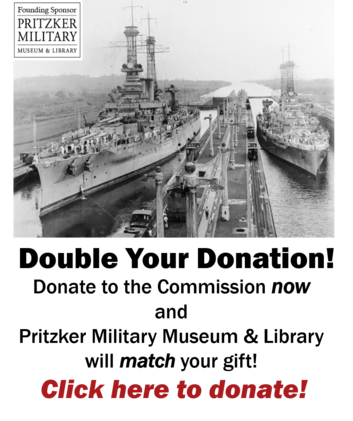
Double Donation Battleships


Sarah Sand

Historian, author, and tour guide Ed Lengel has written an article about Sarah Sand (above), who was Director of Nursing at Evangelical Hospital in Bismarck, North Dakota when the United States entered World War I. Like many other nurses, she immediately volunteered for service overseas. After extensive training at Camp Jackson, South Carolina, Sand departed the United States in September, 1918. She arrived at the front in time to help care for the massive wave of perhaps 100,000 casualties resulting from the Meuse-Argonne offensive. Her life would never be the same again. Click here to read the detailed story of how her experiences in WWI changed her future.


you can help - shop using amazon smile


Poppy Seed Side Ad


Doughboy MIA


Pershing Sponsors

Pershing level sponsors post 11.18


email us


websitefacebooktwitter


Archie Henry Thomas

A Story of Service from the Stories of Service section of ww1cc.org

Archie Henry Thomas

Submitted by: Gregory Neifeld {Great-Grandson}

Archie Henry Thomas born around 1885. Archie Thomas served in World War 1 with the United States Army. The enlistment was in 1909 and the service was completed in 1925.

Story of Service

Between April and September 1916, Archie was stationed on the Mexican border in California with the Oregon Third Infantry Regiment, Company I during the Mexican Border War. His regiment was activated into federal service after Pancho Villa’s raid in Columbus, New Mexico. While on the border, Archie was promoted to Corporal in July 1916 and he was promoted to Sergeant before his return to Oregon in September.

This was an era in which the U.S.-Mexico border was perceived as a potential location for a German-funded invasion by Mexico. Border service went into effect when this threat was exposed by the British interception of the Zimmerman Telegram. This message discussed Germany’s alliance proposal for Mexico if the U.S. entered the European war against Germany.

The onset of American involvement in World War I prompted all National Guard regiments to reactivate under federal service. This activation included the Oregon Third Infantry Regiment in March 1917. In July 1917, the unit was mustered at Camp Withycombe, Oregon and transferred to Camp Greene, North Carolina for training.

Read Archie Henry Thomas’ entire Story of Service here.

Submit your family’s Story of Service here.