Category Archives: World War One Centennial Commission

WWI DISPATCH April 2021

A newsletter from the organization formerly known as the World War One Centennial Commission, which we received earlier today.


View this in your browser

Header 10292020

April 2021

First Colors from NE

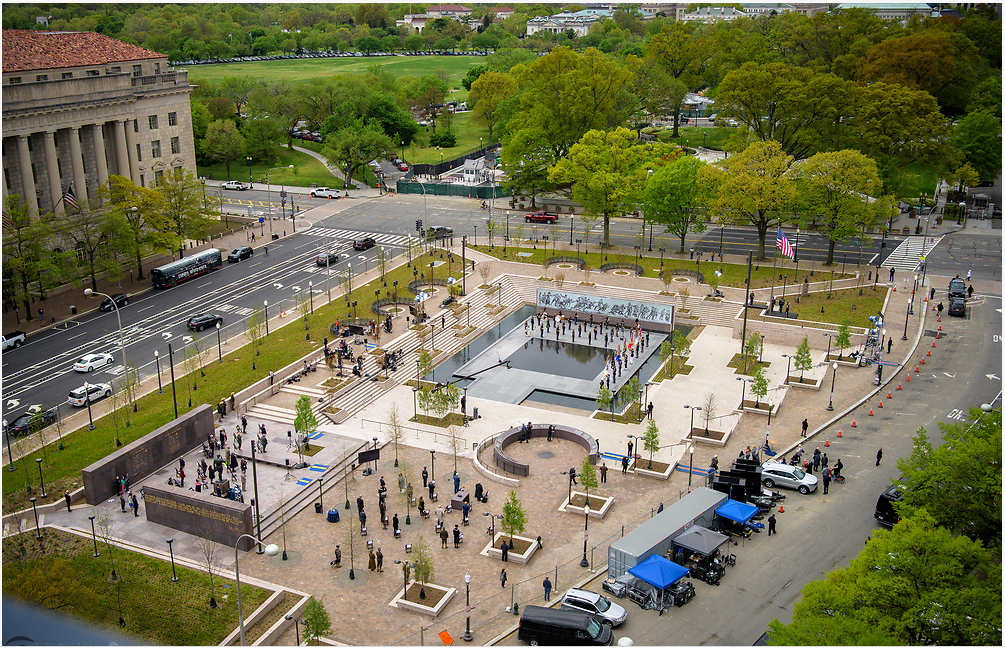
First Colors Ceremony opens the new National WWI Memorial to the public

The National World War I Memorial First Colors Ceremony on April 16 was viewed live by more than 11,000 people on the event website, and the Pentagon streamed it live on every military installation around the globe via defense.gov.

Tens of thousands of people have visited the First Colors site since the event, where the full show is available on demand. It has also been viewed thousands of times on the World War I Centennial Commission YouTube channel. In the future, the American Forces Network will air a 60-minute version of the event worldwide.

PBS News Hour picked up the flag raising through the end of the show and this clip has been viewed online more than 14K times (and counting).

The First Colors Ceremony made news in every single state.

If you haven’t seen the First Colors Ceremony yet, click here to watch the historic event now or later on the event web site.
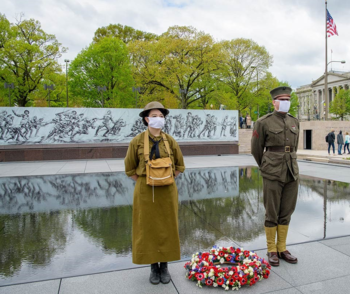

Memorial Webinar May 2021

The National World War I Memorial is OPEN! This webinar will make your visit happen

Join us on Friday May 14, 2021 at 10am PT / 1pm ET for an exclusive insider tour of the new National World War I Memorial that opened to the public on April 17, 2021. This webinar will be a great introduction to all kinds of people, especially tour guides, travel planners, and interested visitors, students, teachers – anyone and everyone who wants to learn more about the new Memorial. Get ready for Memorial Day with key information and insights about Washington, D.C.’s newest war memorial. We will provide you with:

  • Background and History of the location
  • The Story of how the WWI Memorial went from concept to opening
  • Tour of design features and insider tidbits
  • The history of WWI to which the Memorial speaks

AND the FREE WWI Memorial APPs:

  • One app for use when you are VISITING the WWI Memorial in DC.
  • One app which brings the WWI Memorial remotely to any classroom, living room, or yard.
  • “How WWI Changed America” – A downloadable web site on the social & cultural impact of WWI

There will be lots of great information, and words from the people who got the Memorial built.  Click here to learn more, and register for this useful and informative webinar on May 14.

WWI Memorial opening ceremony featured song developed at Binghamton

Hello Girl snip

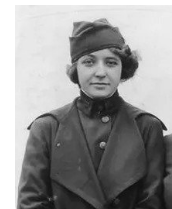
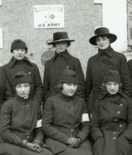
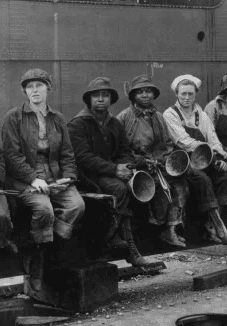
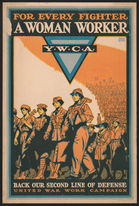
On April 16, the National World War I Memorial site in Washington, D.C., was unveiled in a livestreamed ceremony of the Inaugural Raising of the Flag. The event covered the history of World War I and included numerous speakers whose family members served in the war. Viewers learned about the “Doughboys,” the “Hello Girls” and other veterans who gave their service to the country. The Binghamton University community played a role in this event, as a song about the “Hello Girls,” which was written in Johnson City, was performed at the ceremony. Click here to learn more about the Hello Girls, and the music made in cooperation between the Goodwill Theatre, the Schorr Family Firehouse Stage in Johnson City and the Prospect Theater Company in New York City that was part of the event.


Waging war for her grandmother: N.H. woman fights to honor ‘Hello Girls’

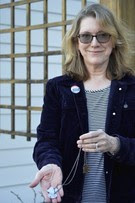
Carolyn Timbie

As she was helping her parents move from their home a decade ago, Carolyn Timbie of Atkinson, NH stumbled upon what she calls “an amazing treasure trove” of items from World War I — things her grandmother Grace Banker had saved from her time in WWI as the commander of the Hello Girls telephone operators. Some 60 years after Banker’s death, Timbie is now helping historians and U.S. Sen. Maggie Hassan of NH understand the work done by Signal Corps women during the war, when they became known as the Hello GirlsClick here to read more, and learn about the proposed Congressional Gold Medal to honor the service and legacy of the Hello Girls.


Twenty-One Steps: Guarding the Tomb of the Unknown Soldier

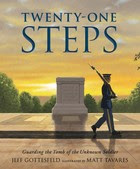
Twenty-One Steps cover

Author Jeff Gottesfeld had, in his forties, gotten into the habit of visiting national cemeteries on Memorial Day. A chance encounter in 1915 at Los Angeles National Cemetery with several headstones marked “UNKNOWN” sparked an idea: a children’s book about the Tomb of the Unknown Soldier, and “the Tomb Guards who have kept watch there every minute of every day since July 2, 1937.”  Click here to learn more about how this project took shape in unexpected ways, and how the author learned about himself as well as the Tomb in the process of writing Twenty-One Steps: Guarding the Tomb of the Unknown Soldier.


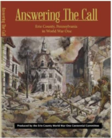
Answering the Call: Erie County, Pennsylvania in World War One

Answering The Call cover

In 2018 thirteen people, including teachers, veterans, historians, members of the Daughters of the American Revolution, all from varying backgrounds, thought that Erie County should be commemorating the American engagement in World War One. Each of them had a distinct connection to WWI. The outcome: a series of projects illuminating the county’s role in the Great War. Their efforts culminated in the last thing that they anticipated at the beginning: a book. Click here to read more about the creation of the volume, and how it will support the perpetual maintenance of the World War One Memorial in Erie County.


Viewing World War I through the eyes of women journalists

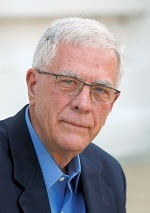
Chris Dubbs

Author Chris Dubbs notes wryly that he occupies “a narrow slice of scholarship in the history of World War 1—its journalism. Having so focused a view on such a vast subject means that I filter all the drama of WW1 through the reporters who covered it.”  Dubbs’ fourth book on WWI journalists came out in April 2021—American Women Report World War I: An Anthology of Their Journalism. As Dubbs himself notes: “A fourth book on WW1 journalists, you ask? Would not three, or two, or even one, have been enough?” Click here to learn why Dubbs was compelled to add another volume to his canon, and how he needed to “draw out the full picture of women’s role, a news story that was overlooked by male correspondents.”


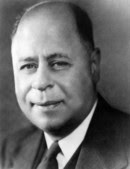
“Give me an opportunity, I will do it” ― Dr. Frank E. Boston & World War I

Dr. Frank Boston

George Whitehair, enjoying his twilight career as a Writer, Editor, and Researcher, “had just finished compiling a fun and upbeat book of short stories highlighting the contributions of immigrants” when a good friend mentioned that he might want to add Dr. Frank Boston (left) to his list. Out of that small suggestion has come a large project to recognize the accomplishments of a remarkable individual in both war and peace. Click here to read more, and learn about an amazing individual: “the first veteran African-American in the US to start both a hospital and ambulance corps, both of which are in operation today.


In The Trenches of World War I

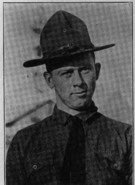
Wallace Martin Stockberger

The Friends of the Frankfort Public Library presents “In the Trenches of World War I” during the month of May. The group has been working with several entities to discover compelling stories of WWI and the Tomb of the Unknown Soldier located in Arlington National Cemetery. As well as onsite exhibitions and programs throughout the month, the event offers a virtual presentation on May 6 by military historian and best-selling author, Patrick O’Donnell. He will discuss one of his latest books, The Unknowns, The Untold Story of America’s Unknown Soldier and WWI’s Most Decorated Heroes Who Brought Him HomeClick here to learn more about the program, and how to register to attend the virtual presentation that intends to illuminate the saga behind the creation of the monument and animate the tomb by giving voice to those who served in WWI.


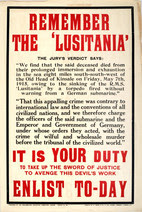
Why was the Sinking of the Lusitania so Controversial?

Remember the Lusitania

Writer Allyn Lawrence notes that “If you asked people a reason for the United States of America entering the First World War, one of the most common answers would be the sinking of the RMS Lusitania.” However, Lawrence also notes that “…the Lusitania was just one of the thousands of ships sunk by the German Imperial Navy during World War One. Yet, to this day, it is remembered as a major precipitant of the United States joining the war. Why is this? Why was the sinking of the Lusitania so controversial? Why was this event so important?” Click here to read more, and learn how some individuals who went down with the ship may have had an outside impact on public opinion in America.


WWI America invites audiences into a nuanced understanding of World War I

WWI America poster

Although it was fought thousands of miles away, WWI war transformed the United States from a relatively provincial power on the world stage to a full-fledged global, military-industrial leader, held together by a newly powerful federal government and charged with confident patriotism. WW1 America, on view through May 30, 2021 at the Irving, CA Archives and Museum, also shows that there were darker sides of the American experience during the years 1914 to 1919. Click here to read more, and discover how this exhibition reveals that WWI “was nonetheless always in dialogue, sometimes violently, with the day’s upheavals, shaping the nation in profound and lasting ways. Indeed, so many issues from this period cascade down the years to our own time.”


World War I brought challenges to the home front — in Vermont and the U.S.

Bellows Falls, VT

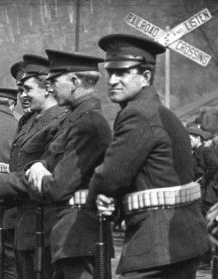
When 19-year-old Gavrilo Princip fired two shots from a pistol in the streets of Sarajevo on a late June morning in 1914, Vermonters had no idea what troubles the incident would trigger for the people of their state.” So begins writer Mark Bushnell’s look at how World War I changed life for the citizens of The Green Mountain State. Writing on the VT DIGGER web site, Bushnell notes that initially “Vermonters remained unscathed by the horrors enveloping so much of the world, but their good fortune didn’t last. Events finally dragged Vermont men off to war, sparked the deadliest epidemic of the last century, and led to a crackdown on civil liberties in the state.” Click here to read the entire article.


How Military Sled Dogs Became Essential Resources During WWI

sled dog snip

When one thinks of war, snow doesn’t usually come into the picture. But part of World War I was fought in the Vosges, a mountain range in France. Soldiers had to contend with cold and snow as well as the other dangers of war. The snow presented challenges that didn’t exist in other areas. How would the soldiers get supplies, ammo, medicine, and transport their injured soldiers? Their horses found it difficult to move through snow, and when they did, it was slow going. Click here to read more, and learn how military sled dogs came into the picture, and became vital in winter theatres during World War I.


Doughboy MIA for April

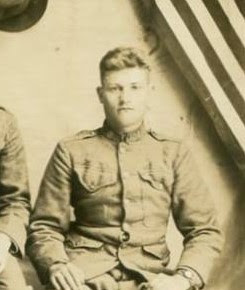
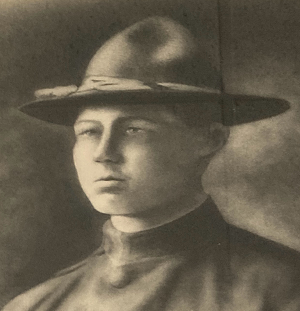
PVT Jerry Harris

A man is only missing if he is forgotten.

Our Doughboy MIA this month is PVT Jerry Harris of the 120thInfantry/30th Division.

Jerry Harris was born 16 May 1896 and raised in the town of Roanoke Rapids in Halifax County, North Carolina, the second of four children born to Sarah and Frank Harlour. He was working in a cotton mill when he enlisted in the North Carolina National Guard on 26 May 1917, being assigned to Company H, 3rd N.C. Infantry Regiment. When his unit was called into federal service that summer, it became Company H of the 120th Infantry, 30th Division. With them Harris traveled to France aboard the SS Bohemian on 12 May 1918.

Harris stone

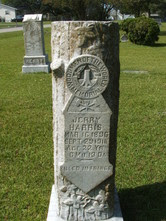
The 30th Division, alongside the 27th, was assigned to the US 2nd Corps and brigaded with the British. They fought in the Ypres-Lyes Sector that summer and in the final Somme Offensive as part of the great ‘final offensive’ by the allies of the war. It was during this offensive that Harris was killed in action on 29 September 1918.  Currently, no other specific details of his death are known, but following the war the Graves Registration Service was unable to locate his battlefield grave and thus he is still listed as officially missing in action and his name is inscribed on the Tablets of the Missing at the Somme American Cemetery at Bony, France. His family also erected a memorial stone for him at Cedarwood Cemetery in Roanoke Rapids.

Want to help us dig deeper into the case of PVT Harris? Consider a tax deductible donation to our non-profit organization and help us solve his case! Simply visit www.ww1cc.org/mia today and consider a gift. Every dollar helps us find out what happened to our missing boys, and YOU get to help.

A man is only missing if he is forgotten.


Official Doughboy Foundation
and WWI Centennial Merchandise
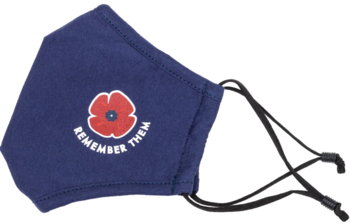
Poppy Mask 2

“Remember Them” Poppy Face Mask

  • A Doughboy.shop exclusive!
  • High quality, dual-layer, machine washable fabric
  • Outer: 100% Cotton jersey knit
  • Inner: Polyester 135gsm with Anti-Microbial protection
  • Adjustable elastic ear straps for a comfortable fit
  • Flexible wire frame over the nose for secure fit
  • Width: 9.5” / 24cm x Height: 6” /15.5cm
  • Screen printed poppy design “Remember Them” inscription
  • One size – fits most adults

This and many other items are available as Official Merchandise of the United States World War One Centennial and the Doughboy Foundation.


Virtual Explorer

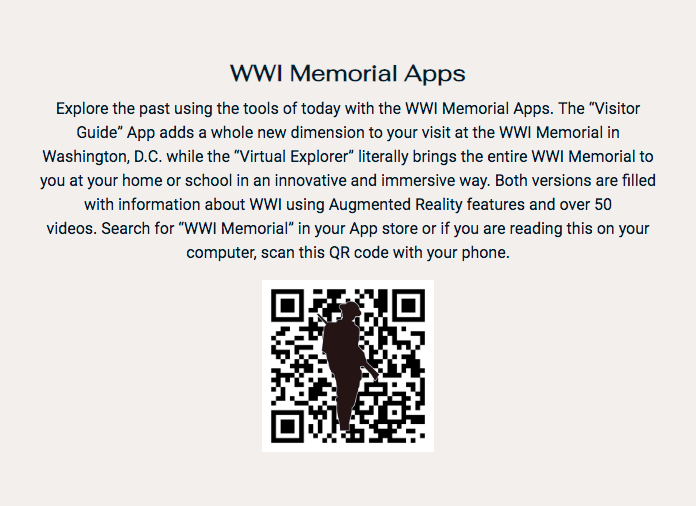
Click or scan the QR Code below to download the Virtual Explorer App for the National World War I Memorial, and explore what the Memorial will look like when work is completed.

QR Code for Virtual Explorer App download


Education Thumb Drive image

Free Self-Contained WWI History Web Site on YOUR computer

Sources, lessons, activities, videos, podcasts, images

We have packaged all the content we created for “How WWI Changed America” into a format that is essentially a web site on a drive. Download the content onto any drive (USB, external, or as a folder on your computer), and all the content is accessible in a web site type format even without an internet connection. Click here to learn more, and download this amazing educational resource for home or classroom use.


Genealogy book FREE DOWNLOAD


you can help - shop using amazon smile


Poppy Seed Side Ad


Doughboy MIA


Pershing Sponsors

Pershing Sponsors


email us


websitefacebooktwitter


Arthur E. Winslow

A Story of Service from the Stories of Service section of ww1cc.org

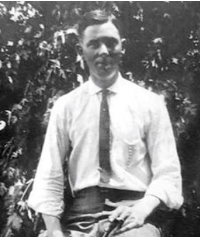
Arthur Winslow

Submitted by: AD1 (AW) Darren Winslow, USN (Ret.) {Nephew}

Arthur E. Winslow was born around 1895. Arthur Winslow served in World War 1 with the United States Army. The enlistment was in 1917 and the service was completed in 1918.

Story of Service

Arthur Winslow enlisted on June 6, 1917, he was the “First to Enlist” and has an American Legion Hall named after him, (American Legion Post #1 Rockland Maine).

After enlistment he was transferred to Augusta June 8, 1917 Company F 2nd Infantry, Maine National Guard. He sailed for overseas in the latter part of September 1917. He was promoted to Pvt 1st Class December 1, 1917 and assigned to Company F, 103rd Infantry.

He was mortally wounded in the Toul Sector on June 16, 1918 and died on July 6, 1918, at evacuation hospital No. 1 He was buried in a cemetery at Toul, word of his death was received in Rockland on July 16, 1918.

On November 11, 1927 “Armistice Day” The American Legion held services to honor the first two soldiers from Rockland that paid the supreme sacrifice, they named a block of main street in downtown Rockland “Winslow Holbrook Square”

Read Arthur E. Winslow’s entire Story of Service here.

Submit your family’s Story of Service here.


Honor the Stories of Service of ALL Who Served.

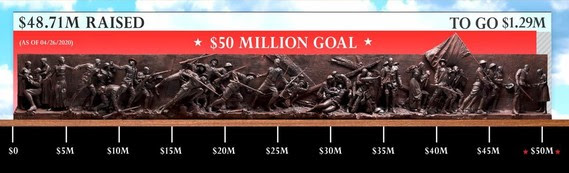
Do Your Bit to Help Build the new National World War I Memorial.

Progress maquette $1.29M left


One week away—The WWI Memorial First Colors Ceremony Live Broadcast

An item from the World War One Centennial Commission


View as a webpage

FIrst Colors logo - no ceremony

Please Join Us:

In a week’s time, the U.S. World War I Centennial Commission, along with our partners at the National Park Service and the American Battle Monuments Commission, will welcome the newest war Memorial in Washington, DC—the National World War I Memorial.

Join us on April 16 via live broadcast at 10:00am EDT | 7:00am PDT as the Flag is raised for the very first time, making the Memorial a living remembrance site for our Doughboys in perpetuity.

Event Registration

Click above to register and watch the preview video about the Memorial as you hear directly from the team that helped make the WWI Memorial a reality.

WWI Memorial Preview Website

Learn more about this innovative and serene Memorial by visiting our Memorial Preview website today!

Thank you for your interest and your participation!

With gratitude,
The U.S. World War I Centennial Commission


If you have any questions, please contact:

Lauren Hancock
events@worldwar1centennial.org
202-719-8063


WWI DISPATCH March 31, 2021

A newsletter from the World War One Centennial Commission.


View this in your browser

Header 10292020

March 31, 2021

Sinise button with FC logo and date bold

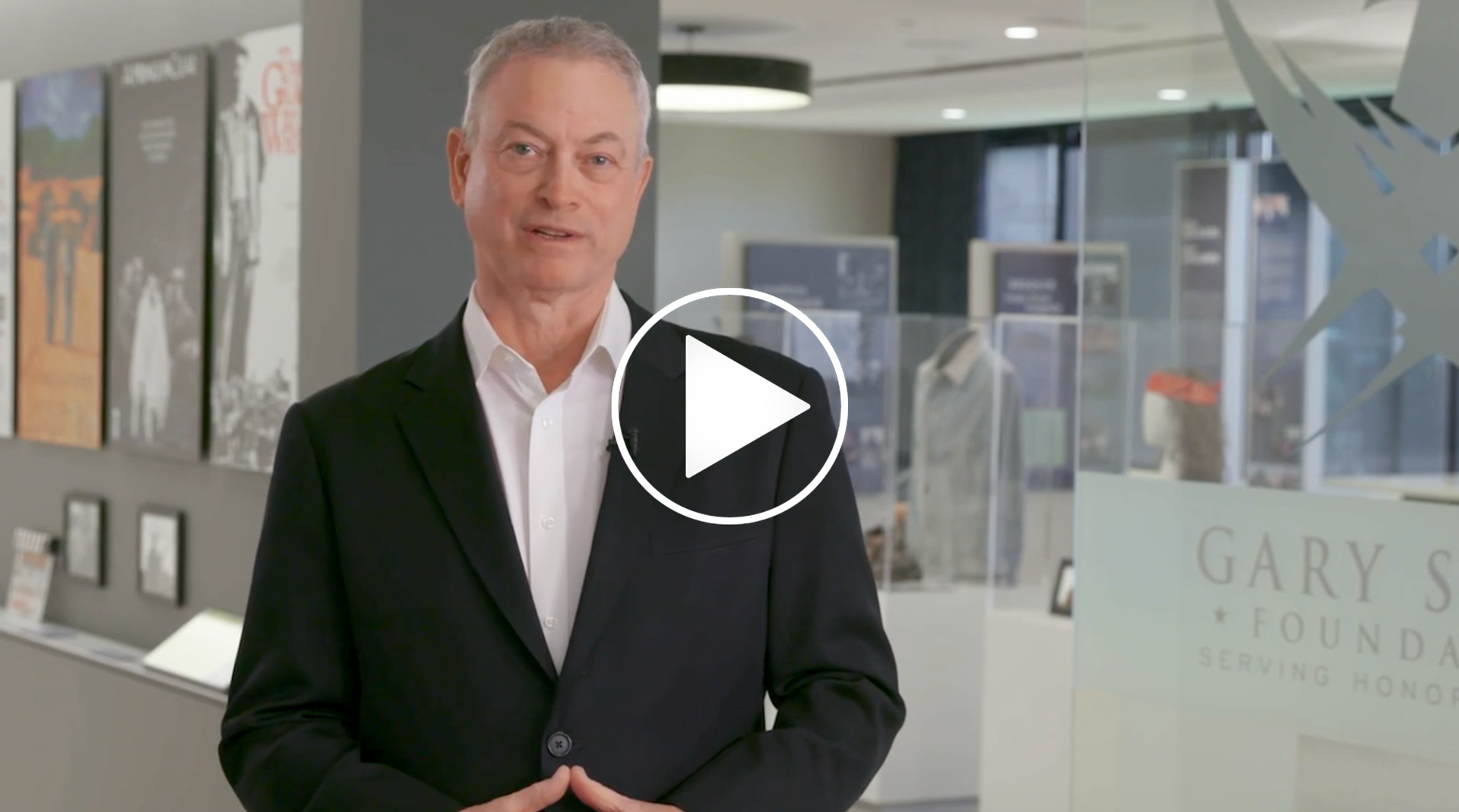
With only two weeks to go, we are counting down the days until we raise the Flag of the United States of America for the first time over the newly constructed National WWI Memorial in Washington, DC. We are honored to celebrate this momentous occasion with each of you via live broadcast on April 16. Please click on the video above to hear more from our host, Award-Winning Actor, Gary Sinise.

First Colors Ceremony will Introduce America’s New World War I Memorial

First Colors Logo

The United States World War I Centennial Commission in cooperation with the Doughboy Foundation, the National Park Service and the American Battle Monuments Commission is sponsoring a major event to celebrate the inaugural raising of the American flag over the nation’s soon-to-open World War I Memorial in Washington, DC on Friday, April 16 at 10:00 a.m. EDT / 7:00 a.m. PDT. Click here to read more about this milestone event, and find out how to register to view the live broadcast of the historic ceremony. (The First Colors Ceremony is not an in-person event.)


Senators introduce Gold Medal legislation to honor “Hello Girls”

Hello Girls gold medal snip

A bipartisan group of U.S. Senators has introduced legislation to award the Congressional Gold Medal to the female military telephone operators who kept American and French GIs connected during World War I. The Hello Girls Congressional Gold Medal Act would award the medal to the women of the U.S. Army Signal Corps. Also known as the Hello Girls, the bilingual female switchboard operators connected more than 150.000 calls per day during the war, doing so at a rate six times faster than their male counterparts. Senate Veterans Affairs Committee Chairman Jon Tester, D-Mont., Ranking Member Jerry Moran, R-Kan., Sens. Maggie Hassan, D-N.H., and Marsha Blackburn, R-Tenn., introduced the legislation. Click here to read more about this new effort to recognize the Hello Girls with the Congressional Gold Medal.


How World War I’s Legacy Eclipsed the Deadly 1918 Pandemic

Doughboy pandemic snip

World War I came to an end on November 11, 1918—nine months after the first cases of what was referred to as the “Spanish Flu” were reported in the United States. Against the backdrop of the war, the 1918 influenza pandemic surged at a time when people were already experiencing scarcity in everyday supplies, coping with having loved ones serving overseas, and living in a wartime economy. A second global crisis had started before the first one ended. Click here to read more about how the legacy of World War I overshadowed the pandemic, making the unprecedented loss of life from the flu almost an afterthought.


WWI Helped Women Ditch the Corset

Corset article snip

Massive cultural shifts during and after World War I helped free women from confining roles—and the confining corsets that bound them to the previous age. Writing on the History.com web site, Jessica Pearce Rotondi notes that “The evolution of the bra re-shaped the image of what a woman could be, whether she was serving in the war effort, fighting for the right to vote, or dancing in a flapper-style dress at war’s end.” Click here to read more, and learn how an American socialite patented the “brassiere” on November 3, 1914, the year World War I broke out in Europe. 


Kentucky soldier’s New Testament headed to National WWI Museum

Arthur J. Douthitt

Nearly 100 years have passed since a New Testament carried by Arthur J. Douthitt into battle during World War I made its way back to his widow in Kentucky from France. Now, it will be donated to the National World War I Museum and Memorial in Kansas City, MO. Nicole Morton Goeser said she wants to share the story of her great uncle, a native of Stanley, KY with his own community. Click here to read more, and learn about how this Kentucky soldier’s Bible became and will remain a touchstone for memory of his service.


‘Hello Girls’ Kept World War I Communications Humming

Hello Girls 2

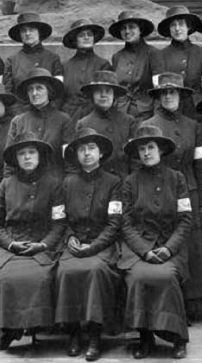
As the first American forces began arriving in France that summer, they found the communications network in disarray. In three years of combat, telephone lines were shot, shelled and bombed faster than they could be repaired. Army Gen. John J. Pershing, commander of American Expeditionary Forces in World War I, found this situation intolerable. He had, however, noted the efficiency and competence of Britain’s Women’s Army Auxiliary Corps as they expertly kept England-based phone lines humming. Click here to learn more about how Pershing, having recognized a good idea when he saw one, created the Hello Girls that supported the American Expeditionary Forces so effectively in WWI.


George Dilboy was first Greek-American awarded Medal of Honor in World War I

George Dilboy

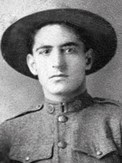
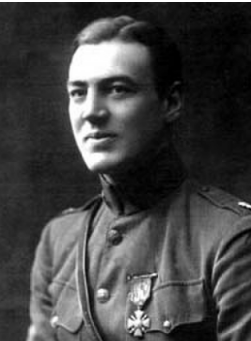
Born in the Greek settlement of Alatsata, which is today located in western Turkey, George Dilboy and his family emigrated to America in 1908 when he was 12 years old. After returning to Greece to fight as a volunteer in the Greek Army in the First and Second Balkan Wars, Dilboy came back to Somervill, MA in 1914, where he went to school and worked for a few years before volunteering to fight in the U.S. Army in the Mexican Border War from 1916 – 1917, and then re-joining the U.S. Army as a private first class to fight in the trenches of France during World War I. Click here to read more, and learn about George Dilboy, who General John Pershing listed as one of the 10 greatest heroes of the war. 


The American farmers, gardeners, and victory gardens of World War I

Fruits of Victory poster

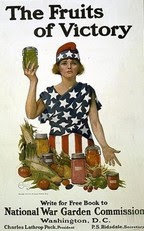
During WWI, Europe’s food supply had been seriously depleted. European farmers had been called to serve on the front lines, abandoning their farms and resulting in a mass farming crisis. Farmlands were quickly turned into battlefields, causing significant destruction of once rich soil. Europe’s ability to keep its soldiers and general population fed was becoming more and more difficult. As a result, the United States was called upon to shoulder the demand for mass quantities of food that was desperately needed overseas. Click here to learn more about the development of the National War Garden Commission in response to the food crisis that raged in Europe.


Commemorative Bricks Support Local Maryland WWI Memorial Restoration

Bladensburg memorial snip

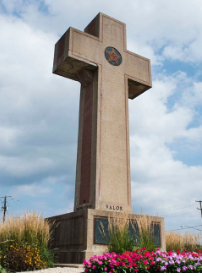
A 40-foot-tall monument standing at the intersections of Bladensburg Road, Baltimore Avenue, and Annapolis Road in Bladensburg, Maryland, serves as a reminder of the 49 area residents who died in World War I. This monument, commonly referred to as the Peace Cross, is owned by the Maryland-National Capital Park and Planning Commission, Department of Parks and Recreation in Prince George’s County which has embarked on a mission to restore it. Click here to learn more about the Peace Cross, and the commemorative brick program developed by the department to support fundraising efforts for the Peace Cross’ restoration.


NY National Guardsman Led Fight for Tomb of the Unknown Soldier

Hamilton Fish III

The United States has a Tomb of the Unknown Soldiers today because a New York National Guard Major and freshman Congressman thought it was necessary 100 years ago. Hamilton Fish III, a 32-year old lawyer with a Harvard degree who could trace his roots back to the beginnings of New York, led Company K of what became known as the 369th Infantry Regiment, which went down in history as the Harlem Hellfighters. He earned a Silver Star, and the French War Cross. Fish thought that the United States, which had suffered 116,516 deaths – 53,402 in combat and 63,114 to disease– between April 1917 and November 1918, should have a memorial to an American Unknown Soldier. Click here to learn more about how Fish, then a Congressman, introduced the federal resolution to create an Unknown Soldier memorial on November 11, 1921.


The Jihad Legacy of World War I

Wolfgang G. Schwanitz

Writing for the Foreign Policy Research Institute web site, Senior Fellow in the Middle East Program Wolfgang G. Schwanitz notes that “Known as a pious Muslim, Egyptian President Abdel Fattah Al-Sisi said in 2015 that it is most difficult to change religious rhetoric and how people use their faith. The outcomes will take many years: ‘Radical misconceptions [of Islam] were instilled 100 years ago. Now we can see the results.’ He may been referring to the German-Ottoman jihadization of Islamism in the early 20th century. So, what happened in World War I?” Click here to read the answer to Schwanitz’s question, and learn how yet another key geopolitical aspect of the 21st Century had its origins in the chaos of World War I.


Doughboy MIA for March 2021

Corporal William Michael Barnett

A man is only missing if he is forgotten.

Our Doughboy MIA this month is Corporal William Michael Barnett, USMC ASN271629, 84th Company/3rd Battalion/6th Marine Regiment/4th Brigade/2nd Division A.E.F.

Born in Oswego, New York on June 1st, 1892, Barnett enlisted in the United States Marine Corps on August 3rd, 1917 at Syracuse, New York. He trained at Parris Island, S.C. and upon graduation from basic training was assigned to the 119th Company at Quantico on January 8th, 1918. With them he departed for France on February 25th, 1918, where he received advanced combat training in the Toulon Sector.

In late May, with the Germans threatening Paris direct, the 2nd American Division received hurried orders to shore up crumbling French lines near Château-Thierry. The 6th Marine Regiment (which along with the 5th Marines and 6th Marine Machine Gun Battalion composed the 4th Brigade of the 2nd Division) took up positions southwest of Belleau Wood and was ordered to seize the town of Bouresches, as well as clear the southern half of Belleau Wood itself. The operation began on June 6th and these attacks were the beginning of a month-long struggle that resulted in both Marine Corps glory and heavy casualties.

On June 13th, 1918, Barnett received assignment to the 84th Company, 6th Marine Regiment as a replacement for a combat casualty. By that time, he was a Corporal. After 40 days in the sector, during which time the regiment would incur 2,143 casualties, the 6th Marines were pulled off the line for rest and refitment before again being brought into the maelstrom, this time in the Battle of Soissons.

On July 16th, the regiment was rushed to the Villers-Cotterets Forest where, on the morning of July 19th, 1918 the 6th Marines attacked in force, alone, from the town of Vierzy toward Tigny but were stopped short of their objective by extremely heavy artillery and machine gun fire. It would prove to be the single costliest day the regiment would ever face with many companies seeing upwards of 50% casualties and some as high as 70%.

It was during the attack forward that morning that Corporal Barnett was killed in action by a German sniper. He was later buried in a temporary grave in a field just outside Vierzy. However, following the war Graves Registration Service personnel were never able to locate that grave.

Want to do your part? Stand up and dig in with us by visiting www.ww1cc.org/mia.

Can you spare just ten dollars? Give ‘Ten For Them’ to Doughboy MIA and help us make a full accounting of the 4,423 American service personnel still listed as missing in action from WW1. Make your tax deductible donation now, with our thanks.


Official Doughboy Merchandise Store

First Colors Commemorative Coin 500

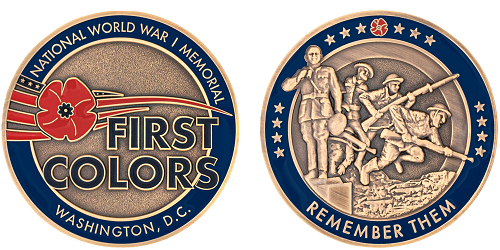
“First Colors” Commemorative Coin

Exclusive new design for 2021! Double-sided Bronze alloy medallion design commemorates the Doughboys of WWI, and the first raising of our nation’s flag over the new National World War I Memorial in Washington, DC on April 16, 2021. Two-Color Soft Enamel, 1.75″ in diameter.

Our mission is to remember those who served in WWI. These commemorative gifts help make that happen.


Memorial Camera

You can keep track of progress at the new National World War I Memorial through construction site time lapse video, or a live video feed from the site. Click here to take a look, and also find out how you can help finish this national tribute to the 4.7 million Americans who served, and the 116,516 who did not come home from WWI.


Virtual Explorer

Click or scan the QR Code below to download the Virtual Explorer App for the National World War I Memorial, and explore what the Memorial will look like when work is completed.

QR Code for Virtual Explorer App download


Education Thumb Drive image

Free Self-Contained WWI History Web Site on YOUR computer

Sources, lessons, activities, videos, podcasts, images

We have packaged all the content we created for “How WWI Changed America” into a format that is essentially a web site on a drive. Download the content onto any drive (USB, external, or as a folder on your computer), and all the content is accessible in a web site type format even without an internet connection. Click here to learn more, and download this amazing educational resource for home or classroom use.


Genealogy book FREE DOWNLOAD


you can help - shop using amazon smile


Poppy Seed Side Ad


Doughboy MIA


Pershing Sponsors

Pershing Sponsors


email us


websitefacebooktwitter


Albert Robert Laske

A Story of Service from the Stories of Service section of ww1cc.org

Albert Robert Laske

Submitted by: Jean Burns {granddaughter}

Albert Robert Laske was born around 1894. Albert Laske served in World War 1 with the United States Army. The enlistment was in 1918 and the service was completed in 1918.

Story of Service

Feb. 1918, Albert “Bert” (24 yrs. old) received induction orders to enter the Army, during World War I. He is to serve in the 25th Spruce Squadron, Vancouver Barracks, in Vancouver Washington. This Squadron is to harvest wood that will be used to build the planes they need for the war. In Dec. 1918, Bert is discharged honorable and thanked for his service, but since the war is ending, his service is no longer needed.

About the 25th Spruce Squadron: “The states of Oregon and Washington form the backdrop for one of the most interesting dramas of the First World War. When the U.S. entered the War, it was quickly discovered that the nation had no capacity to build warplanes in quantity. Even though the U.S. had invented the airplane, by 1917 the European powers had already spent years developing it for warfare, and deploying it in deadly combat. Those nations were trying to produce enough machines to keep the skies occupied over the front lines in France.

Read Albert Robert Laske’s entire Story of Service here.

Submit your family’s Story of Service here.


Honor the Stories of Service of ALL Who Served.

Do Your Bit to Help Build the new National World War I Memorial.

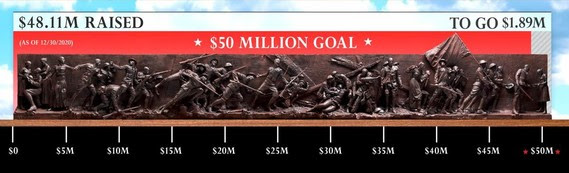
fundraising thermometer 1.89 to go


WWI Memorial–Join us for a live broadcast of the First Colors Ceremony on April 16

This event may be of interest to our members.


Join us for a live broadcast of the inaugural raising of the flag of the United States of America over the National WWI Memorial in Washington, D.C. featuring award-winning actor Gary Sinise.

First Colors Ceremony Logo

Join us for a live broadcast of
the First Colors Ceremony on April 16

With less than a month to go, we are counting down the days until we raise the Flag of the United States of America for the first time over the newly constructed National WWI Memorial in Washington, DC.  We are honored to celebrate this momentous occasion with each of you via live broadcast on April 16. 


Please click on the video below to hear more from our host, Award-Winning Actor, Gary Sinise.

Gary Sinise promo for First Colors video thumbnail

Have you registered for the First Colors Ceremony? Click here to register.

For questions, please contact Lauren Hancock at 202.719.8063 or events@worldwar1centennial.org