Tag Archives: Canadian Studies Program UC Berkeley

Canada’s 1st Indigenous Supreme Court Justice; former director wins emeritus award

A newsletter from a fellow Canadian organization in the Bay Area.


Canadian Studies Announcements

In This Issue:

Program News

  • Former program director Nelson Graburn named Berkeley “Emeritus of the Year”

Canadian News

  • Michelle O’Bonsawin Confirmed As Canada’s First Indigenous Supreme Court Justice

Research Opportunities

  • ACSUS Executive Council nominations & elections
PROGRAM NEWS

Former Program Director Nelson Graburn Wins Berkeley “Emeritus of the Year” Award

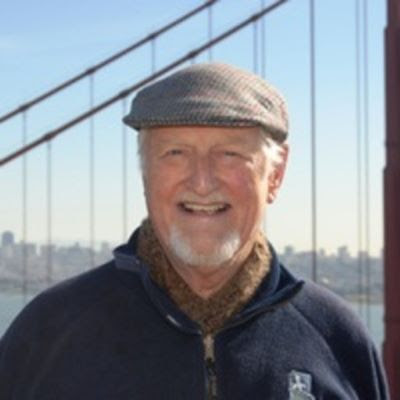
Canadian Studies is proud to announce that former program director Nelson Graburn has been named Distinguished Emeritus of the Year for 2022 by the UC Berkeley Emeriti Association. The award recognizes exceptional accomplishment by an emeritus faculty member since retirement. He will be honored at a reception hosted by the Emeriti Association early next month.

Professor Graburn is a professor emeritus of anthropology who has taught at Berkeley since 1964. He is an expert on Inuit culture and arts, and conducted his fieldwork in the Canadian Arctic. He joined the Canadian Studies Program shortly after its founding, and became a co-director in 1986. In 2005, he was appointed the inaugural holder of the Thomas Garden Barnes Chair in Canadian Studies, and served as program director until his retirement in 2012.

Professor Graburn’s current interests sit at the center of cultural preservation, identity, and tourism. Although officially retired, he still teaches a seminar on “Tourism, Art and Modernity” at UC Berkeley, and co-chairs the Tourism Studies Working Group. He also continues to conduct research in the field of contemporary Inuit art. In recent years, he has expanded his research to include the study of contemporary tourism in China and Japan. He continues to travel widely as a consultant and lecturer at various institutions.

CANADIAN NEWS

Michelle O’Bonsawin Confirmed As Canada’s First Indigenous Supreme Court Justice

Canadian judge Michelle O’Bonsawin made history this week when the Prime Minister’s office confirmed her appointment to the Supreme Court of Canada. When O’Bonsawin takes her seat on Thursday, she will be the first Indigenous justice to sit on Canada’s highest court. O’Bonsawin is a fluently bilingual Franco-Ontarian, and a member of the Abenaki Odanak First Nation in Quebec.

The Prime Minister’s office described her as “widely respected”, and released a summary of her “distinguished” 20-year legal career. In 2017, O’Bonsawin became the first Indigenous woman to be appointed to the Ontario Superior Court of Justice. Prior to that, she was the General Counsel for the Royal Ottawa Health Care Group, as well as counsel with Canada Post and the Royal Canadian Mounted Police. She is frequently cited on Indigenous issues, and has taught Indigenous law at the University of Ottawa. Her legal work has focused on labour and employment law, mental health, and human rights. In a public statement welcoming O’Bonsawin to the court, Chief Justice Richard Wagner called the new justice a “principled, authentic and hard-working” jurist.

While O’Bonsawin says that Indigenous legal traditions will inform her perspective, she also rebuffed suspicions of partiality, telling lawmakers “I’m a judge first and an Indigenous person… afterwards.” Nevertheless, she says that her life experience and background working with disenfranchised communities are an important part of her work. She also says that she hopes to serve as an inspiration to young women, both Indigenous and not, and that her example encourages them to follow their dreams.

O’Bonsawin is Trudeau’s fifth appointment the Supreme Court. She will replace outgoing justice Michael Moldaver, who will reach the court’s mandatory retirement age of 75 in December. Some legal analysts project that her appointment will result in a significant liberalization of the court, particularly with regards to the interpretation of the Canadian Charter of Rights and Freedoms. Moldaver, who was tied for longest-serving member of the current court, long endorsed a relatively narrow approach to the Charter rights. At the time of his retirement in May, experts predicted that Trudeau would seek a replacement who supported a more generous interpretation and expansion of these rights. While O’Bonsawin’s background would seem to confirm this assessment, only time will tell what impact she will have on the court and Canada’s constitutional jurisprudence.

RESEARCH OPPORTUNITIES

ACSUS Executive Council Nominations & Elections

Nomination deadline: September 23, 2022

The Association for Canadian Studies in the United States (ACSUS) is pleased to announce that it is accepting nominations for vice-president (1 opening) and executive councillor (4 openings).

Nominations are due no later than September 23. Nominations need to: (1) include the names, institutional affiliations, and contact info of 3 current association members who have agreed to endorse any nominee; and, (2) provide a brief biographical statement outlining the nominee’s experience/background in Canadian Studies (250-300 words). All nominees will be contacted by ACSUS prior to the start of the election to confirm their candidacy to serve on the Executive Council.

Voting will commence no later than September 30, with electronic election ballots being distributed to all ACSUS members. The deadline to vote is October 15. Following the tabulation, review and certification of the election results, an announcement to ACSUS members will be disseminated by October 21.

Nominations may be submitted by email to ACSUS Secretary Amy Sotherden at info@acsus.org, or via this form, https://tinyurl.com/ACSUSnominate.

Canadian Studies Program
213 Moses Hall #2308
Facebook  Twitter
Canadian Studies Program | Univ. of California, Berkeley213 Moses Hall #2308Berkeley, CA 94720

Welcome to a new semester: Check out our new class guide! 🎒

A newsletter from one of our fellow Canadian organizations in the Bay Area.


Canadian Studies Announcements

In This Issue:

Program News

  • Check out our new Canadian Studies course list!
  • Farewell to research fellow Nicholas Fraser

Canadian News

  • Alberta doctor takes charges as first Indigenous president of the Canadian Medical Association

Research Opportunities

  • Call for papers: International Journal of Canadian Studies

External Events

  • Nine Canadian films at the Cinequest Film & Creativity Festival

A Message from Our Director

Dear friends,

It is my pleasure to welcome you all to another semester at Berkeley. Whether you’re a longtime friend, a faculty member, or a new or returning student, we’re so grateful to have you as part of our community. Your engagement helps us advance our mission to share knowledge of Canada with the Berkeley community and beyond – whether that’s by attending our events, submitting your research proposals, or even just subscribing to this newsletter. We are proud of the way our little community keeps growing, and we couldn’t do it without your involvement. So share us with your friends, and we hope to see you around Berkeley soon!

Warmly,

Irene Bloemraad, Program Director
PROGRAM NEWS
Check Out Our New Canadian Studies Course List!

As part of our efforts to increase education on Canada, Canadian Studies has created a new course list for Berkeley students. As an interdisciplinary program, we strongly encourage students to take classes across a variety of disciplines. Our new list highlights classes from across campus that focus on Canada and its culture, either alone or in a comparative context. The following courses are being offered this semester:

  • “Comparative Equality Law”: This course examines how the law protects equality rights in different jurisdictions. Canadian laws will be discussed in a global, comparative context.
  • “Language and Identity”: This course examines the role of language in the construction of social identities, and how language is tied to various forms of symbolic power at the national and international levels. This course will use Canada as a case study.
  • “Monsters and Modernity”: This class delves into fears and anxieties behind modern literary “monsters”, and what they say about society. Margaret Atwood’s The Handmaid’s Tale will be a highlighted text.
  • “Native Americans in North America to 1900”: This course will provide an ethnohistorical analysis of America’s original inhabitants and their interactions with Europeans and Euro-Americans, emphasizing an Indian perspective.

Farewell to Research Fellow Nicholas Fraser

The Canadian Studies Program wishes farewell to our 2021-22 John A. Sproul Research Fellow, Dr. Nicholas A. R. Fraser, whose one-year term ended last week. Dr. Fraser is a scholar of comparative politics, with a focus on immigration and multiculturalism. During his time at Berkeley, he conducted independent research on the impact of possible religious biases in Canadian courts. He also assisted program director Bloemraad with a long-term immigration project, and arranging speakers for our May conference. Dr. Fraser leaves Berkeley for Harvard University, where he will join the Program on U.S.-Japan Relations as a Policy Innovations Fellow. We wish him well in his new position!

CANADIAN NEWS

Alberta Doctor Takes Charges as First Indigenous President of the Canadian Medical Association

An Alberta-based physician made history this week as the first Indigenous president of Canada’s most prominent medical organization. On Monday, Dr. Alika Lafontaine, a 40-year-old anaesthesiologist from Grande Prairie, assumed the presidency of the Canadian Medical Association (CMA). Founded in 1867, the organization is the country’s largest professional association for physicians, and advocates for medical issues. Dr. Lafontaine is also the youngest-ever president in the organization’s 155-year history.

Dr. Lafontaine was born in Treaty 4 territory in southern Saskatchewan. As reported by the CBC, as a child he struggled in school due to learning challenges, poor hearing, and a stutter. His teachers dismissed him, and predicted he would be “lucky” to graduate high school. These experiences were a “huge motivator” for Lafontaine, who says he was afraid to speak out in his early years.

Lafontaine’s parents were strongly supportive of his education, and believed that his teachers were overlooking his true potential. After Lafontaine was diagnosed with a learning disability in grade school, his parents decided to homeschool him. Contrary to his teachers’ predictions, Lafontaine went on to an extraordinary academic career: he graduated high school at age 14, received his doctorate in medicine from the University of Saskatchewan at 24, and completed his residency by 28.

Dr. Lafontaine says that he hopes his personal background allows him to bring a new perspective to his role. He wants to advocate for people like himself, who felt unable to speak out. And he is making it a priority to bring communities to the table that have previously been excluded from medical discourse, or face unequal health outcomes.

A particular focus of Dr. Lafontaine’s past work has been advocating for improved healthcare in Indigenous communities. He believes that it is important for Indigenous people to see people like them in the medical field, and to normalize Indigenous people in leadership. Dr. Lafontaine previously helmed the development of a national campaign to reduce disparities between Indigenous and non-Indigenous patients on behalf of the Indigenous Health Alliance, and successfully secured $68 million in federal funding for the project. In 2019, he received the CMA’s Sir Charles Tupper Award for Political Advocacy for his efforts.

Dr. Lafontaine also advocates for healthcare workers, who he says are suffering from high rates of burnout due to the Coronavirus pandemic. Restoring a sense of normalcy and a healthy work-life balance are among his top priorities following years of crisis conditions at many medical centers. And as a doctor in a rural region, he also has firsthand experience with how a shortage of medical workers in many parts of Canada is exacerbating these problems, leading to hospital closures and scarcity of care. He is exploring strategies to ameliorate these problems, which he says have left medical networks in some rural areas on the brink of collapse.

RESEARCH OPPORTUNITIES

Call for Papers: International Journal of Canadian Studies

Submission deadline: October 1, 2022

The International Journal of Canadian Studies is seeking interdisciplinary original submissions for its #61 special issue to be published in May 2023. This special issue welcomes articles discussing the topic: “Is Canada a model?”

The International Journal of Canadian Studies is a long-running interdisciplinary journal dedicated to examining Canada from the fields of the arts, literature, geography, history, native studies, social and political sciences. The bilingual journal is published by the University of Toronto Press.

Submissions could explore the place of Canada in the world as a possible “role model” or simply a model of society, in the past or present times. Does Canada have a power of emulation regarding other nations, regarding which topics? Is Canada a leader in some specific social or political areas? In the field of the arts and literatures, are there any Canadian literary canons?

Submissions (6000 to 8000 words plus two summaries in English and French) are welcome from a range of disciplines and perspectives in Canadian Studies, including, but not restricted to political studies, international relations literatures and the arts, history, native studies, sociology, anthropology. Submissions can be uploaded through this portal until October 1, 2022. To prepare and submit your submission, follow the “Guideline for authors”. All articles will undergo double-blind peer review. For inquiries, contact the editor (francoise.le-jeune@univ-nantes.fr).

EXTERNAL EVENTS

Nine Canadian Films at the Cinequest Film & Creativity Festival

August 16-29 | San Jose, CA | Purchase tickets here

Canada will be well represented at this year’s Cinequest Film Festival, taking place in select theaters in San Jose. Canadian submissions include CarmenLabour DayMontréal GirlsAshgroveWolvesThe FamilyTehrantoWe’re All in This Together, and Back Home Again.

Image: Natascha McElhone and Steven Love in Carmen (2022).

Canadian Studies Program
213 Moses Hall #2308
Facebook  Twitter
Canadian Studies Program | Univ. of California, Berkeley213 Moses Hall #2308Berkeley, CA 94720

Pope visits Canada for residential schools apology; Canadian films in San Jose

A newsletter from a fellow Canadian organization in the Bay Area.


Canadian Studies Announcements
In This Issue:
Program News
  • Happy New Brunswick Day!
Canadian News
  • Pope Francis visits Canada to apologize for residential schools
External Events
  • Nine Canadian Films at the Cinequest Film & Creativity Festival
PROGRAM NEWS
Happy New Brunswick Day!
Today, people across Canada are enjoying a well-deserved holiday. The first Monday in August goes by several names across Canada; New Brunswick is one of many places to mark the day as a commemoration of its history, and the many cultures that have contributed to Canada’s only bilingual province.
New Brunswick was first inhabited by First Nations peoples like the Mi’kmaq and Maliseet. In 1604, the French colonized the region as “Acadia”, the first of their New France territories. These Acadians were largely deported after the British conquered the province, in turn replaced by Loyalists fleeing the American victory in their revolution. For a time, the region prospered, and in 1867 it was one of the four original provinces that confederated to form the core of modern Canada. Unfortunately, the province then entered a long decline in its traditional industries like shipbuilding, lumber, and fishing, and by the 20th century it was one of the poorest regions in Canada.
Fortunately, today the province is seeing a revival, as Canadians from all over are lured by the provinces’ scenic beauty and relatively cheap housing costs. It also remains a popular holiday destination for Canadians, who appreciate the rugged coastline of the Bay of Fundy and its many beaches and picturesque lighthouses and covered bridges. So to all our New Brunswicker friends, have a safe and fun weekend!
CANADIAN NEWS
Pope Francis Visits Canada to Apologize for Residential Schools
Pope Francis concluded a “penitential pilgrimage” of Canada on Friday,after making a landmark apology for the role of the Catholic Church in Canada’s Indian residential school system. Over the course of the six-day trip, the Pope met with government leaders and school survivors from across Canada as he travelled across Alberta, Quebec, and Nunavut.
The Indian residential school system was established by the Canadian government in the 19th century. The system lasted into the 1960s, when most residential schools were closed, although the last school did not close until 1997. The schools were meant to forcibly assimilate Native children into European Canadian society by removing them from their families, in what the Truth and Reconcilliation Comission calls a policy of “cultural genocide”. Attendance was compulsory for Indigenous chidren over the age of 7. While the schools were funded and overseen by the Canadian government, they were administered by Christian churches, 70% of them by Catholic religious orders.
Apart from the cultural destruction wrought by assimilation, students often endured terrible conditions in the schools. Official reports from the time and surivivor testimony shows that in many schools, children suffered from poor sanitation, overcrowding, and rampant disease. Abuse was also endemic to the system, with survivors recounting being beaten for speaking Native languages or engaging in traditional customs. Sexual abuse was also common. The Truth and Reconcilation Commission’s final report in 2015 listed a papal apology on Canadian territory as a key step in the Reconciliation process.
The Pope began his trip in Alberta, with a visit to the site of the Ermineskin Indian Residential School, south of Edmonton. In a public ceremony, he made a formal apology for the “evil” perpetuated by the schools before a gathering of Native elders and residential school survivors. Speaking in Spanish, he apologized for the way “Christians supported the colonizing mentality of the powers that oppressed the Indigenous peoples”. He described the assimiation process as “catastrophic” for Native communities, depriving them of the “values, language and culture that made up the authentic identity of your peoples.”
From Edmonton, the Pope travelled to Quebec. In Quebec City, he met with Prime Minister Trudeau and Governor General Mary Simon, the first every Indigenous person to hold that position. Following a sojourn to Sainte-Anne-de-Beaupré, where he held meetings with Indigenous leaders from eastern Canada, the Pope concluded his tour in Iqaluit, Nunavut, with another private meeting with residential school survivors. He said the meeting filled him with renewed “indignation and shame” for the suffering they had experienced.
Reactions to the visit from the Indigenous community have varied. Almost all welcomed the Pope’s remarks, which many felt were long overdue recognition of the trauma they endured. However, many added that the Reconciliation process is far from over. Some leaders called for the Pope to formally repudiate the 15th-century Doctrine of Discovery that justified the colonization of the Americans. Still others are calling for additional financial compensation to support families impacted by the residential schools. While the Catholic Church paid surivors $54 million as part of a 2006 settlement, an associated fundraising campaign raised only $3.7 million of a $25 million goal. While the Canadian Government released the Church from further legal obligation, activists say the Church remains morally responsible to pay the entire amount promised.
Photos provided by the Offices of the Prime Minister and Governor General.
EXTERNAL EVENTS
Nine Canadian Films at the Cinequest Film & Creativity Festival
August 16-29 | San Jose, CA | Purchase tickets here
Canada will be well represented at this year’s Cinequest Film Festival, taking place in select theaters in San Jose. Canadian submissions include CarmenLabour DayMontréal GirlsAshgroveWolvesThe FamilyTehrantoWe’re All in This Together, and Back Home Again.
Image: Natascha McElhone and Steven Love in Carmen (2022).
Canadian Studies Program
213 Moses Hall #2308
Canadian Studies Program | Univ. of California, Berkeley, 213 Moses Hall #2308, Berkeley, CA 94720

Welcome to three new board members! Plus: The USMCA at 2

A newsletter from a fellow Canadian organization in the Bay Area.


Canadian Studies Announcements
In This Issue:
Program News
  • Canadian Studies welcomes three new External Advisory Board members
  • Anthropologist Sabrina Agarwal joins Faculty Advisory Committee
Local News
  • San Francisco marks Canada Day with official proclamation, flag-raising
External Events
  • USMCA at Two: What Comes Next?
PROGRAM NEWS
Canadian Studies Welcomes Three New External Advisory Board Members
The Canadian Studies Program is excited to announce three new additions to our External Advisory Board: David Jeu, Rhonda Rubinstein, and Jennifer Wong. Each of our new members are Canadians with strong connections to the San Francisco Bay Area, local non-profits, and the broader Canadian-American community. Their experience, skills, and enthusiasm will be a major asset to the program. All three began their terms on July 1, so please join us in giving them a warm welcome!
David Jeu retired from UC Berkeley in 2020, where he had held the position of Assistant Vice Chancellor, International Relations for ten years. During his time at Cal, he led a team responsible for international fundraising (averaging over $45M annually, with an historic high of $81.4 million in FY19) and alumni relations (a global alumni network and volunteer leadership in 41 countries).
Prior to joining Berkeley, David had served in a variety of fundraising and non-profit leadership positions in the Canadian higher education, healthcare and social services sectors (in Ontario, Nova Scotia and Western Canada) for over 20 years. He is currently a consulting partner with the international firm of Marts & Lundy, advising several startups and building a philanthropic advisory service with family offices in Asia and the Middle East. His board experience includes service on UC Berkeley’s University of California Foundation (Hong Kong) and Chancellor’s Asia Advisory Council, IWK Health Centre, and various professional membership associations. He currently lives in Edmonton, Alberta, with his family.
Rhonda Rubinstein is the Creative Director of the California Academy of Sciences, a museum and research center in San Francisco. She orchestrates how design, photography, typography and information converge in the public experience as exhibitions, environmental graphics, and print, digital and interactive communications. Resonant with the Academy’s mission, Rhonda co-founded BigPicture Natural World Photography, an acclaimed annual international photography competition focused on wildlife and conservation, currently in its 9th year. She curated the book WONDERS: Spectacular Moments in Nature Photography, showcasing the immense diversity and beauty of our world and is at work on another, due to be published in 2023.
Rhonda grew up in Montreal where Expo 67 and its legacy influenced her worldview on humanity, media, and the potential of cultural aspirations. In Halifax, she earned a bachelor’s of design in communication design from NSCAD University, then moved to New York City to work as a publication designer for numerous magazines. Rhonda taught at New York University School of Journalism and Parsons School of Design, and distinguished herself as the award-winning art director for Esquire at a time when magazines were significant social documents of the era. Recruited to San Francisco, she became art director of Mother Jones magazine, and a founding partner of Exbrook, a consultancy focused on helping progressive social impact organizations to use design thoughtfully and with purpose.
Jennifer Wong was raised in Ottawa. She earned her B.A. in finance and economics from Huron College at Western University in London, Ontario. She brings global business development, professional services and customer success experience with tech leaders including DocuSign, Dell and IBM. While leading a global team as DocuSign’s Director of Partner Services, Jennifer also served as SF co-chair for DocuSign IMPACT, and served on the global steering committee for DocuSign Women.
Jennifer has held a number of community leadership roles include SF Expat Canadian Meetup co-organizer, InterNations Consul, SFFD Neighborhood Emergency Response Team (NERT) member, and Dress for Success mentor. A champion for education and lifelong learning, she was a long time SF Advisory Board member for Junior Achievement. Jennifer learned to hike during the pandemic; she recently returned from summiting Mt Kilimanjaro, and will next be training for the Matterhorn.
Anthropologist Sabrina Agarwal Joins Faculty Advisory Committee
We are pleased to announce that anthropologist Sabrina Agarwal has agreed to join the Canadian Studies Faculty Advisory Committee, a board of scholars who assist program leadership in developing academic goals for the program. She fills the chair vacated by outgoing committee member Beth Piatote (Native American Studies); the program thanks Professor Piatote for her service.
Professor Agarwal is an expert in biological anthropology, with a focus on human bone. She received her bachelor’s, master’s, and Ph.D. from the University of Toronto, where she also taught for one year before coming to Berkeley.
Professor Agarwal emphasizes inclusivity and respect in her teaching and research, particularly in the context of the fraught relationship between anthropology and many historically disenfranchised communities. In addition to her teaching, she chairs the UC Berkeley NAGPRA Advisory Committee, which facilitates the return of Native American ancestral remains and cultural goods to their tribes of origin. She received the UC Berkeley Distinguished Teaching Award in earlier this year.
The Canadian Studies Faculty Advisory Committee serves in an advisory capacity to the chair and director in the administration, planning, and strategic direction of the unit’s activities. The committee also advises on the selection of a new director when the chair is vacant. Other current members include UC Berkeley Chancellor Emeritus Robert Birgeneau, and former program director Nelson Graburn.
LOCAL NEWS
San Francisco Marks Canada Day With Official Proclamation, Flag-Raising
On July 1, the City of San Francisco marked Canada Day on with an official ceremony attended by representatives of the Canadian government and local Canadian community.
Mayor London Breed signed a proclamation declaring July 1 as “Canadian-American Friendship and Heritage Day”, which was presented to consul Marie Alnwick. The event was capped by a ceremonial raising of the Canadian flag at City Hall, and the building’s dome was illuminated red-and-white after dark.
The event celebrated the fraternal bonds felt between the people of California and Canada, sentiments were also expressed by Prime Minister Justin Trudeau in his June visit to the state. State and local governments in California have developed increasingly close ties to Canadian counterparts in recent years, citing their shared values and political goals, as well as the strong economic ties between the two markets.
EXTERNAL EVENTS
USMCA at Two: What Comes Next?
July 20 | Online | RSVP here
On July 1, 2022, the United States, Mexico, and Canada reached the two-year anniversary mark of the United States-Mexico-Canada trade agreement, or USMCA. The three countries marked the anniversary with a meeting in British Colombia of USMCA’s Free Trade Commission to review work underway and next steps in the context of a challenging set of circumstances. While trade has rebounded above 2019 levels, despite challenges from the COVID-19 pandemic, there nevertheless remains much to do to realize USMCA’s potential to strengthen regional prosperity and competitiveness.
Join the Wilson Center’s Canada and Mexico Institutes for a discussion on what the priorities should be in the months ahead for implementing USMCA and how that work fits into the broader frame of strengthening North American prosperity and competitiveness. Following introductory remarks by US Representative Kevin Brady, Ambassador Earl Anthony Wayne will lead a panel discussion with leaders in the business and trade community from the US, Canada and Mexico. Canada Institute director and Canadian Studies board member Christopher Sands will give closing remarks.
Canadian Studies Program
213 Moses Hall #2308
Canadian Studies Program | Univ. of California, Berkeley, 213 Moses Hall #2308, Berkeley, CA 94720

Happy Canada Day from Berkeley! 🇨🇦

An item from one of our fellow Canadian organizations in the Bay Area.


Happy Canada Day!
Dear Michael,
On behalf of our team at Canadian Studies, I wish you and your family a wonderful Canada Day. Today, Canadians show our pride in our nation’s accomplishments, reflect on its history, and honor the values for which it stands in the modern world.
This year, I invite you to take this day to reflect on what defines Canada as a modern nation. Today’s Canada is a strong voice for democracy, human rights, and the acceptance of human diversity; it’s a country that defines itself through peacefulness and inclusivity. In a world that has in many ways seen substantial regression into authoritarianism and injustice in recent years, we believe that this example is more important than ever. As a program, we are proud to support research and scholarship that uplifts these values.
This year’s Canada Day celebrations are almost back to normal. Locally, there will be a flag-raising at San Francisco City Hall while our friends at the Digital Moose Lounge are hosting a (sold out!) Saturday picnic. For those in Canada, Canadian Heritage has compiled a list of celebrations happening across the country. And for those who can’t make it, the festivities in Ottawa will be streamed live online. Whether you’re attending a festival or just barbecuing with the family in the backyard, we wish you a joyous celebration.
In friendship,
Irene Bloemraad
Director and Thomas G. Barnes Chair
Canadian Studies Program
213 Moses Hall #2308 WEBSITE | EMAIL
Canadian Studies Program | Univ. of California, Berkeley, 213 Moses Hall #2308, Berkeley, CA 94720