Tag Archives: Canadian Studies Program UC Berkeley

New faculty affiliate studies politics of climate change; mapping the future of the Arctic

A newsletter from a fellow Canadian organization in the Bay Area.


Canadian Studies Announcements
In this issue:
  • Upcoming panel discussion: “Models for Repatriation of Indigenous Cultural Property from First Nations, Canada”
  • New faculty affiliate, Daniel Aldana Cohen, studies politics of climate change
  • External event: “Canadian Minister of Northern Affairs Dan Vandal: Building A Strong, Sustainable North”
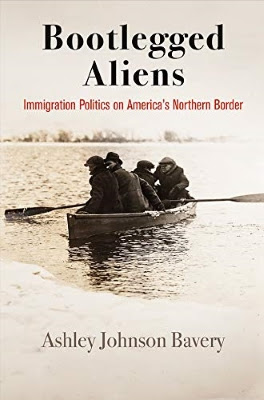
  • External event: Book talk on Bootlegged Aliens: Immigration Politics on America’s Northern Border
UPCOMING EVENT
Panel Discussion: Models for Repatriation of Indigenous Cultural Property from First Nations, Canada
Tuesday, February 8 | 12:30 pm | Online | RSVP here
How can repatriation be built from mutual respect, cooperation and trust? North American museums and institutions have historically engaged in the collection and categorization of Indigenous cultural property and knowledge without the consent or active involvement of Indigenous people. The Native American Graves Protection and Repatriation Act (NAGPRA) was enacted in 1990 to return Native American “cultural items” to lineal descendants and culturally affiliated American Indian tribes, Alaska Native villages, and Native Hawaiian organizations. Despite this and further state legislation, many institutions including the University of California, have obfuscated or denied repatriation claims. Across the border, the Canadian government does not currently have legislation addressing the repatriation of Indigenous Ancestors and cultural heritage, but is working to create national support for repatriation through legislation Bill C-391. Some Canadian provinces have passed repatriation acts or provincial museum polices that have facilitated the return of ancestors and belongings. This panel discussion seeks to learn from what is being done in Canada. What is the cultural and nuanced work that builds successful repatriations? How can repatriation and indigenizing the institution from within preserve and strengthen tribal cultural heritage?
Join Canadian Studies affiliate Sabrina Agarwal (Professor of anthropology and chair of the UC Berkeley NAGPRA Advisory Committee) in conversation with Dr. Louis Lesage (Director, Nionwentsïo Office, Huron-Wendat Nation), Lou-Ann Neel (Curator and Acting Head of Indigenous Collections and Repatriation Department, Royal BC Museum), and Michelle Washington (Repatriation Specialist, Royal BC Museum) to explore these questions and hear about their experiences in repatriation.
Image: Kwakwaka’wakw house posts from British Columbia in the Hearst Museum of Anthropology, UC Berkeley.
New Faculty Affiliate Daniel Aldana Cohen Studies Politics of Climate Change
Canadian Studies is pleased to welcome professor Daniel Aldana Cohen, an assistant professor of sociology, as our newest program affiliate.
Professor Cohen joined the Berkeley faculty in July 2021. He completed his undergraduate schooling at McGill University, where he was also editor of the McGill Daily, and received a master’s and doctorate in sociology from New York University. He is also an Azrieli Global Scholar with CIFAR, a Toronto-based organization that provides support for outstanding early-career researchers studying the most important questions facing science and humanity.
Professor Cohen’s research focuses on the politics of climate crises, investigating the intersections of climate change, housing, political economy, social movements, and inequalities of race and social class in the United States and Brazil. He conducts comparative qualitative research on social movements and elite climate policymaking, as well as creating equitable, practical pathways to a low-carbon emissions future.
Professor Cohen is director of the Socio-Spacial Climate Collaborative, or (SC)2, a hub for critical social science research on climate change, and is a founding co-director of the Climate and Community Project. He has served as a policy advisor to several nonprofits and American political campaigns. His writing has appeared in publications including Nature, The Guardian, The Washington Post, Jacobin, and Vox, and he co-hosts the Dissent magazine affiliated podcast Hot & Bothered: A Climate Podcast for the 99%. He co-authored the book A Planet to Win: Why We Need a Green New Deal (2019), and is currently working on his next book, Street Fight: Climate Change and Inequality in the 21st Century City. Professor Cohen can be found on Twitter at @aldatweets.
EXTERNAL EVENTS
Canadian Minister of Northern Affairs Dan Vandal: Building a Strong, Sustainable North
Friday, February 4 | 10 am PT | Online | RSVP here
The Government of Canada, Indigenous peoples, and 6 territorial and provincial governments came together to develop Canada’s Arctic and Northern Policy Framework, a transformative vision of the future where northern and Arctic people are thriving, strong and safe. The Framework includes goals relating to eight overarching themes—people and communities, strong economies, comprehensive infrastructure, environment and biodiversity, science and Indigenous knowledge, global leadership, safety, security and defence, and reconciliation. It incorporates regional and distinctions-based lenses while integrating domestic and international dimensions. Canada’s Minister of Northern Affairs, Daniel Vandal, will discuss federal, Indigenous, and community-driven partnerships and programs to address short-term and long-term climate change adaptation and mitigation, supporting healthy ecosystems in the Arctic and North in a conversation by moderated by Jothsna Harris.
Book Talk: Bootlegged Aliens: Immigration Politics on America’s Northern Border
Friday, February 18 | 12 pm PT | Online | RSVP here
Join Professor Ashley Johnson Bavery for a discussion of her new book, Bootlegged Aliens. The book explores immigration on America’s northern border before World War II, situating Detroit, Michigan as America’s epicenter for unauthorized immigration. In this industrial center, thousands of Europeans crossed the border from Canada each year, prompting nativist backlash and complicating the labor politics of the automobile industry. This event is jointly hosted by the Center for Comparative Immigration Studies at UC San Diego and UCLA Center for the Study of International Migration. UCLA professor Tobias Higbie will join as a discussant.
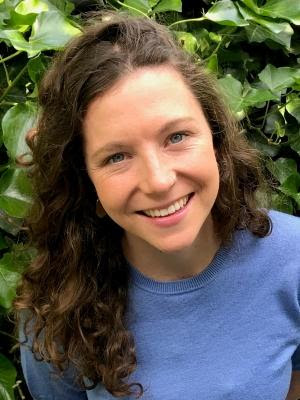
Ashley Johnson Bavery is assistant professor of history at Eastern Michigan University. Her work has appeared in the Journal of Urban History and the Journal of American History and her book, Bootlegged Aliens: Immigration Politics on America’s Northern Border (2020) won the First Book Award from the Immigration and Ethnic History Society.
Tobias Higbie is a professor of history and labor studies at UCLA, the chair of the Labor Studies and the associate director of the Institute for Research on Labor and Employment. His research explores social movements, migration, and the politics of community in the United States. Higbie’s most recent book, Labor’s Mind: A History of Working Class Intellectual Life (2019), recovers the social world of self-educated working people and the politics of working-class identity during the early 20th century.
Canadian Studies Program
213 Moses Hall #2308
Canadian Studies Program | Univ. of California, Berkeley, 213 Moses Hall #2308, Berkeley, CA 94720

New migration data resource; when Detroit was an immigration hub

A newsletter from a fellow Canadian organization in the Bay Area.


Canadian Studies Announcements
In this issue:
  • Upcoming panel discussion: “Models for Repatriation of Indigenous Cultural Property from First Nations, Canada”
  • New resource: UBC Migration Hub
  • March 2022 ACSUS conference cancelled
  • Grant opportunity: Visiting fellowships at the British Library
  • External event: Book talk on Bootlegged Aliens: Immigration Politics on America’s Northern Border
UPCOMING EVENT
Panel Discussion: Models for Repatriation of Indigenous Cultural Property from First Nations, Canada
Tuesday, February 8 | 12:30 pm | Online | RSVP here
How can repatriation be built from mutual respect, cooperation and trust? North American museums and institutions have historically engaged in the collection and categorization of Indigenous cultural property and knowledge without the consent or active involvement of Indigenous people. The Native American Graves Protection and Repatriation Act (NAGPRA) was enacted in 1990 to return Native American “cultural items” to lineal descendants and culturally affiliated American Indian tribes, Alaska Native villages, and Native Hawaiian organizations. Despite this and further state legislation, many institutions including the University of California, have obfuscated or denied repatriation claims. Across the border, the Canadian government does not currently have legislation addressing the repatriation of Indigenous Ancestors and cultural heritage, but is working to create national support for repatriation through legislation Bill C-391. Some Canadian provinces have passed repatriation acts or provincial museum polices that have facilitated the return of ancestors and belongings. This panel discussion seeks to learn from what is being done in Canada. What is the cultural and nuanced work that builds successful repatriations? How can repatriation and indigenizing the institution from within preserve and strengthen tribal cultural heritage?
Join Canadian Studies affiliate Sabrina Agarwal (Professor of anthropology and chair of the UC Berkeley NAGPRA Advisory Committee) in conversation with Dr. Louis Lesage (Director, Nionwentsïo Office, Huron-Wendat Nation), Lou-Ann Neel (Curator and Acting Head of Indigenous Collections and Repatriation Department, Royal BC Museum), and Michelle Washington (Repatriation Specialist, Royal BC Museum) to explore these questions and hear about their experiences in repatriation.
Image: Kwakwaka’wakw house posts from British Columbia in the Hearst Museum of Anthropology, UC Berkeley.
New Resource: UBC Migration Data Hub
The UBC Centre for Migration Studies (UBC) is pleased to announce the launch of its UBC Migration Data Hub with a series of nine interactive, searchable visual dashboards drawn from the Government of Canada’s Open Government Portal. More than 20 different datasets available from Immigration, Refugees and Citizenship Canada (IRCC) are used to create visualizations that provide monthly updates on statistics related to permanent and temporary residents.
These dashboards allow users to quickly search for the information they want from these monthly open data reports and have them readily available in graphic form. It is an ideal tool for teaching and learning, research and for our community service providers interested in understanding immigration flows and trends. Dashboards provide not only general, national level information since 2015, but also breakdowns by province, metropolitan area, immigration program category, citizenship, gender, and age. It also allows users to specify the date range they wish to see in visual form as well.
Dashboards are updated monthly and drawn directly from government datasets making Canadian migration data more accessible and easier to manage. The CMS hopes to expand the data available on the UBC Migration Data Hub in future so be sure to check out the site and provide suggestions or comments to admin.migration@ubc.ca.
March 2022 ACSUS Conference Cancelled
As a result of the current Omicron wave, the Association for Canadian Studies in the United States (ACSUS) Executive Council has decided to cancel their upcoming conference previously scheduled for March 24-27, 2022. While this decision is unfortunately, ACSUS believes it is best for the health and safety of its members. Those who have already registered may either request their payment be credited to a future conference or reimbursed by emailing info@acsus.org. The association’s next scheduled biennial conference will be in Fall 2023.
Grant Opportunity: British Library Visiting Fellowships
Application deadline: February 1, 2021
The Eccles Centre for American Studies at the British Library in London welcomes Canadianists to apply for their 2022 Visiting Fellowship programme. These fellowships are open to academics, postgraduate students, creatives and independent scholars and cover all regions of the Americas.
For those living in North America, the fellowships are worth £3,000 (approximately $4,000 USD) and should enable around a month’s research in London. Due to the popularity of these fellowships, the Centre will focus most of this year’s fellowships on four research themes: sounds and music of the Americas; Americans beyond the Americas; American environments; and religion and spirituality.
For more information about the fellowship programme, please look here. The deadline for applications is 5pm GMT (9:00 pm PT) on Tuesday, 1 February 2022 and the Fellowship needs to be taken by 30 April 2024. For more information about the four themes, please look here.
EXTERNAL EVENTS
Book Talk: Bootlegged Aliens: Immigration Politics on America’s Northern Border
Friday, February 18 | 12:00 p.m. | Online | RSVP here
Join Professor Ashley Johnson Bavery for a discussion of her new book, Bootlegged Aliens. The book explores immigration on America’s northern border before World War II, situating Detroit, Michigan as America’s epicenter for unauthorized immigration. In this industrial center, thousands of Europeans crossed the border from Canada each year, prompting nativist backlash and complicating the labor politics of the automobile industry. This event is jointly hosted by the Center for Comparative Immigration Studies at UC San Diego and UCLA Center for the Study of International Migration. UCLA professor Tobias Higbie will join as a discussant.
Ashley Johnson Bavery is assistant professor of history at Eastern Michigan University. Her work has appeared in the Journal of Urban History and the Journal of American History and her book, Bootlegged Aliens: Immigration Politics on America’s Northern Border (2020) won the First Book Award from the Immigration and Ethnic History Society.
Tobias Higbie is a professor of history and labor studies at UCLA, the chair of the Labor Studies and the associate director of the Institute for Research on Labor and Employment. His research explores social movements, migration, and the politics of community in the United States. Higbie’s most recent book, Labor’s Mind: A History of Working Class Intellectual Life (2019), recovers the social world of self-educated working people and the politics of working-class identity during the early 20th century.
Canadian Studies Program
213 Moses Hall #2308
Canadian Studies Program | Univ. of California, Berkeley, 213 Moses Hall #2308, Berkeley, CA 94720

Happy New Year! First look at our spring events 🌷

An item from one of our fellow Canadian organizations in the Bay Area.


Canadian Studies Announcements
In this issue:
  • Our Spring 2022 Events Calendar is here!
  • Panel discussion: “Imagining a New Model for Repatriation of Indigenous Cultural Property: Lessons from Canada and the United States”
  • Hildebrand Graduate Research Showcase
  • “Establishing Aboriginal Territories in Cyberspace”
  • “‘Practically American’: What a Canadian Schoolteacher’s Fight Against California’s Anti-Alien Laws Reveals About the Boundaries of American Identity”
  • Conference: Implementing Migration Policy: Excavating the Administrative and Bureaucratic Processes Behind Migrant Admissions and Deportation
  • COVID update for UC Berkeley events
  • Grant opportunity: Visiting fellowships at the British Library
SPRING 2022 EVENTS CALENDAR
While 2022 is off to a challenging start with a new COVID upsurge, we at Canadian Studies are delighted to share our exciting Spring colloquium line-up, which revolves around new scholarship and practice on Indigeneity and immigration. We’ll hear about museums, cyberspace, Bay Area history, energy autonomy, and new agrarian projects in the Northwest Territories. Do join us!
Panel Discussion: Imagining a New Model for Repatriation of Indigenous Cultural Property: Lessons from Canada and the United States
Tuesday, February 8 | 12:30 pm | Online | RSVP here
How can repatriation be built from mutual respect, cooperation and trust? North American museums and institutions have historically engaged in the collection and categorization of Indigenous cultural property and knowledge without the consent or active involvement of Indigenous people. The Native American Graves Protection and Repatriation Act (NAGPRA) was enacted in 1990 to return Native American “cultural items” to lineal descendants and culturally affiliated American Indian tribes, Alaska Native villages, and Native Hawaiian organizations. Despite this and further state legislation, many institutions including the University of California, have obfuscated or denied repatriation claims. Across the border, the Canadian government does not currently have legislation addressing the repatriation of Indigenous Ancestors and cultural heritage, but is working to create national support for repatriation through legislation Bill C-391. Some Canadian provinces have passed repatriation acts or provincial museum polices that have facilitated the return of ancestors and belongings. This panel discussion seeks to learn from what is being done in Canada. What is the cultural and nuanced work that builds successful repatriations? How can repatriation and indigenizing the institution from within preserve and strengthen tribal cultural heritage?
Join Canadian Studies affiliate Sabrina Agarwal (Professor of anthropology and chair of the UC Berkeley NAGPRA Advisory Committee) in conversation with Dr. Louis Lesage (Bureau du Nionwentsïo, Huron-Wendat Nation), Lou-Ann Neel (Curator and Acting Head of Indigenous Collections and Repatriation Department, Royal BC Museum), and Michelle Washington (Repatriation Specialist, Royal BC Museum) to explore these questions and hear about their experiences in repatriation.
Image: Kwakwaka’wakw house posts from British Columbia in the Hearst Museum of Anthropology, UC Berkeley.
Hildebrand Graduate Research Showcase
Tuesday, March 15 | 12:30 pm | Moses Hall
Learn about the research Canadian Studies funds through our Edward Hildebrand Graduate Research Fellowships, as recipients present short overviews of their projects. This panel will have a special focus on issues of Indigenous resource sovereignty and development in Canada. Participating scholars will be Mindy Price (Environmental Science, Policy, and Management), with her project “New Agrarian Frontiers: Power, Sovereignty, and Public-Nonprofit Partnerships in the Northwest Territories, Canada”, and Aaron Gregory Young (City and Regional Planning), with “Kinship Infrastructures: Indigenous Energy Autonomy and Regulatory Sea Change in Beecher Bay”.
Establishing Aboriginal Territories in Cyberspace
Thursday, April 7 | 12:30 pm | Moses Hall
Jason Lewis, founder of Obx Labs, will discuss his work using virtual environments to assist Aboriginal communities in preserving, interpreting and communicating cultural histories. Lewis co-founded and co-directs the Aboriginal Territories in Cyberspace research network that is investigating how Aboriginal people can participate in the shaping of our digital media future. He also co-directs the Skins workshop, combining traditional stories and game design at the Kahnawake First Nations’ high school. Professor Lewis teaches design and computational arts at Concordia University in Montreal and holds a University Research Chair in Computational Media and the Indigenous Future Imaginary.
“Practically American”: What a Canadian Schoolteacher’s Fight Against California’s Anti-Alien Laws Reveals About the Boundaries of American Identity
Thursday, April 28 | 12:30 pm | Moses Hall
Brendan Shanahan, a Yale lecturer and former Hildebrand Fellow, explores the case of Katharine Short, a Canadian immigrant to California who challenged an early 20th-century law that banned non-citizens from state employment. Shanahan will discuss what her campaign – and the case overall – shows about the disparate impact of the state’s anti-alien hiring laws, comparing the experiences of favorably portrayed immigrants (like white, middle-class Canadians) vs. less favored non-citizens.
Conference: Implementing Migration Policy: Excavating the Administrative and Bureaucratic Processes Behind Migrant Admissions and Deportation
May 2-3 | UC Berkeley Campus
In a globalized world, one of the most difficult tasks facing governments is how to effectively manage cross-border migration. In recent years, many have highlighted the ways in which elected officials and lobby groups influence the politics that drives immigration policy. However, less attention has been paid to those tasked with carrying out immigration policy, such as bureaucrats who may work in conjunction with non-governmental organizations. With the aim of shedding light on how bureaucratic agencies and civil society organizations influence immigration policy and resettlement, we invite the public to attend a series of conversations exploring the dynamics of implementing immigration policy by showcasing cutting-edge academic research by an international group of leading experts. Further details to come!
Image: Peace Arch Border Crossing between the United States and Canada. David Herrera, Wikimedia Commons.
UC Berkeley Coronavirus Update
Last week, the University announced that all courses would be held online through January 28 due to the current Omicron wave. While this does not directly affect Canadian Studies, we will continue to monitor the situation and ensure our events conform with updated University guidelines. Please double-check all event listings before attending as details may change due to public health directives. All our events will continue to offer a virtual option this semester for those unable to attend in person. For the latest updates on the campus COVID situation, please visit the coronavirus resource hub.
Grant Opportunity: British Library Visiting Fellowships
Application deadline: February 1, 2021
The Eccles Centre for American Studies at the British Library in London welcomes Canadianists to apply for their 2022 Visiting Fellowship programme. These fellowships are open to academics, postgraduate students, creatives and independent scholars and cover all regions of the Americas.
For those living in North America, the fellowships are worth £3,000 (approximately $4,000 USD) and should enable around a month’s research in London. Due to the popularity of these fellowships, the Centre will focus most of this year’s fellowships on four research themes: sounds and music of the Americas; Americans beyond the Americas; American environments; and religion and spirituality.
For more information about the fellowship programme, please look here. The deadline for applications is 5pm GMT (9:00 pm PT) on Tuesday, 1 February 2022 and the Fellowship needs to be taken by 30 April 2024. For more information about the four themes, please look here.
Canadian Studies Program
213 Moses Hall #2308
Canadian Studies Program | Univ. of California, Berkeley, 213 Moses Hall #2308, Berkeley, CA 94720

Season’s greetings from Canadian Studies! 🎅🏻

A newsletter from a fellow Canadian organization in the Bay Area.


🎄 Canadian Studies Announcements 🎄
In this issue:
  • Happy holidays from Canadian studies!
  • A brief history of the Christmas tree in Canada
  • Holiday recipe: The tourtière, a Québécois holiday pie
  • Support Canadian Studies with an end-of-year gift
Happy Holidays from Canadian Studies!
It’s hard to believe, but 2021 is almost at an end. While the pandemic is once again creating challenges to celebrating our most cherished year-end traditions, we hope that you are able to spend this special time of year with those who matter to you. From Christmas roasts to New Year’s toasts, we hope that whatever you’re doing, the next two weeks are a time of peace, joy, and celebration.
On behalf of all of us at Canadian Studies, we look forward to seeing you in the New Year. Stay safe, stay warm, and be well! ☃️
A Brief History of the Christmas Tree in Canada
While last-minute shoppers across North America are scrambling to get popular items before they sell out, it turns out gifts aren’t the only thing affected. As the CBC reported last month, Canada is currently experiencing a Christmas tree shortage, particularly for highly-prized trees like the Fraser or Balsam fir. But while the Christmas tree may be today a Canadian holiday must-have, it didn’t start out that way. In the classic Canadian tradition, it actually began as a foreign custom that has since been thoroughly integrated into Canadian society.
The modern Christmas tree originated in 16th-century Germany, and is commonly credited to Martin Luther, though it possibly had earlier precedents. The first recorded Christmas tree in all North America appeared in Canada in 1781, at a party hosted by the German baroness Charlotte Riedesel in Sorel, Quebec. However, the custom was not popularized until the reign of Queen Victoria, who established an official royal tree along with her German husband, Prince Albert. Fashionable families rushed to copy the royal couple, and by the end of the century the custom had spread across Canada. And in another first, one of the world’s first electrically-lit Christmas trees was set up in the Westmount suburb of Montreal in 1896.
As the Christmas tree established itself across North America, this new demand brought new opportunities to enterprising farmers. The first dedicated Christmas tree farm was founded in the United States in 1901. Nevertheless, Canadians overwhelmingly used locally-cut wild trees up until around WWII. After this, increasing demand and urbanization made sourcing local trees impractical, and led to the growth of the Christmas tree industry, which today tops over $100 million annually in Canada alone.
So, what’s the future of the industry? Canada today produces up to 6 million Christmas trees annually, almost half of which are exported. The trees form a significant industry in several provinces, with 80% grown in Quebec, Ontario, or Nova Scotia. Demand continues to soar, with sales continue growing almost 15% a year since 2015.
Farmers say current shortages can be partially explained by a drop in trees planted during the last recession. However, the industry also faces several long-term challenges: despite increasing demand, the number of acres under cultivation dropped 15% between 2011 and 2016. Land prices in Ontario incentivize farmers to use land for other, more profitable purposes. And as older farmers retire, they say few young people are interested in continuing the family business. So just as Canadians adopted the Christmas tree one hundred years ago, they may soon find themselves adjusting to a new holiday tradition: the Christmas tree shortage.
Image #1: Engraving of Queen Victoria and Prince Albert with their children. Anonymous artist, 1848. Webster Museum.
Image #2: Nova Scotia farmer prunes a balsam fir. Source: Madereugeneandrew on Wikimedia Commons.
Holiday Recipe: The Tourtière, a Québécois Holiday Pie
In the dark days of winter, there’s nothing as satisfying as tucking into a dish of warm comfort food with friends and family. For the people of Quebec, that dish is the savory meat pie called the tourtière. Dating back to the 1600s, this dish has become a staple of French-Canadian Christmas celebrations. Traditionally, it’s eaten as part of the réveillon, a long dinner held on Christmas Eve and New Year’s Eve. Regional variations made with various meats or fishes exist across Canada, including a famous version from the Lac-Saint-Jean region.
While the dish requires some preparation, it’s relatively forgiving (for baking) and easily adapted to taste. For simplified take on this holiday classic, visit AllRecipes.com; experts wanting to try a more traditional recipe can check out this one from the New York Times.
Image source: AllRecipes.com.
🔔 Support Canadian Studies with a Year-End Gift 🔔
As we wrap up 2021, we’d like to remind you that our program depends on your support. 90% of Canadian Studies’ funding comes from friends like you. If you enjoy these newsletters or our monthly colloquium, please consider making a year-end gift. Your donation helps support our public events, graduate student fellows, and original research, and strengthens our community of Friends of Canada in the Bay Area.
Canadian Studies Program
213 Moses Hall #2308
Canadian Studies Program | Univ. of California, Berkeley, 213 Moses Hall #2308, Berkeley, CA 94720

Grad research showcase tomorrow! Plus: New Hildebrand fellow studies housing inequality

We received this newsletter from a fellow Canadian organization in the Bay Area yesterday – so the event(s) described as “tomorrow” are actually later today.


Canadian Studies Announcements
In this issue:
  • Tomorrow: Hildebrand Graduate Research Showcase
  • New Hildebrand Fellow studies inequality and the Vancouver rental market
  • In the News: Are investors fuelling Canada’s soaring housing costs?
  • External events:
  • “Canadian Brass: Making Spirits Bright for 50 Years and Counting”
Beginning today, the Canadian Studies newsletter will be published every two weeks. We’ll return to a weekly newsletter in January 2021.
TOMORROW
Hildebrand Graduate Research Showcase
December 7 | 12:30 pm | Online | RSVP here
Learn about the research Canadian Studies funds through our Edward Hildebrand Graduate Research Fellowships, as recipients present short overviews of their projects. Participating scholars are below; RSVP to canada@berkeley.edu.
Caylee Hong, Ph.D. can., Anthropology
“Orphaned Wells: The Impact of Corporate Bankruptcy on Energy Infrastructures and Municipal Futures”
Mass bankruptcies of energy companies have “orphaned” thousands of oil and gas wells across Canada and the United States in recent years. Without solvent owners to plug and decommission them, such wells pose serious environmental, financial, and health and safety concerns, especially in urban areas. Caylee examines the ways that cities and their residents grapple with these oil and gas wells in their midst. In this talk, Caylee will draw upon her comparative research from several diverse urban environments in British Columbia, Alberta, and California.
Sophie Major, Ph.D. can., Energy & Resources Group
“Engaging with Indigenous Political Thought From British Columbia”
Sophie’s research examines the marginalization of Indigenous people and Indigenous knowledge in political theory discourses and asks if and how political theorists ought to engage with Indigenous political thought. Incorporating original ethnographic work with First Nations peoples in British Columbia, Canada, Sophie’s dissertation introduces a number of case studies, illustrating the strengths of an ethnographic, historicist, genealogical, and interpretive approach to the study of Indigenous political theory.
New Hildebrand Fellow, Molly Harris, Studies Inequality and Commodification of Rental Housing in Vancouver
Canadian Studies is pleased to introduce Molly Harris as the latest recipient of an Edward Hildebrand Graduate Research Fellowship. Molly is a master of city planning student, concentrating in housing, community, and economic development.
Molly’s research explores the role of financialized actors in the Metro Vancouver region’s multifamily rental housing sector. She assesses the scale and perceptions of financialization, or the growing ubiquity of financial logic in everyday life, in the development and operation of rental buildings, as well as the impacts of this process on residents. Molly’s work evaluates how financialized actors—such as private equity firms, asset managers, and real estate investment trusts—can transform rental housing from a home into an investment commodity, potentially creating new systems of extractive accumulation and consolidation. Her Hildebrand Fellowship will provide funding for data and interviews with real estate industry professionals, local policy makers, and tenant organizations.
Molly’s research builds on her interest in increasing access to housing through decommodification. Her current project expands on prior work investigating the disparate impacts of housing quality issues on subsidized and unsubsidized residents across the United States, mapping neighborhood change in Vancouver and Toronto, and evaluating post-wildfire disaster rebuild strategies and land use scenarios. Before coming to Berkeley, Molly worked as a consultant at HR&A Advisors, supporting clients on strategic planning, open space, economic development, and real estate advisory projects. She holds a bachelor of arts degree in urban geography from McGill University.
IN THE NEWS
Are Investors Fueling Canada’s Soaring Housing Costs?
While cities like Vancouver and Toronto are now infamous for their high cost of housing, soaring home prices are no longer confined to Canada’s major cities. Housing prices are up across all provinces, with real estate records registering a nearly 25% increase in June compared to the previous summer. The average home cost in Toronto reached $1,163,323 in November, a 2.5% increase from October.
Bank of Canada deputy governor Paul Beaudry attributed some of the growth to domestic investors looking for secure returns. High real estate prices have allowed many homeowning Canadians (and corporations) to take out loans to buy investment properties. In Ontario, 25% of new mortgages were taken out by individuals who already possessed at least one home, up from 16% ten years ago. And buyers are not longer merely interested in rental income. Expectations of continued price increases mean investors are sometimes willing to pay more on a mortgage than a rental property brings in, on the expectation they will be able to later sell the house for an even greater profit.
The Bank of Canada cautions that overinvestment in the housing sector may prompt a price correction. In September, Canada Mortgage and Housing Corp. warned that the housing market was now “highly vulnerable” due to overvaluations and accelerating price increases. While Beaudry insists Canadians shouldn’t worry about a 2008-style mortgage crisis, he warns any drop in prices would have severe knock-on effects for the rest of the Canadian economy. Most families’ wealth is tied up in their homes, which gives Canadians access to cheap credit. A decrease in value would likely cause a major cutback in household spending, with consequent effects on retail and unemployment. Beaudry nevertheless assured citizens that the Canadian financial system is fundamentally sound, and would not be seriously affected by a hypothetical price drop.
Image: House for sale in Burnaby, BC. Philippe Giabbanelli, Wikimedia Commons.
Support Canadian Studies with an End-of-Year Gift
Do you support the work we do? Give now to keep Canadian Studies going strong! As a donor-supported program, 90% of Canadian Studies’ funding comes from friends like you. Your gift of any size helps support our public lectures, graduate student fellows, and original research, and strengthens our community of Friends of Canada in the Bay Area.
EXTERNAL EVENTS
Canadian Brass: Making Spirits Bright for 50 Years and Counting
December 11 | 8 pm | Zellerbach Hall | Buy tickets
For half a century, the lighthearted but seriously virtuosic Canadian Brass has been luring listeners of all ages to the rich, exciting, exuberant sound of brass music. The Grammy-winning quintet, with more than 100 recordings to its name, has charmed audiences from Moscow and Beijing to Boston and Tokyo, playing a dizzying range of repertoire including music of the Baroque, Dixieland, Broadway, and John Philip Sousa.
This very special holiday program features originals like “Bach’s Bells”; favorite songs such as “White Christmas,” “The Most Wonderful Time of the Year,” and “Christmas Time Is Here”; and familiar classical, choral, and popular music arranged to make brass instruments sing.
Canadian Studies Program
213 Moses Hall #2308
Canadian Studies Program | Univ. of California, Berkeley, 213 Moses Hall #2308, Berkeley, CA 94720