Tag Archives: World War One Centennial Commission

WWI DISPATCH April 2022

A newsletter from the organization formerly known at the World War One Centennial Commission.


View this in your browser

Header 10292020

April 2022

Webby top

WWI Memorial “Virtual Explorer” App Nominated for Two Webby Awards!

The WWI Memorial “Virtual Explorer” App has been selected from among over 14,300 entries as a finalist in not one but two categories of the 2022 Webby Awards. Presented by the International Academy of Digital Arts and Sciences, the Webby Awards are the “Internet’s highest honor.” Each category will give one award selected by the Academy and another that is known as a People’s Voice award, selected by vote of the general public. This means that YOU can help the WWI Memorial “Virtual Explorer” App win one or both of these awards! Click here to read the whole exciting story, and find out how you and everyone you know can vote to bring these two prestigious awards to the “Virtual Explorer” App, and thereby put a great national spotlight on the National World War I Memorial in Washington, DC.

Webby bottom


World War I Centennial Commission wins 2021 DowntownDC Momentum Award for National World War I Memorial

DowntownDC Momentum Awards 2021

The DowntownDC Business Improvement District hosted its 2021 Momentum Awards on Thursday, March 24, 2022, at the Martin Luther King Jr. Memorial Library in Washington, DC. At the ceremony, the World War One Centennial Commission received the Downtown Detail Award for the opening of the new National World War I Memorial at the former Pershing Park, on Pennsylvania Avenue NW, “which serves as a beautiful dedication to the heroism and sacrifice of Americans.” Click here to read more, and see video that was played for attendees at the award ceremony last month.


Jari Villanueva Leads Daily Taps at the National World War I Memorial

Jari Villanueva snip

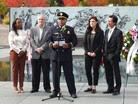
The Daily Taps program at the National World War I Memorial, in Washington, DC was launched November 11, 2021 by the Doughboy Foundation as part of its ongoing commitment to Honor All Those Who Served in WWI. To ensure this commitment would be steadfast, Jari Villanueva, lifelong bugler, considered to be the country’s foremost expert on military bugle calls, and Director of Taps for Veterans, was chosen to lead this effort. Jari sounded the first Daily Taps at the WWI Memorial, DC, and continues to play, as well as organize many other dedicated buglers who have stepped forward to honor all our Veterans and active-duty military, rain or shine. Click here to learn more about Jari and the Daily Taps program at the National World War I Memorial.


“More Precious Than Peace” Uncovers the American Experience in World War I

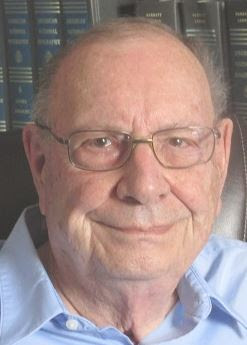
Justus D. Doenecke

When Justus Doenecke retired in 2005 at age 67 from the faculty of New College of Florida, the state’s honors college, where he had taught for 36 years, he was “hoping for a large project to keep me occupied during my new ‘permanent leave.’” He realized that he had “collected a number of contemporary books” on World War I, so he decided to read them. One thing led to another, and 17 years later, his retirement “hobby” has turned into two monumental books on WWI. The latest book, More Precious Than Peace: A New History of America in World War I  was published this spring by the University of Notre Dame Press. Click here to read more, and find out how some light reading about WWI evolved into two important contributions to the canon of writings about the “diplomatic, military, and ideological aspects of U.S. involvement as a full-scale participant in World War I.”


‘Valor never expires’: How a pair of Iowa researchers is honoring the heroic acts of diverse World War I soldiers

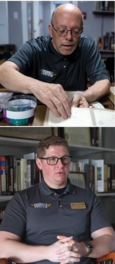
Tim Westcott-Josh Weston

The Des Moines Register newspaper in Iowa recently ran an extensive article on the work of researchers on the Valor Medals Review Project at Park University’s George S. Robb Centre for the Study of the Great War. Supported by the U.S. World War I Centennial Commission, the Valor Medals Review is searching for WWI American service members who deserved to be awarded the Medal of Honor, but received a lesser decoration due to their race, ethnicity or religion. Click here to read more, and learn how research team members such as Tim Wescott (top left) and Josh Weston are racing the calendar to complete the review by 2025.


Remembering James Butler, R.A., MBE, 25 July 1931–26 March 2022

James Butler

James Butler, who died last month at the age of 90, was a famous British figurative sculptor and the longest serving member of the Royal Academy. His notable works include not only large-scale bronze statues of famous historical figures like Queen Elizabeth, but also several memorials commemorating WWI and WWII in England, France and the United States. Commissioner Monique Seefried of the US World War I Centennial Commission pays fond tribute to the artist and his work on several monumental sculptures that honor American soldiers who served and died in World War I.


World War I Veteran to be celebrated during EMS Week at WWI Memorial

Dr. Frank Boston

On May 20, 2022, and in celebration of EMS week, Washington DC Fire & EMS Deputy Chief Michael Knight and Boston researcher George Whitehair will lead the recognition for all EMS workers and in particular, a World War I veteran, doctor, and surgeon, who served in France with the 92nd Division (Buffalo soldiers). He then returned to start an ambulance corp and a hospital, both of which continue to serve their communities almost 100 years later. His name is Dr. Frank Erdman Boston, and he will be honored at the World War I Memorial along with all EMS workers during EMS week. Click here to read more about Dr. Frank Boston and EMS Week 2022.


WWI Army nurse Helen Grace McClelland received Distinguished Service Cross

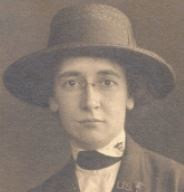
Helen Grace McClelland

Helen Grace McClelland was born in Ohio in 1887. She enrolled at the University of Pennsylvania School of Nursing in 1908 and graduated in 1912. When the Red Cross asked for volunteers in 1914 to aid overseas during World War I, McClelland answered the call. She volunteered in 1915 for the American Ambulance Service and served in France. The U.S. officially entered the war in 1917, but McClelland saw it as her duty to continue helping in the humanitarian effort overseas. Click here to read more, and learn how, after briefly returning to the U.S., she officially joined the Army Nurse Corps in 1917 and was brought back to Europe’s Western Front to continue aiding in the war effort.


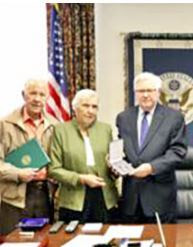
Congressman presents war medals to family of American World War I hero

Private First Class Abraham Smith medals

Private First Class Abraham Smith was part of the U.S. Army’s WWI American Expeditionary Force, known as the “Polar Bears.” On Oct. 27, 1918, PFC Smith carried wounded soldiers to the dressing station and delivered a message under artillery fire in north Russia. Unfortunately, he was never awarded the military medals that he valiantly earned. But recently, Congressman Hal Rogers of Kentucky presented the Silver Star, the WWI Victory Medal, and the WWI Bronze Victory Pin to Smith’s descendants. Click here to read more, and find out how this century-long oversight was at least partially rectified with the assistance of the Congressman’s office.


Honoring the “Hello Girls” of World War I

Daniela Larsen

More than 100 years ago, women from every state in the U.S. volunteered to serve as switchboard operators and real-time translators on the front lines of World War I. They served under commissioned officers, wore dog tags, rank insignia and uniforms and swore the Army Oath, but the 223 women and 2 men of the Signal Corps Telephone Operator Unit were told when they came home that they had served as “civilian contractors” instead of soldiers. Click here to read more, and learn how Director Daniela Larsen of the John Hutchings Museum in Lehi, Utah is doing her part to get the “Hello Girls” (including 2 from Utah) recognition they’ve long deserved.


World War I opened opportunity for women workers at Rock Island Arsenal

RIA female worker

During Women’s History Month, inspirational women such as Harriet Tubman or Susan B. Anthony are often remembered, but it is also important to recognize women closer to home. During World War I, women from Rock Island and Moline, Illinois, Davenport, Iowa, and the surrounding areas, were hired in large numbers at Rock Island Arsenal in Illinois for the first time, in order to support the war efforts. Click here to read more, and learn how women at RIA emerged from strictly clerical jobs, and put their lives on the line by working one of the most dangerous tasks at the arsenal, filling 155mm shells and setting fuses.


Cincinnati Icon passes; championed for Black World War I Soldiers

Paul LaRue and Carl Westmoreland snip

Carl Westmoreland, who was the senior historian at the National Underground Railroad Freedom Center for the past 20 years, died March 10, two days after his 85th birthday. He had an “extraordinary friendship” with Paul LaRue, a retired social sciences teacher and former member of the Ohio WWI Centennial Commission. Click here to read more, and learn how the two men “came together because of a passion they shared for making sure the Black men who took up arms to fight oppression in the Civil War and World War I were never forgotten.”


Waking Up to History: Putin’s War and the Historical Precedent of World War I

Todd S. Gernes

As the world emerges from the COVID-19 pandemic, and all of its eerie associations with and similarities to the World War I-era Spanish Flu epidemic that killed millions globally, the crisis in Ukraine has emerged carrying its own unsettling resonances with the Great War. Writing on the EVN Report web site, Todd Gernes, Associate Professor of History at Stonehill College in Easton, MA, takes a look at the grim parallels. Click here to read more, and see how “Putin’s war against Ukraine evokes so many images and plotlines from the Great War of 1914-1918.”


Together in life and death:
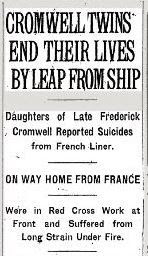
The Cromwell sisters of World War I

Cromwell Sisters news clip

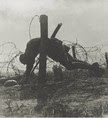
Buried side by side at Suresnes American Cemetery just outside Paris, lie the Cromwell sisters, who traded in a life of prominence in New York City to be frontline nurses during World War I. The twin sisters survived the war, but overcome by what is now known as post-traumatic stress disorder (PTSD), jumped to their deaths from the ship that was to take them home in January 1919. Click here to read the whole story, and learn how the “Misses Cromwell,” as they were sometimes referenced in newspapers, were never far from active warfare, and how their shocking suicide helped put the mental trauma of war in a different light for the public.


Texas A&M Announces Discovery Of 15 Additional Aggies Killed In World War I

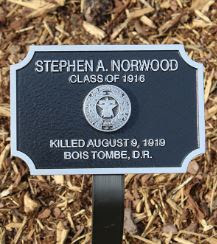
Norwood plaque Texas A&M

Texas A&M University has announced the discovery of 15 additional Aggie veterans who died in the First World War. The additional names have been added to a WWI commemorative site on Simpson Drill Field in the center of campus, joining the 55 Texas Aggie Gold Stars who are all remembered with individual oak trees and plaques. Click here to read more, and learn how research efforts by the Brazos County World War I Centennial Committee identified the additional Aggie veterans who died during the war.


The Tomb of the Unknown Soldier Centennial Webinars & Event Series

Tomb Webinar

Beginning in January 2021, Arlington National Cemetery (ANC) commenced a monthly program of events focused on different aspects of the Tomb of the Unknown Soldier, as part of its year-long centennial commemoration. While the initial planning for these programs in 2019 envisioned that they would primarily be held in-person, ANC had to pivot due to ongoing Covid surges. Click here to read more, and see how this challenge came with creative opportunities, and how the benefits this shift afforded ultimately outweighed the difficulties.


In World War One, A Clean Pair Of Socks Could Save Your Life

Knitting Socks WWI

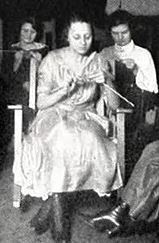
In a situation where people had to stand for what they believed in and at the same time run on their feet whenever needed, it is important to ensure that they are able to do so. In a war where weapons and tactics and how to defeat the enemies were the main focus, it was fairly easy to forget about the significance of small things like socks. As ridiculous as it might sound, a small detail as this one could dictate the fate of the soldiers in a war, and history had proved that to be true. Click here to read more, and learn how socks, relatively uncommon before World War I, became a battlefield essential often supplied by American volunteer knitters back home.


World War I News Digest April 2022

Gateway Pillars

World War I was The War that Changed the World, and its impact on the United States continues to be felt a century later, as people across the nation learn more about and remember those who served in the Great War. Here’s a collection of news items from the last month related to World War I and America.

90-year-old Gateway pillars in Lafayette deserve to be saved

Fiery crash topples over World War I memorial in Prospect Park

How war became a crime after WWI

Naturalized World War I Soldier Frank Capra

The first canned dog food in US made from excess WWI horses

How Basic Healthcare Became Big Business in America after WWI

WWI veteran considered for Medal of Honor recognized in Texas

What happened when the 1918 flu pandemic met World War I

VA Medical Center to celebrate 100-year anniversary next year 

Again, Russia at center of American-Backed War for Democracy

WWI in the Alps: An American Journalist on the Italian front lines

Des Moines museums  explore Black soldiers’ sacrifice in WWI


What are the best movies about WWI?
May I have the envelope, please!

Gary Cooper as Sergeant York

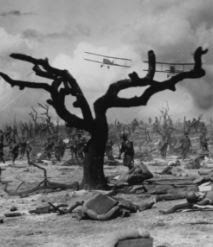
Maybe it had to do with the hand-to-hand combat onstage at this year’s Academy Awards, but for some reason, two major cinemaphilia web sites (now settle down, that means “a passionate interest in films, film theory, and film criticism“) took it upon themselves to issue their own lists of “the best World War I movies of all time.” You’d think these two lists would have a lot in common, but remember, we’re talking about cinemaphiles here: the two lists are actually quite different, both in their evaluation approaches, and the specific films selected for the honors. The Stacker web site posted its “Best World War I movies of all time” list on March 30, after consulting “the top-rated war films on IMDb and ranked the top 25 about WWI.”

Wings movie snip

However, five days earlier on March 25, the slashfilm.com web site was out with its own “The 14 Best World War I Movies Ever Made” list. Intriguingly, the two lists are quite different (quite apart from having a different number of films), and not all of the films on the shorter list are included on the longer list. (Bonus question: what now-famous actor appears in one film that is on both lists, and another film that is only on one list?)  So if you are looking for an excuse to binge watch a bunch of WWI movies, check out these two lists, and maybe come up with your own list of “the best World War I movies of all time.”

Farewell to Arms jacket

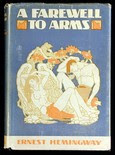
But say you’re a bibliophile rather than a cinemaphile—we still got you covered. Writing on the intercollegiate Studies Institute web site, David Hein is pleased to present his great big list of The Great Books of the Great War for your reading pleasure. And since we don’t have another contemporaneous list of WWI books to which to compare and contrast his, perhaps you can come up with your own!


Doughboy MIA for April 2022

Eugene Sharpe

A man is only missing if he is forgotten.

Our Doughboy MIA this month is Eugene Sharp. Eugene was born in Chattanooga, Tennessee on May 31st, 1896. He was the youngest of the 6 children that Sterling and Delphia Sharpe would have, farmers by trade.

Tall and stout, Sharpe had already done a year and half in the US Army before he enlisted in the Marine Corps on 13 February 1918. Upon arrival overseas he served as a Private in the 17th Company, 5th Regiment of Marines and was killed in action on 3 August 1918. His body was never recovered or identified and he is memorialized on the Tablets to the Missing in the chapel at the Aisne-Marne American Cemetery at Belleau Wood, France.

What makes PVT Sharpe’s case so special to us at Doughboy MIA is that we found a long forgotten ‘movement card’ for a set of remains received at the cemetery on 11 December 1922. These were deemed unidentifiable and so interred permanently there on 18 January 1923. This card indicates the remains were those of a Marine that carried the name ‘Eugene’. In looking on our comprehensive list of MIA’s, we find that there is but one Marine with that first name who is still missing in action from WW1. The likelihood of the man described on the card being Eugene Sharpe are very good then – however, in order to investigate further there is a batch of long missing paperwork we need to find that we have been searching for a very long time. Once we find that paperwork, we will be able to either raise the case for the man on the card being our man or else dismiss it all together. In fact, Sharpe’s would be the fifth case we could do this on – WHEN we locate this paperwork!

Now that the National Archive system is beginning to open up again, Doughboy MIA can get back in there and resume doing what we do best there: root out the clues that help us locate these men for recovery and/or tell their stories. FOR THAT WE NEED YOUR HELP. Every trip to the archives or to the battlefields costs us money, and we survive solely on donations – donations that help us bring closure to these long-forgotten cases. Our recent trip to the battlefields of France last November has put us tantalizingly close to possibly recovering at least two sets of remains, and we’ve got a follow-up trip in the works – a trip that may prove very exciting and a real breakthrough for us after many years of dedicated work!

BUT WE NEED YOUR HELP!!! Won’t you consider giving to Doughboy MIA? We are a 501(c)3 non-profit organization and your donation is tax deductible. Every dollar is used for our mission – a mission we believe is worthy of our best efforts. Here is YOUR chance to be part of this great endeavor. Please give today, and don’t be afraid to give generously! Visit us at www.ww1cc.org/mia and donate today with our everlasting thanks. Also visit us at www.doughboymia.org, or on Facebook at Doughboy MIA. Want to know more? Drop us a line – we’ll fill you in! But above all GIVE PLEASE: www.ww1cc.org/mia

A man is only missing if he is forgotten.


Merchandise from the Official
Doughboy Foundation WWI Store

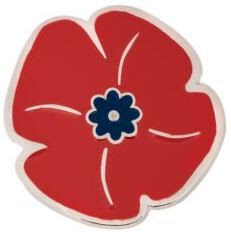
WWI Poppy Lapel Pin

Poppy Lapel Pin

Back in stock!

♦ Exclusive Commemorative WW1 Poppy Lapel Pin

♦ First Colors Commemoration

♦ Soft enamel color design

♦ Approx. 1.5 inch in dia.

♦ Standard military clasp

Proceeds from the sale of these books will help build the new National World War I Memorial in Washington, DC.

This and many other items are available as Official Merchandise of the Doughboy Foundation.


WWI Memorial Visitor Guide App map screen

Click or scan the QR Code below to download the Virtual Explorer App for the National World War I Memorial, and explore what the Memorial will look like when work is completed.

QR Code for Virtual Explorer App download


Genealogy book FREE DOWNLOAD


Education Thumb Drive image


Free Self-Contained WWI History Web Site on YOUR computer

Sources, lessons, activities, videos, podcasts, images

We have packaged all the content we created for “How WWI Changed America” into a format that is essentially a web site on a drive. Download the content onto any drive (USB, external, or as a folder on your computer), and all the content is accessible in a web site type format even without an internet connection. Click here to learn more, and download this amazing educational resource for home or classroom use.


you can help - shop using amazon smile


Doughboy MIA


Pershing Sponsors

Pershing Sponsors


John Henry Allison

A Story of Service from the Stories of Service section of ww1cc.org

John Henry Allison

Submitted by: Jim Allison {grandson}

My Grandfather, John Henry Allison had moved from Adair County Kentucky to Pontiac, IL and was a farm hand for his future father-in-law John B. Scott in 1916. At the beginning of his courtship with Louise Scott, what is now known as World War 1 disrupts the plans of many a young man including Grandpa who was inducted in Pontiac, IL September 19, 1917 and sent to Camp Dodge, Iowa. From there he went to Camp Pike Arkansas. Then he sailed from Hoboken, New Jersey on June 19, 1918 on the ship “Delta” arriving in Liverpool, England on July 15, 1918, and on to Le Harve, France on July 20, 1918.

Grandpa was in the following engagements: Chateau Thierry July 20-August 5. 1918; St. Mihiel Sept. 14-20, 1918; Verdun Sept. 21-28, 1918. He was wounded in the left arm at Chateau Thierry and in his right foot at Verdun. He was in overseas hospitals at Tauris and Vichy France. He sailed back from Brest, France on September 29, 1918 and arrived at Hoboken, New Jersey Christmas Day 1918. He was discharged January 19, 1919.

In her high school days my sister Janet interviewed grandpa concerning his World War days. When grandpa told her about diving into a fox hole and having a bullet hit his foot, she asked him why he dove in head first? Grandpa said something to the effect with a touch of humor, “Would you rather I had got shot in the head?” Janet could probably fine tune this part of my memory a bit!

Here are a few memories grandpa shared about his war experiences. While on leave, he and a small group of soldiers were in town somewhere in France. They were trying to find some thing and one of the fellow soldiers convinced grandpa to ask a lady how to find it. They told grandpa how to say it in French. He did so and was promptly slapped in the face. They “got” grandpa on that one!

Read John Henry Allison’s entire Story of Service here.

Submit your family’s Story of Service here.


Honor the Stories of Service of ALL Who Served.

Do Your Bit to Help Build the new National World War I Memorial.

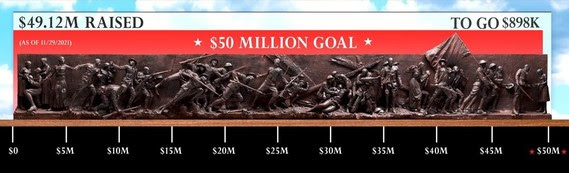
Fundraising Progress Maquette 11292021


WWI DISPATCH March 2022

A newsletter from the organization formerly known at the World War One Centennial Commission.


View this in your browser

Header 10292020

March 2022

Sculpture segment Jan 2022

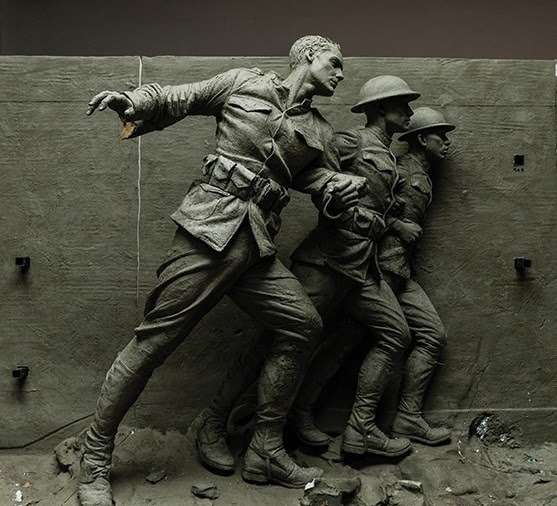
Sculptor Sabin Howard is working tirelessly on A Soldier’s Journey, the 60-foot-long high relief bronze bound for the nation’s capital. In the completed section shown (which has already been shiped to the foundry for casting), the soldier heads into battle with two comrades.

Behind the Epic WWI Memorial Being Sculpted in an Englewood Warehouse

A recent article in the New Jersey Monthly magazine captures the painstaking work going on in the sculpture studio of Sabin Howard as the monumental A Soldier’s Story bronze takes shape. When completed, the sculpture is destined for installation at the new National World War I Memorial in Washington, DC before the Memorial is dedicated in 2024. Click here to read the entire New Jersey Monthly magazine article, and and learn how a 21st Century digital process is enabling the project, which might have taken a lifetime using traditional approaches, to be completed in just a few years.


April 6 Book Launch & Photography Reception in Washington, DC “In the Centennial Footsteps of the Great War”

In the Centennial Footsteps of the Great War two books

In recognition of the 105th anniversary of the American entry into World War I, the Daughters of the American Revolution (DAR), the Doughboy Foundation, the Embassy of Hungary, and Mathias Corvinus Collegium invite you to a Book Launching ceremony and Photography Reception for the premiere of Attila Szalay-Berzeviczy’s forthcoming two-volume book, “In the Centennial Footsteps of the Great War.” The event will be held at the DAR Headquarters, located in the heart of Washington D.C at 1776 D St NW,, on Wednesday, April 6, 2022 at 5 p.m. Click here to read more about the event, and learn how “In the Centennial Footsteps of the Great War” chronicles and explains the historical events and the horrors of the First World War through photos that were taken 100 years later,


Virtual Field Trip – “Our Girls Over There”: The Hello Girls of World War I

National Museum US Army logo

The National Museum of the United States Army is presenting a “Virtual Fieldtrip” to 100 years ago in history for a close look at “Our Girls Over There”: The Hello Girls of World War I.  Supported by the U.S. Army Women’s Museum, the free online program has three showings: Wednesday, March 9, 2022, 10 a.m. EST; Wednesday, March 16, 2022, 10 a.m. EDT; and Wednesday, March 23, 2022, 10 a.m. EDT. Click here to learn more, and to sign up for a session exploring “the commitment, sacrifice and challenges of the Hello Girls during World War I.


Daniel Sharp: Taps at the National World War I Memorial has been an honor

Daniel Sharp

Through rain or shine, (and this winter through heavy snow as well), rotating buglers fulfill the Doughboy Foundation’s mission to sound “DAILY TAPS” at the National World War One Memorial in Washington, DC. This month one of our dedicated buglers, recruited by Taps for Veterans, Daniel Sharp shared his story with us. Click here to read more, and learn how sounding Taps at the Memorial “has become very meaningful” to this Former Surface Warfare officer in the U.S. Navy, who remains active in the Navy Reserve.


An American Father-Daughter Story in World War I

In Their Own Words, Writings of war correspondent Don Martin and his 11-year-old daughter Dorothy.

When James Larrimore’s mother died in 2001 at age 94, Larrimore was stunned to discover family records from the World War I era. His grandfather, Don Martin, who Larrimore never met, had died in France while serving as a highly-regarded war correspondent. Looking through the treasure trove of documents, Larrimore realized “that I had to learn about the role my grandfather had played in World War I.” What Larrimore discovered was published on his blog over several years, and is now captured in his new book “ In Their Own Words, Writings of war correspondent Don Martin and his 11-year-old daughter Dorothy. An intimate view of WWI.” Click here to read more about the book, and learn how Larrimore discovered that the grandfather that he had never known “was a role model and a hero.


Power Parity in Produce: Women’s History Month

Women's Land Army

Leslie Halleck of the Produce Grower web site noted recently that “March being Women’s History Month and all, I of course find myself thinking about where women stand today in the world of agriculture, and society.” Noting that the official theme for Women’s History Month in 2022 is “Women Providing Healing, Promoting Hope,” Halleck cites an interesting historical example, asking “have you ever heard of the Women’s Land Army?” Click here to read more, and learn how during World War I the Women’s Land Army of America (WLAA) put 20,000 women to work in agricultural fields, many of whom “believed that doing their patriotic duty in the agricultural sectors would also help the suffrage movement” in the United States after the war.


Fargo woman finds WWI letter to her great-uncle from the King of England

King's letter envelope

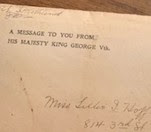
When 20-year-old Jens Olaf Kittlesrud arrived in England with a few thousand other American troops to fight in WWI, he was handed a letter from the King of England. The letter had apparently been tucked away for years when Jens Kittlesrud’s great-niece, Betty Hoff, found it among her parents’ possessions. She was curious about the story behind the letter and wondered if other soldiers had received it. Click here to read more, and learn how many American soldiers received similar royal correspondence in WWI.


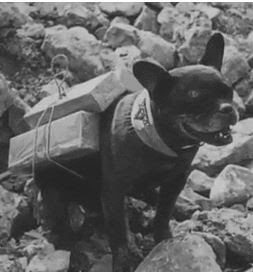
Meet the very good boy who brought smokes to soldiers in WWI trenches

Mutt the cigarette delivery dog

Have you ever gotten exactly what you wanted? It’s hard to imagine that any PlayStation 5 on Christmas morning could beat a pack of cigarettes showing up when you’re stuck in the trenches, but add to it that it’s delivered by an adorable dog. That’s what the soldiers of the 11th Engineers were treated to when Mutt, a YMCA trench runner loaded with ciggies, visited them in 1918 in the Aisne-Marne operation during World War I.” Click here to read Miranda Summers Lowe’s entire article about Mutt the cigarette delivery dog, and all the other canines with a job supporting Doughboys in World War I.


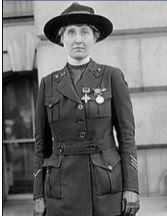
Who was the first woman to receive a Purple Heart? 7 things to know about WWI nurse Beatrice Mary MacDonald

Beatrice Mary MacDonald

Beatrice Mary MacDonald, a World War I nurse, was the first woman to be awarded the Purple Heart. One night in August 1917 during World War I, a German aerial bomb exploded at a military field hospital in Belgium during the Third Battle of Ypres. Metal shrapnel ripped through a tent at Casualty Clearing Station #61, where the 36-year-old was rising from her cot to start her shift caring for wounded Allied soldiers. Click here to learn about what happened next, and six more interesting facts about this American WWI heroine.


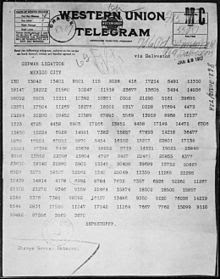
How one telegram helped to lead America toward war

Zimmerman telegram

On this day in 1917, President Woodrow Wilson learned of a shocking piece of paper that made America’s entry into World War I inevitable. And current research shows the Americans didn’t know everything German diplomats intended. The Zimmermann Telegram was a message sent on January 12, 1917, from the German foreign minister Arthur Zimmerman to the country’s embassy in Washington, D.C., to be relayed to German representatives in Mexico. Click here to read more about the infamous telegram, and learn how there was a lot more to the message than the American government knew at the time.


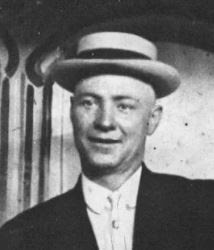
A Post-Dispatch mailroom clerk is the first St. Louisan to die in WWI

David Hickey

David Hickey was 38 when he answered the patriotic drumbeat in April 1917 to fight in the Great War. He was assigned to a U.S. Army artillery battery in France at the village of Seicheprey, near the slaughterhouse known as Verdun. Hickey had grown up just north of downtown and was a newsboy. He later worked in shoe factories and the Post-Dispatch mail room, where newspapers were bundled. He played on local amateur baseball teams and never married. His distinction was posthumous: “First St. Louis Man Killed in France,” was the headline in the Feb. 27, 1918, Post-Dispatch. Click here to read the entire article, and learn how the battlefield death of an obscure newspaper employee became really big news in wartime St. Louis.


The Tomb of the Unknown Soldier Centennial on Digital Media

TUS Twitter post

From November 9 through 11, 2021, thousands of people came to Arlington National Cemetery (ANC) to participate in the Tomb of the Unknown Soldier Centennial Commemoration. To supplement the in-person anniversary events, a comprehensive digital media campaign enabled millions more to participate in the centennial virtually. Click here to read more, and learn how, throughout 2021, ANC featured blog and social media posts (identified with the hashtag #Tomb100) about a rich variety of topics related to the Tomb’s history, meanings, and global significance as a memorial site.


Granddaughter finds hidden WWI treasure in a box

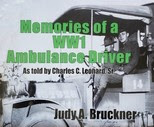
Memories of a WWI Ambulance Driver cover

Judy Bruckner’s lifelong passion for family history began at a young age. An interest sparked by a multi- generational collection of stories, photographs and countless afternoons with her beloved grandparents who cared for it all. Most prized amongst this collection of treasure; a black, leather-bound album containing photographs, letters, documents and a one-year diary by a 19- year-old WWI ambulance driver named Charles C. Leonard, Judy’s grandfather. Click here to read more, and learn how this vast collection of memories allowed her to experience World War I through Charles’ eyes, and led to an amazing new book.


Teaching Ohio’s Forgotten WWI Heroes

Ohio History Connection

Nearly 8,000 Black Ohioans served in the United States Army and Navy in World War I; many made the ultimate sacrifice. The story of these heroes is often overlooked. In today’s classroom, teachers are often forced to balance the volume of content against limited time. World War I content would likely be covered in one to two weeks of class time. Click here to see the resources that Paul LaRue, retired high school teacher and former member of the Ohio WWI Centennial Committee, has made available to teachers that will enable better thoughtful classroom coverage for Ohio’s (and other states’) forgotten World War I heroes.


How Much Was World War I About… Bread?

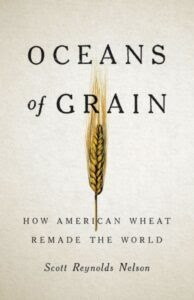
Oceans of Grain book cover

Current events unfolding in Ukraine are raising fears of possible global grain shortages as a fallout from the conflict, as Ukraine is one of the world’s largest exporters of wheat. In his new book Oceans of Grain, author Scott Reynolds Nelson shows that a century ago, “Grain was key to almost every stage of World War I.” Click here to read more, and learn how “Fearing the threat to its grain exports, imperial Russia helped provoke this global conflict,” and “as the conflict dragged on, Germany, also suffering from a dearth of cheap bread, found a unique path to Russia’s bountiful harvest.”


National WWI Museum & Memorial asks Black families to donate WWI artifacts

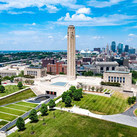
Nat WWI Museum square

The National World War I Museum in Kansas City has launched an ongoing project to diversify its collections by calling on family members or other people related to Black World War I soldiers to donate their loved ones’ treasured items from the war. Click here to read more, and learn how one of the museum’s goals with the project is “showing how that history affects us today. It’s their objects, their statements and their letters. We need to have that to tell the story” of how “African Americans were well represented, both on the battlefield and the home front.”


‘Don’t You Know There’s A War On?” Rationing In World War I

Sheep on White House lawn

Wartime is a crisis not only because men and women are being sent into a warzone where untold numbers may be killed, but also because resources diverted to the war effort mean privation and shortages for the folks back home. Those who were left had to make sacrifices too, in ways they might never have imagined. Click here to read more, and learn some of the conservation measures made during wartime that really hurt, and others that were really unusual…like mowing the White House lawn with a flock of sheep.


Pritzker Military Museum & Library “On War” Military History Symposium March 31 – April 1, 2022

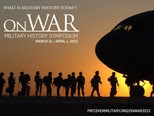
PMML On War Symposium 2022 alternative

The Pritzker Military Museum & Library present their 2022 On War Military History Symposium featuring Dr. Margaret MacMillan, recipient of the 2021 Pritzker Military Museum & Library’s Literature Award for Lifetime Achievement in Military Writing. The symposium will consider the current state of military history under the theme of “What is Military History Today?” This year’s Symposium will take on a hybrid format with an option to join in person or virtually online. Click hear to read more about the event, the speakers, and how you can register to attend.


“There is No Expiration for Valor”

Park University logo

For the past few years, a task force at a Missouri university has made it its goal to give many Doughboys of World War I the proper recognition for their acts of valor. A team from Park University’s George S. Robb Centre for the Study of the Great War — located in Parkville, Missouri, near Kansas City, Missouri, — is working on the project with the World War I Centennial Commission, members of Congress and veterans service organizations, including the VFW. Click here to read more from the VFW web site about how the Park University team has taken on the task  of correcting the military records of marginalized veterans of WWI.


World War Wednesday: Bacon Fat Soft Molasses Cookies from World War I

Bacon Fat Soft Molasses Cookies from WWI

Writing on the Food History Blog web site, author and baker Sarah Wassberg Johnson recounts her search for and discovery of “historic recipes for bacon fat cookies” from World War I. Click here to read more, and learn how a World War I “Soft Molasses Cookies” recipe, listed as a “Conservation Recipe” in the February, 1918 issue of American Cookery (formerly the Boston Cooking School Magazine) got itself baked (and enjoyed!) again 104 years later in February, 2022.


World War I News Digest March 2022

US soldier on wire

World War I was The War that Changed the World, and its impact on the United States continues to be felt a century later, as people across the nation learn more about and remember those who served in the Great War. Here’s a collection of news items from the last month related to World War I and America.

What if World War I was just a tragic accident?

Erik Kokeritz: Remembering a forgotten American WWI hero

John T. McCutcheon’s Wartime Valentines

 WWI facts: The Real History of The King’s Man

Del Mar author releases book based on WWI-era letters

KC veterans’ WWI fight shows democracy is durable

The Dangerous Ghosts of WWI Research in Spring Valley

WWI Battlefield Replica Keeps Tennessee Military Memory Alive

Letters and the Lost Voices of Women in World War I

The Daring Americans who Flew for France

Foreign countries benefit from WWI-era Jones Act


Doughboy MIA for March 2022

Franklin Ellenberger

A man is only missing if he is forgotten.

Our Doughboy MIA this month is PVT Franklin Ellenberger – and he has a special story!

Born on 12 July, 1892, Frank Ellenberger was from Wilmington, Ohio and was drafted into the army on 27 May, 1918. Sent to Camp Beauregard at Alexandria, Louisiana he was assigned training with the 41st Company, 159th Depot Brigade for indoctrination before being sent to Company I, 153rd Infantry Regiment, 39th ‘Delta’ Division. The 39th left for France on 6 August, 1918 and once Over There was re-designated as the 5th Depot Division (replacement division). From there, Ellenberger was sent to Company K, 128th Infantry, 32nd ‘Red Arrow’ Division in September, 1918. When the 32nd went forward to relieve the 91st Division during the Meuse-Argonne campaign on 4 October, 1918 PVT Ellenberger was among them. The 32nd would be the first division to crack the Kriemhilde Stellung six days later, on 10 October, 1918, but by that time Ellenberger was already dead. A statement by his sergeant says he “saw Private Ellenberger killed instantly by fragments from a high explosive shell. Hit in the head… on October 7th, 1918 while in action near Epinonville.”

At the time Ellenberger’s battalion (the 3rd) was supporting attacks made by the 125th Infantry south of Romagne sous Montfaucon who would, within a few days, capture the ground that the Meuse-Argonne American Cemetery occupies today.

Laura Ellenberger

No record of his burial ever made it back to the Graves Registration Service however, and while two separate searches were made for him following the war, nothing further was ever found concerning his case and it was closed in December, 1919. His mother, Laura Ellenberger (right) made the Gold Star Mother’s Pilgrimage to see her sons name on the Tablet of the Missing at the Meuse-Argonne Cemetery in 1931.

Jeremy Wayne Bowles

Then, on the evening of 4 November, 2019, our Assistant Field Manager here at Doughboy MIA, Mr Jeremy Wayne Bowles (at left, commonly known as ‘The Dayton Doughboy’) was doing some research into Ohio soldiers that served in the war with his family’s help when his mother happened to notice a name that rang a bell with her… Ellenberger. Later that night, just on a hunch, she pulled out the family tree to check that name and found an entry for a Private Franklin Ellenberger KIA in the war, who had been her great grandmothers brother. Jeremy checked the ABMC website to find out if this relative of his – whom he had not known about before – was buried in France or had come home and found he was MIA!

Infer what you want about this story, but it certainly would seem some sort of intervention was at work here for a worker with Doughboy MIA to discover through accident and hunch that HE was related to an MIA from that war – another example that a man is only missing if he is forgotten!

Would you like to help solve PVT Ellenberger’s case? Please consider a donation to Doughboy MIA and help us make as full an accounting of our American service personnel still listed as missing in action from WW1 as possible. Can you spare just ten dollars? Give ‘Ten For Them’ to Doughboy MIA and help us make a full accounting of the 4,423 American service personnel still listed as missing in action from WW1. Make your tax deductible donation now, with our thanks.


Merchandise from the Official
Doughboy Foundation WWI Store

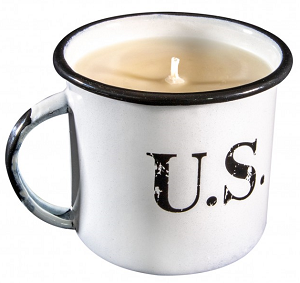
Morning Java Candle Mug

Soy Candle
Camp Mug

  • A Doughboy.shop Exclusive!
  • This replica tin mug has been upcycled into an all-natural soy candle
  • Candle filled by Charleston Candleworks (USA)
  • Made from all organic soy wax, cotton wick, essential oils
  • The “Morning Java” scent will fill the room with a wonderful coffee aroma that includes just a hint of chocolate.
  • Camp mug is reusable once the candle has burned down
  • Makes a great 2-in-1 gift. (Reduce + Reuse)

Proceeds from the sale of this item will help build the new National World War I Memorial in Washington, DC.

This and many other items are available as Official Merchandise of the Doughboy Foundation.


Virtual Explorer logo new

Click or scan the QR Code below to download the Virtual Explorer App for the National World War I Memorial, and explore what the Memorial will look like when work is completed.

QR Code for Virtual Explorer App download


Education Thumb Drive image

Free Self-Contained WWI History Web Site on YOUR computer

Sources, lessons, activities, videos, podcasts, images

We have packaged all the content we created for “How WWI Changed America” into a format that is essentially a web site on a drive. Download the content onto any drive (USB, external, or as a folder on your computer), and all the content is accessible in a web site type format even without an internet connection. Click here to learn more, and download this amazing educational resource for home or classroom use.


Genealogy book FREE DOWNLOAD


you can help - shop using amazon smile


Doughboy MIA


Pershing Sponsors

Pershing Sponsors


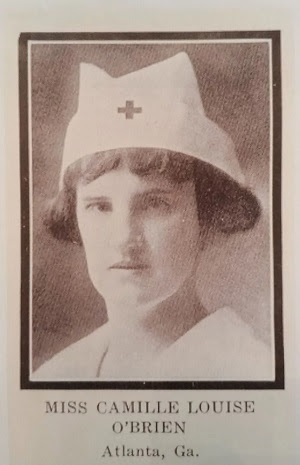
Camille Louise O’Brien

A Story of Service from the Stories of Service section of ww1cc.org

Camille Louise O'Brien

Submitted by: Michael {Friend of family}

Camille Louise O’Brien was born around 1883. Camille O’Brien served in World War 1 with the United States Army. The enlistment was in 1918 and the service was completed in 1919.

Story of Service

Emory Unit Nurse, Camille O’Brien, is the only Emory Unit nurse to died in France. Her family, in Roswell, Georgia, reached out to me to find a home for her personal effects. I am a retired police officer of 34 years and a historian so I agree to help. Happily, Camille’s items are now at the Atlanta History Center. I decided to learn more about this nurse.

Unknown to the family, Camille’s body was brought back to Georgia, in 1921 and placed in an unmarked grave, in Greenwood Cemetery, Atlanta. On April 18th, 2019, at 11am, I have put together a grave site memorial, for Camille. Thanks to Patterson & Son Funeral Home, Camille is going to finally have a beautiful gravestone. A WW1 Honor Guard will be present and a bugler, for Taps. Present at the site will be the grandson of Lt.Col. Edward Davis, the father of the Emory Unit, Ren Davis.

Who is Camille? She was born in 1883 in Warren County, Georgia. In 1900/1901, she attended the University of Georgia. In 1913, she attended the St. Joseph’s Hospital School of Nursing, graduating in 1916.

Read Camille Louise O’Brien’s entire Story of Service here.

Submit your family’s Story of Service here.


Honor the Stories of Service of ALL Who Served.

Do Your Bit to Help Build the new National World War I Memorial.

Fundraising Progress Maquette 11292021


WWI DISPATCH February 2022

An item from the organization formerly known at the World War One Centennial Commission.


View this in your browser

Header 10292020

February 2022

Taps Bugler with sky

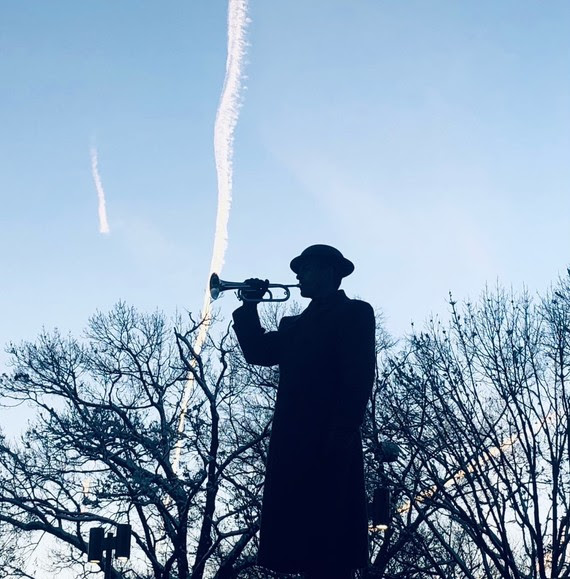
Sponsored by The Doughboy Foundation, a bugler in World War I uniform sounds Taps every evening at 5 p.m., seven days a week, rain or shine, at the National World War I Memorial in Washington, DC. Planning is in progress for a live stream of Daily Taps on YouTube, with the ability to honor specific veterans, groups or organizations for that day, week, or month. Click on this image to learn more, and find out how you can support this effort, and help ensure that this daily tradition will continue at the National World War I Memorial in perpetuity.

Contrasting lives: WWI Black Veterans Everett Johnson and Robert Chase

Johnson and Chase

Battery E, 349th Field Artillery Commander Lieutenant Everett Warren Johnson (1896-1964) and one of the non-commissioned officers in his unit, Sergeant Robert Chase (1891-1958), entered the war from similar backgrounds. Johnson volunteered for an officer training program and Chase was drafted, but they fought on the same battlefield and chose similar post-war professions. Click here to read the entire story, and learn just how “War impacted their lives in profoundly different ways.


Unconventional Memorials Created by the Forgotten Female Veterans of World War I

Allison Finkelstein

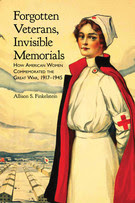
Why does the memory of World War I remain so much stronger in Great Britain than in the United States?” Seeking the answer to this question led historian Allison Finkelstein “on a long path to the publication of my first bookForgotten Veterans, Invisible Memorials: How American Women Commemorated the Great War, 1917-1945.” Click here to read more, and learn about “significant but too often overlooked aspects of World War I’s history that have renewed relevance today.


New “Hello Girls” musical honors military exploits of women in World War I

Rosemarie Chandler

After spending her childhood on Luke Air Force Base, Rosemarie Chandler finds it fitting that she’s playing one of the first women in combat during World War I in “The Hello Girls” production by the Phoenix Theatre Company. “The Hello Girls” stars Chandler as Grace Banker, a switchboard operator in charge of a corps of women who went overseas during World War I. Click here to read more, and learn how being the child of two military parents gave Chandler an interesting perspective on the challenges faced by the first women in Army service during and after World War I.


Call for Papers: “Lesser-Known Stories
of the Great War: Women, Minorities, Civilians, and the Untold”
Park U/First Division Museum logos

This symposium, hosted by the First Division Museum and sponsored by The
Great War Institute at Park University will be held May 13-14, 2022, at the First Division Museum, 1s151 Winfield Road, Wheaton, IL., 60189. Paper and panel proposals in all fields of history related to “Lesser-Known Stories of the Great War: Women, Minorities, Civilians, and the Untold” are invited. The symposium is particularly interested in proposals for complete sessions, including panelists, chairs, and commentators. All proposals should be submitted no later than March 1, 2022. The symposium encourages aspiring and young historians, including graduate students, to present their work. For questions about submitting a proposal, please contact us at gsrcentre@park.edu.


Orange County NY Historian hosting Europe trip to pay tribute to 369th New York Infantry Regiment in World War I

Harlem Rattlers logo

Orange County Historian Johanna Yaun will host a trip to Belgium and France next year to honor the soldiers who served in the 369th New York Infantry Regiment. The trip will take place from July 10 -19, 2023 and will explore locations that served as notable backdrops during World War I. Harlem’s Rattlers, the 369th New York Infantry Regiment, later nicknamed the Harlem Hellfighters, was a regiment of soldiers of African American descent from New York City, the Hudson Valley and other parts of the county. Click here to read more, and find out how you can join this limited-space tour to sites of significance related to the 369th. 


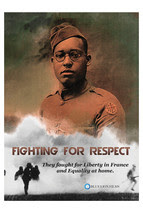
Fighting For Respect – African Americans in World War I France

Fighting For Respect

Blue Lion Films, Inc, the authors of the award-winning documentary ‘Paris Noir – African Americans In The City Of Light’ has launched a new film in their series examining the African American experience in France. ‘Fighting For Respect – African Americans in WWI‘ digs deep into the often overlooked yet compelling story of 200,000 Black soldiers willing to fight for democracy abroad while it was violently refused them at home. The film shows why their story still matters today. Click here to read more, and learn how this film grew out of director Joann Burke’s “deep passion and commitment to tell the exciting but also heartbreaking stories of African American soldiers during WW1.”


The Great Forgotten: A Television Series Honoring Nurses Who Served in WWI

The Great Forgotten logo

Kacie and Karen Devaney are a mother-daughter team who wrote an original full length play entitled The Great Forgotten, the story of the American nurses who served in France during World War I, which had a sold-out run in the 2015 New York City International Fringe Festival. After years of aiming for Broadway, the team changed course and dived into “the arduous climb of transitioning from playwrights to television writers.” The result? Click here to read more, and find out how the duo pushed through the challenges of the last two years to go “from play to Pilot, to a fully fleshed out season with nine episodes’ ideas and a detailed Show Bible Long and Short,” and learn what comes next.


Group is closer to finding remains of World War I soldier from McKean County

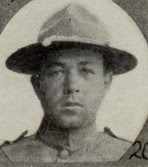
Cpl. James Uber

James L. Uber has been missing in action since Oct. 8, 1918, and the Meuse-Argonne Offensive in France in World War I. However, since his dog tag made its way to the Pennsylvania National Guard Museum in 2019, a group of volunteers have a pretty good idea of where the young corporal is buried. Click here to read the full Pennsylvania newspaper’s interview with the Doughboy MIA team that is closing in on accounting for Uber, one of over 4,000 Americans still MIA from World War I.


Mustering Out: the Navy’s First Black Yeowomen

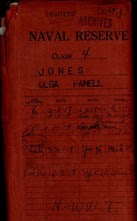
Olga Jones service record

Writing on the National Archives’ Rediscovering Black History web site, researcher Cara Moore Lebonick takes a look at the first Black yeowomen to serve in the U.S. Navy who were later referred to as the “Golden Fourteen.”  Known as  Yeoman (F) (also as Yeowoman and Yeomanette), these pioneers in Naval service were headed by Armelda H. Greene, who enlisted August 13, 1918 becoming the first Black Yeoman (F). Click here to read more about how Greene and those that joined after her formed a WWI Navy active unit consisting of all Black females – the first Black female non-nursing unit of the Navy.


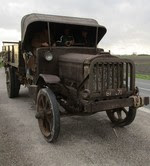
Driving a 1918 Liberty B truck back to the Western Front under its own power. What could possibly go wrong?

Liberty TRuck

We are taking a couple of trucks over to Belgium for the Armistice commemorations, would you like to come?” That sounded like a good idea to Tim Gosling in 2018, but as his memoire of the trip reveals, that didn’t last. The first clue that the trip might be an adventure was “when the transporter was unable to take the Liberty all the way to Belgium so it would have to be unloaded at the channel tunnel and then driven under its own power from Calais to Ypres.” And then…no, we won’t spoil the story. Click here to read the whole tale of a memorable journey in a century-old American truck that was, looking back at it from three years later, “a remarkable exercise and great fun.”


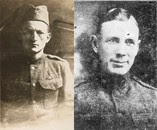
Halyburton and Grimsley: The Story of America’s first POWs in World War I

Halyburton and Grimsley

On the night of November 2, 1917, Company F of the 16th Infantry Regiment, First Infantry Division, held off a night raid from German forces at Bathlémont, France, and sustained the first of many combat casualties of the American Expeditionary Forces in World War I (1917-1918).  Among these casualties were Sergeant Edgar M. Halyburton and Private Clyde Grimsley, who were captured by the Germans and became some of the first American prisoners of war (POW) in the conflict. Click here to read the entire article, and learn how both men performed their military duties with distinction in the POW camps until liberated at war’s end.


The Decision That Changed The World – America’s Entry Into World War I

The Approaching Storm cover

World War I? Why are you writing about that war?” says Neil Lanctot, “was an all-too-common attitude I encountered when I shared with family and friends that my new book would explore America’s path to involvement in the Great War.” But Lanctot knew there was a long-overlooked story to tell: “How did America come to make the fateful decision to join the Allies in 1917, a decision that actually changed the course of the 20th century?” Click here to read more, and see how a focus on some key characters in the process led to interesting discoveries on America’s path to involvement in World War I.


Battle Of Argonne Forest: America’s Deadliest Battle

Argonne Plan of Attack

The Meuse-Argonne Offensive was a critical Allied forces operation of World War I, during the Hundred Days Offensive. It lasted for a bloody 47 days, starting on September 26th of 1918 and ending on November 11th by armistice. Writing on the Rebellion Research web site, Tony Cao analyzes the American effort in the epic struggle. Click here to read the entire article, and learn how “At Argonne, undertrained American Doughboys learned how to conduct mobile warfare through bloody experience.”


Windows On The Past

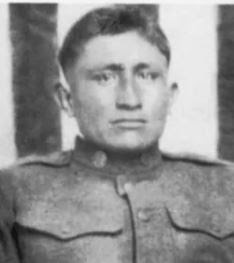
Sam Swaskegame

Historic photos are fractions of time frozen forever. They are windows on the past.” Jim Hinckley takes a look through one such window–photo of the Mohave County Courthouse at the dedication of a World War I memorial in 1928–and shows how the image is a key that unlocks some fascinating facts. Click here to read the entire article and learn about rare WWI memorials dedicated to  brave warriors, and how the experience of the war changed the county


Family Research and Service Projects Lead to Better Understanding of Doughboy Heroes

Russell Silverthorn

On November 13, 2021, I met my great uncle who died in France during World War One,” says Ann Silverthorn. She adds: “To be more exact, I met the young man who personified my uncle in a local play called A Doughboy’s Story.” American Legion Post 494 in Girard, PA was the site of this meeting, which was the end of (or perhaps a waypoint on) a “rewarding journey.” Click here to read the entire article, and learn how family history research sparked an interest in WWI, which led to remarkable commemorative efforts for the centennial of the war.


Doughboy Family Memories Etched in Architectural Art

Benjamin Dunham

When Ben Dunham encountered the etching in an antique booth in New Bedford, he thought it looked familiar. Then I signaled to my wife and asked, “Doesn’t this look like one of the cathedrals done by the brother of your great grandmother’s second husband?” The distant relative was the British artist James Alphege Brewer, and Dunham’s purchase of the etching with that tenuous familial link led to a cascade of collecting, and a book: Etched in Memory: The Elevated Art of J. Alphege BrewerClick here to read the entire story, and learn about the significance of this and other Brewer etchings in regard to the Doughboys of World War I.


Arlington National Cemetery’s Tomb of the Unknown Soldier Centennial Commemoration

Tomb Soldier 11112021

In 2021, Arlington National Cemetery (ANC) served as the designated government leader of the Tomb of the Unknown Soldier Centennial Commemoration, recognizing the 100th anniversary of the Tomb’s creation at ANC on November 11, 1921. The ANC team produced a wealth of content for the public about the history and meanings of the Tomb of the Unknown Soldier, much of which focused on World War I, which will be shared with Dispatch readers in the coming months.  Click here to read more, and learn about  ANC’s amazing Commemorative Guide to the Tomb of the Unknown Soldier


Mrs. Dawson’s Wartime Memories

Dawson book

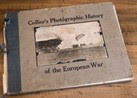
“It was a thoughtful gift; the giver knew that I had an interest in the history of the Great War and it was a book full of World War 1 photography. It was over a hundred years old but in bad shape. The binding was broken and unravelling, and the cover almost fell off when I opened it.”  But Thomas Emme was not discouraged. Click here to learn how his painstaking restoration of the WWI volume rescued a book that was “Too special to throw out, too damaged to keep.


Doughboy MIA for February 2022

Leonard Charles Aitken

A man is only missing if he is forgotten.

Our Doughboy MIA this month is1st LT Leonard Charles Aitken.

Born in Reno, Nevada on 10 June 1897, Leonard Aitken grew up in California, where he joined the California National Guard at 18 years of age. When the trouble broke out with Mexico, he reported for duty in June 1916 and served along the border with the hospital corps, attending elements of what would, a year later, become the 160th Infantry, 40th Division. Following America’s declaration of war on Germany, on 7 April 1917, Aitken reported to the Officers Training School at San Diego and upon graduation was shipped to France in August 1918 as a 2nd lieutenant with the 158th Infantry, 40th Division. There, on 20 October 1918, he was sent as a replacement officer to the 372nd Infantry, 93rd Division, then holding a section of the line in the Alsace sector near Hill 607. On 7 November, while leading his platoon on a night action, Aitkens and his men captured several prisoners but unknowingly walked into the line of fire of a German machine gun nest, which opened up on them, killing or capturing all but two enlisted men of the patrol and freeing the prisoners. Without hesitation Lieutenant Aitken immediately advanced against the position with the intent of eliminating it, but he was shot twice in the chest and killed in the endeavor. The end result was that they captured 1 officer (Aitkens) and 22 men; however, the date of Aitkens’ death is given as 8 November 1918.

Following the Armistice, Graves Registration Service (GRS) officials went on the search for Aitkens’ remains, but had little luck. Their hardest clue was a report that German officers had buried Aitkens with full military honors “in the church yard of the tiny hamlet of La Paive, some 40 miles east of Epinal, France.” There being no town by that name anywhere in that area, this was almost certainly actually the town of La Pariee which is indeed in the area of the action of 7 November. Nothing was ever found however, and his remains continued to be unlocated in the years following the war. As investigations continued, in January 1924, GRS sent a letter to Aitkens’ father requesting a civilian dental chart, but also admitting in the letter that in all probability he was among the Unknown burials, though how this information was considered is not stated in his surviving file. A final attempt at some kind of identification came in December 1926 when the case files of Aitkens and one other officer from the 372nd Infantry were checked against a set of Unknown remains at the Meuse-Argonne Cemetery morgue. It was a long shot, however, as the remains being checked came from a French cemetery in the Marne sector some 300 kilometers northwest of where both officers in question were at the time of their deaths. Not surprisingly, neither officer’s remains were a match and Aitkens’ case was officially closed in 1932 without resolution.

Would you like to help solve Lt. Aitken’s case? Please consider a donation to Doughboy MIA and help us make as full an accounting of our American service personnel still listed as missing in action from WW1 as possible. Can you spare just ten dollars? Give ‘Ten For Them’ to Doughboy MIA and help us make a full accounting of the 4,423 American service personnel still listed as missing in action from WW1. Make your tax deductible donation now, with our thanks.


Merchandise from the Official
Doughboy Foundation WWI Store
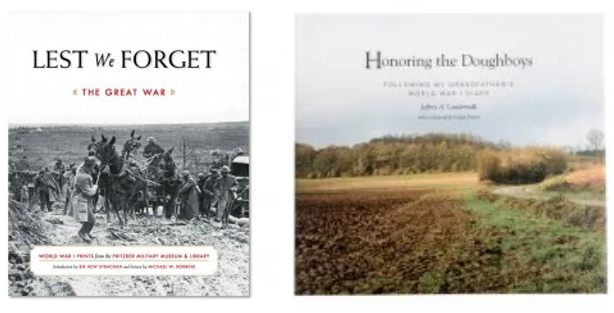
Books --Lest We Forget & Honoring the Doughboys

Lest We Forget: The Great War World War I Prints from the Pritzker Military Museum & Library. One of the nation’s premier military history institutions pays tribute to the Americans who served and the allies they fought beside to defeat a resourceful enemy with a lavishly illustrated book.  It is an official product of the United States World War One Centennial Commission and is a tribute to those who served in the Army, Navy, Marine Corps, and what would become the Air Force. It serves as a lasting reminder that our world ignores the history of World War I (and the ensuing WWII) at its peril―lest we forget.

Honoring the Doughboys: Following My Grandfather’s World War I Diary is a stunning presentation of contemporary photographs taken by the author that are paired with diary entries written by his grandfather, George A. Carlson, who was a soldier in the U.S. Army during World War I. Jeff Lowdermilk followed his grandfather’s path through France, Belgium, Luxembourg, and Germany and returned with these meticulously crafted photographs and his own engaging stories that bring the diary to life for contemporary readers. Lowdermilk’s passion for World War I and military history began as a young boy when he listened to his grandfather tell his stories about serving as an infantryman– a “Doughboy”–in Europe during the Great War.

Proceeds from the sale of these books will help finish the new National World War I Memorial in Washington, DC.

This and many other items are available as Official Merchandise of the Doughboy Foundation.


Apps image Feb 2022

Click or scan the QR Code below to download the Virtual Explorer App for the National World War I Memorial, and explore what the Memorial will look like when work is completed.

QR Code for Virtual Explorer App download


Education Thumb Drive image

Free Self-Contained WWI History Web Site on YOUR computer

Sources, lessons, activities, videos, podcasts, images

We have packaged all the content we created for “How WWI Changed America” into a format that is essentially a web site on a drive. Download the content onto any drive (USB, external, or as a folder on your computer), and all the content is accessible in a web site type format even without an internet connection. Click here to learn more, and download this amazing educational resource for home or classroom use.


Genealogy book FREE DOWNLOAD


you can help - shop using amazon smile


Doughboy MIA


Pershing Sponsors

Pershing Sponsors


Sergeant Henry Veal, II

A Story of Service from the Stories of Service section of ww1cc.org

Henry Veal, II

Submitted by: Johnette Brooks {granddaughter}

Sgt Henry Veal, II served in World War 1 with the United States Army . The dates of service are: Known 30 APR 1918 – 30 AUG 1918.

Story of Service

18 FEB 1895, Henry was born in the Spring Hill District 2 of Milledgeville, GA. He was the baby son of eleven (11) children of Henry Veal, I and Lucy Ann Hearst of Deepstep, GA. Henry, II’s father was a minister and a farmer. Henry, II (Sr.) grew up a few doors down from his future bride, Mamie Solomon on the highway that would later (13 AUG 2011) be named in their honor.

He joined Green Pastures Baptist Church as a youth and attended school until the 5th Grad . On 5 JUN 1917, Henry registered for the WWI Draft.

He was inducted in Milledgeville GA on 29 APR 1918 and was entrained on 30 APR at Camp Gordon in the 157th Depot Brigade until September 21, 1918. he departed Newport News VA on the USS Mercury headed for Brest, France.

Seven (7) days after boarding the ship, he was promoted to Sgt. on 21 OCT 1918 and then Mess Sergeant to the White Officers on the same day. He served overseas in France from 13 Oct 1918 to 13 AUG 1919 and was honorably discharged from the Army on August 30, 1919. He was reduced back to the rank of Private on 27 FEB 1919 while still serving in France, likely to avoid paying the Sergeant’s pension upon his discharge. Seven (7) days after returning from France, he received his final Army payment of $4,278.95.

Read Sergeant Henry Veal, II’s entire Story of Service here.

Submit your family’s Story of Service here.


Honor the Stories of Service of ALL Who Served.

Do Your Bit to Help Build the new National World War I Memorial.

Fundraising Progress Maquette 11292021


RESOLVED – Cpl. Uber, U.S. Army MIA

An item from the organization formerly known at the World War One Centennial Commission, which may be of interest to members.


Doughboy MIA letter header
Five start 260

Hi Friend,

One year ago, I shared the story of Corporal James L. Uber: a 29-year-old Pennsylvania boy killed in action on October 8, 1918 while serving in France as part of Company E, 112th Infantry Regiment, 28th Division National Army. His body, interned in a shallow grave where he fell, was never recovered; his family was never given a last resting place to remember him and ease their grief.

But today, I am writing with some good news.

Cpl. James Uber

On Thursday, January 27th from 8:00 to 9:00 PM EST– I’ll be presenting the latest findings in the Cpl. Uber case, a detailed look at a year-long investigation and our journey onto the battlefields of France to recover one of our brave young American boys. This is your chance to learn what we are doing to give more of these missing soldiers, sailors, Marines, and airmen a final resting place – and how you might be able to help.

You can access this Zoom briefing by signing up here.

I firmly believe that a man is only missing if he is forgotten. That’s why I founded Doughboy MIA, the only nonprofit in the world working to find our missing American boys from WWI and bringing them home. And you can help.

Even if you can’t make it, but are interested in learning more, please sign up. We’ll be sending a full recording of the briefing to those who do, along with updates as we head back to France later in the year for more search and recovery operations.

Help remember James and the sacrifice he made for this country. Sign up and get involved.

Warmly,

Robert

Robert J. Laplander

Directing Manager – Doughboy M.I.A.

www.ww1cc.org/mia

(414) 333-9402

A Man Is Only Missing If He Is Forgotten

Doughboy MIA helmet image

WWI DISPATCH January 2022

A newsletter from the organization formerly known as the World War One Centennial Commission.


View this in your browser

Header 10292020

January 2022

Taps in the Snow January 2, 2022 tight

“…nor snow. nor dark of night…”

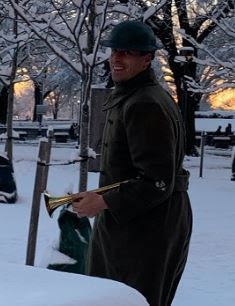
Daily Taps at the National WWI Memorial sounded despite inclement DC weather

Snow bugler 01032022 tight

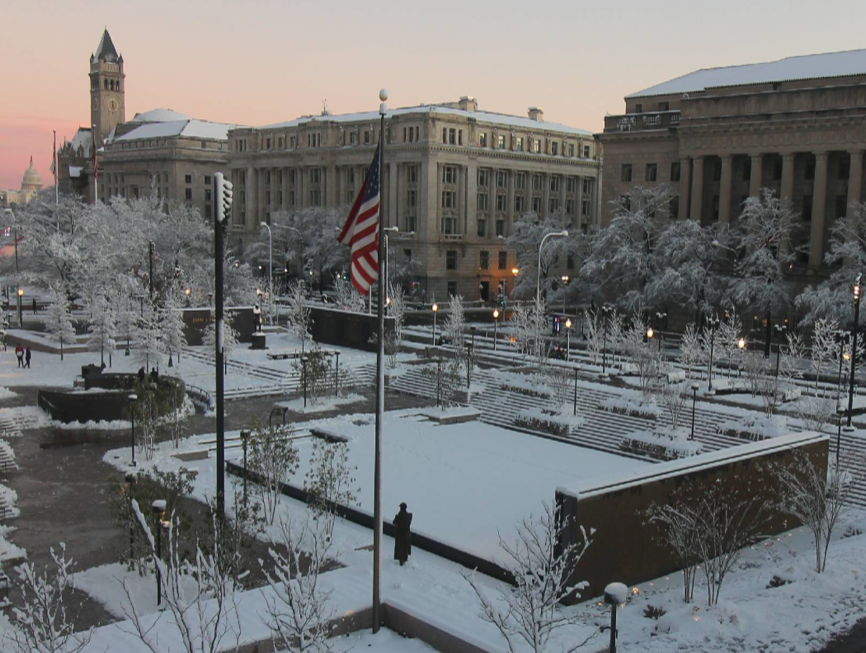
The powerful winter storm that dumped some 10 inches of snow in the DC area on Monday, January 3 did not stop the sounding of Taps at the new National World War I Memorial in Washington. This solemn nightly tribute in honor of the Americans who served in WWI and the service of all U.S. veterans and active military personnel, sponsored by The Doughboy Foundation, was sounded as scheduled at 5:00 pm in this public gathering place for reflection on “the war that changed the world.” The daily sounding of Taps at the National World War I Memorial, every day in perpetuity, is a key objective of the Doughboy Foundation’s ongoing work. You can help make this program a permanent, living part of daily life in our nation’s capital by donating to the endowment that will ensure its funding into the future.


Connecticut’s 1st Official State Troubadour Connects to World War I

Connecticut's 1st Official State Troubadour

Tom Callinan, designated as as Connecticut’s 1st Official State Troubadour in legislation passed by the CT General Assembly, anticipated that his services might be called upon for the commemoration of the Centennial of World War I. What he didn’t anticipate was how his own family tie to WWI, his great uncle Jerry Coleman, would become so central a figure in that work. Click here to read more, and learn how a WWI Doughboy accompanies performances of both original and historic music about Americans serving during the Great War.


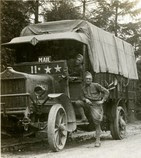
The Trucks the Doughboys Left Behind: Surplus Disposal in Europe after WWI

Trucks the Doughboys Left Behind

Writer Tim Gosling notes that “Amongst the many millions of postcards sent home to the friends and families of the Doughboys of the American Expeditionary Force is a small but reoccurring theme. It is a picture of an army truck usually with a proud Doughboy either leaning upon it or sitting in the driver’s seat and on the back the words something along the lines of “This is the truck that I am driving”. World War One introduced the driving of mechanical transport to a great number who it might otherwise have passed by. What it also did is establish a bond between military drivers and their machines, something which has happened ever since.” Click here to read more about the very American bond between man and machines, and how most of the beloved trucks that served in WWI were left behind in Europe when the Doughboys came home.


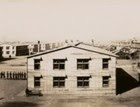
Built Fast and Not Meant to Last: The story of Camp Sherman’s WWI Buildings

Camp Sherman Buildings snip

In 1923, President Warren G. Harding created the Mound City National Monument by setting aside a portion of land from Camp Sherman, Ohio, a World War I training cantonment just outside of Chillicothe. Ohio historian Paul LaRue wondered what became of the structures built to house and train US troops on the grounds of Camp Sherman after that donation. Click here to read more, and learn how the temporary buildings that supported Doughboy training at Camp Sherman later became, in many cases, permanent structures in the local communities.


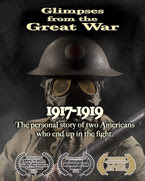
Frontenac High School in Kansas sees Glimpses from the Great War

Glimpses from the Great War poster

A hundred years later, why should the Great War have any meaning for today’s high school students? “Why we fight wars today probably hasn’t changed a whole lot,” explains Brady Hill, history/ government teacher at Frontenac High School in Kansas. “Diplomacy fails, other means fail, and having that understanding is important,” On a conceptual level this makes sense, but it’s hardly appealing to today’s teens. Hill believes it’s the personal views and hearing first-hand experiences of individual Doughboys that bring America’s role in World War I alive for his students. Click here to read more, and learn how the award-winning documentary Glimpses from the Great War helped the students get a first-hand view from men who served in World War I.


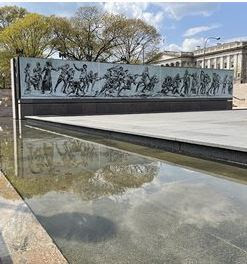
Red poppies will bloom this spring at the new National World War I Memorial in Washington, DC

Memorial American Legion Auxiliary article

A new article appeared on the American Legion Auxiliary web site last week to highlight the National World War I Memorial in Washington, DC. The article noted that the “long-awaited memorial to World War I and the 4.7 million Americans who served in the war is now a reality” as “the last of the 20th century wars to receive its own memorial in our nation’s capital.”  Click here to read the entire article, and learn how the iconic red poppy blossoms will bloom later this year in landscaped areas of the memorial.


Veterans Day launch of new comic book featuring WWI hero Dr. Frank Boston

Dr. Frank Boston comic book launch

The Boston Legacy Foundation returned to the National World War I Memorial in Washington, D.C. on November 11th, Veteran’s Day, to continue to celebrate the legacy of Dr. Frank Boston, a WWI Veteran, alongside all of those who have served their country and to celebrate the release of the Doc Boston Adventures comic book. Click here to read more, and learn how the “Doc Boston Adventures”, based upon a true story Boston and his team saving lives, updated to reflect America today and introduce a unique and diverse group of young first responders.


He fought for self-determination in a time of assimilation. He left these objects.

John B. McGillis

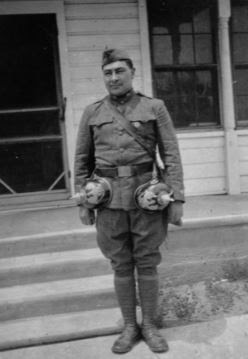
Photographer Nīa MacKnight never met her great grandfather John B. McGillis, but she did have a window into his storied life as an Anishinaabe man in early 20th-century America: a steam trunk where he stowed away undated photographs and stray objects such as an address book, a pair of horn-rimmed glasses, and a single eagle feather. McGillis also served in World War I, and later secured a position at the U.S. Bureau of Indian Affairs where he worked towards improving employment opportunities for Indigenous people. Click here to read more, and see how MacKnight is using her skills as a documentary photographer and interviews with relatives and family friends, to piece together McGillis’ history, and reflecting on questions of identity and self-determination that persist to this day.


Woodrow Wilson seizes U.S. railroads

Woodrow Wilson railroads snip

The American railroad system faltered under the heavy demands of a wartime economy in 1917, resulting in materials being unable to be loaded and shipped on trains. On December 26, 1917, President Wilson issued a declaration that he had nationalized the railroad system, and he ordered Secretary of War Newton Baker to take possession of the railroads on December 28, 1917. The National Constitution Center looks back at “one of the broadest acts of presidential power” which occurred during World War I. Click here to learn how Congressional action was repeatedly needed to return the railroads to private ownership at war’s end.


The bravery of Jesse Clipper, first Black from Buffalo to sacrifice his life in WWI

Jesse Clipper

Jesse W. Clipper was working as a singer and dancer in Buffalo, New York before he was drafted into the Army for World War I. Unfortunately, he never made it home from that war as he died on February 21, 1919, some three months after the war ended in November 1918. Today, Clipper is remembered as the first Black from Buffalo who sacrificed his life in the First World War. Click here to read more, and learn about ongoing efforts in Buffalo to uncover more information about Clipper’s family, and his life before his service and loss in WWI.


Remembering My Grandfather,
Giovanni Carusone

Giovanni Carusone

World War I Veteran, Italian Immigrant, Proud American, Husband, Father, Grandfather, a Paschall resident of Southwest Philadelphia—and our Hero.” That’s how Denise Clofine starts this profile of her grandfather, who she notes “left Italy telling his mother he was visiting America to see the great land of opportunity. His true intention was to join America in fighting for our freedom.”  Click here to read more, and learn about Carusone’s service during World War I, and his life after the war in in the Paschall neighborhood of Southwest Philadelphia.


Historian chronicles the grassroots work to recognize women’s sacrifices, service during World War I

Forgotten Veterans, Invisible Memorials: How American Women Commemorated the Great War, 1917-1945

Over 16,000 women served overseas during World War I. Yet as Armistice Day marked the war’s final chapter, the stories of women who sacrificed—in overseas hospitals or as wives and mothers back home—were destined to become footnotes. More than a century later, University of Maryland graduate Allison Finkelstein is rewriting that narrative, revealing the grassroots efforts spearheaded by women of the WWI generation to honor this service, not carved in marble statuary, but through community service and advocacy and in hospitals and respite houses. Click here to read more about “Forgotten Veterans, Invisible Memorials: How American Women Commemorated the Great War, 1917-1945” and how the book tells the stories behind “the work to commemorate wartime sacrifices through living memorials—intangible commemorations grounded in continued service to the country.”


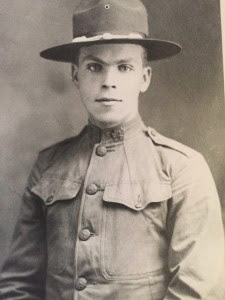
Building named for WWI vet Henry Owl, first American Indian student at Carolina

Henry Owl

The University of North Carolina at Chapel Hill has announced that it will honor Cherokee historian and teacher Henry McClain Owl  by placing his name on the Student Affairs building. Owl (1896-1980) was the first American Indian and the first person of color to enroll at the University, as a graduate student in history in 1928. Click here to learn more about Henry Owl’s service in World War I, and his work after the war ended to ensure voting rights for Native Americans.


Talking About War: PTSD in WWI & now

Talking About War

World War I “proved to be a grisly example of the hellishness of war. Technology-enhanced was manufactured, making it easier to kill. Machine guns, rapid-fire artillery, poison gas, and tanks, weapons that could take away life at any time, either in an instant in the best-case scenario, or after agonizing minutes if the soldier was not lucky enough. Talk about the war? The returning veterans of World War I would never want to do that.” So begins Dr. Arturo Osorio’s exploration of Post Traumatic Stress Disorder (PTSD) in and after the Great War. Click here to read more, and learn how talking about it–usually the last thing a vet wants to do–is often the best way to begin PTSD recovery.


Digging to Victory: How Bellingham Conserved Food During World War I

Gardening poster

Saving food was a central part of the American home front during World War I. The need for food was dire for America’s soldiers and allies. The conflict had devastated agriculture in Europe as men marched off to war and fields disappeared under shelling. Submarine warfare disrupted international trade. Jennifer Crooks takes a look back at how the people of Bellingham, WA leaned into the campaigns for food conservation. Click here to read more about how schools, businesses, and individuals got onboard with the efforts to conserve key items, and plant gardens to grow their own food.


Woodside, New York’s Doughboy Park Gets New Plaza, Seating Area

Woodside, NY's Doughboy Park

NYC officials recently celebrated the newly reconstructed $1.8 million plaza and seating area in Woodside’s Doughboy Plaza with a ribbon-cutting ceremony. The facility now has a brand new bluestone plaza, making it a worthy space to recognize and honor all of the soldiers who gave their lives in service to their country. Click here to read more, and find out how The Returning Soldier statue (later called “The Woodside Doughboy”) erected by the Woodside Community Council in remembrance of the local men and women who served in World War I, has been given a new and much improved setting.


World War I News Digest January 2022

USS Olympia

World War I was The War that Changed the World, and its impact on the United States continues to be felt a century later, as people across the nation learn more about and remember those who served in the Great War. Here’s a collection of news items from the last month related to World War I and America.

USS Olympia: The little cruiser with a battleship’s guns

Ending 2021 on a Positive Note

How World War I Shaped “Lord of the Rings” 

The Devil Dogs of Belleau Wood: US Marines of World War One

American Red Cross of WNY honors unclaimed WWI veterans

WWI nurse Gladys Watkins & the Legion Post Named for her

American Railroads During World War I

WWI nurse from Patchogue, NY receives military honors

Cleanup at WWI chemical weapons dump in D.C.’s Spring Valley 

Ferdinand Foch, WWI commander of Allies, feted in Spokane 

Vancouver’s police chief was ‘Fighting Forester’ in WWI


Doughboy MIA for January 2022

Robert Alsleben

A man is only missing if he is forgotten.

Our Doughboy MIA this month is Private Robert August Alsleben Company A/308th Infantry Regiment/77th Division.

Robert Alsleben was the 5th of 11 children born to Heinrich (Henry) and Cecelia Alsleben, a family of German immigrant farmers settled in Minnesota. Robert was born 01MAY1894 in Penn Township, McLeod County, Minnesota and worked the family farm up until his induction into the army on 28MAY1918 at New Auburn, Minnesota. He was received into the service at Camp Lewis, Washington in 43rd Company/11th Battalion/166th Depot Brigade until he was transferred to Camp Kearney, near San Diego, California in July and assigned to Company F/160th Infantry/40th ‘Sunshine’ Division. What little training Alsleben received was given here, and that wasn’t much as his unit spent almost half of their time at Camp Kearney (which was only a month) under quarantine for a possible Scarlet Fever outbreak. At the beginning of August, the 40th packed up and boarded trains for the Port of Embarkation at New York, sailing overseas 08AUG1918.

In France, the 40th Division was reassigned as the 6th Depot Division – meaning it became a replacement pool – and filtered its men into combat units depleted by casualties. Private Alsleben was transferred to Company A/308th Infantry/77th Division, being taken onto unit strength upon arrival on 23SEPT1918. Three days later, Company A (along with Company D) spearheaded the 308th’s drive into the Argonne Forest at the opening of the massive Meuse-Argonne Campaign. At this point, Alsleben had been in the army just two days shy of 4 months and had spent better than half of that time either in quarantine or travel.

A statement later given by a comrade says Alsleben was shot through the abdomen and right upper thigh while going over the top on the afternoon of 27SEPT1918, the second day of the Argonne fight, and killed instantly. No one, however, knew anything about his burial and as neither he nor his remains were ever found, he was declared as missing in action on 22OCT1918.

The story then gained new light when an International Red Cross report was received 16 APR1919 that contained a list of names from the Germans and dated 01MAR1919 showing that Alsleben had been captured that same day he was wounded and died of his wounds on 28SEPT1918 at Landwehr Infantry Field Hospital #13 in Grand Pre and had been buried in the German military cemetery there. No grave number was reported however, and when GRS officials went to look for him, they were unable to locate any remains, nor was a grave number found in surviving hospital records.  In 1922, attempts were made by the German government to contact the head doctor who had worked at the hospital, but records do not say if this was successful or not. For a time, it appears there was some speculation Alsleben may have been recovered by the French and moved to the German military cemetery at Buzancy, but records do not say whether this lead was followed up on. Nothing more is known at this time.

Active investigation was suspended in the case in February 1929 and PVT Alsleben is memorialized on the Tablets of the Missing at the Meuse-Argonne American Cemetery at Romagne-sous-Montfaucon, France.

Can you spare just ten dollars? Give ‘Ten For Them’ to Doughboy MIA and help us make a full accounting of the 4,423 American service personnel still listed as missing in action from WW1. Make your tax deductible donation now, with our thanks.

Remember: A man is only missing if he is forgotten.


Merchandise from the Official
Doughboy Foundation WWI Store

tote bag

Function and style are combined in this lightweight and compact Canvas & Leather Tote. You can show your American pride while carrying this Made in the USA dark khaki tote. Plenty of room for keys, wallet, tablet and documents. A distressed “U.S.” imprint is prominently displayed on the bag and an exclusive fabric garment label commemorates the U.S. Centennial of World War One.

This versatile canvas tote features:

  • Constructed of heavy duty, touch dyed canvas and lined with 400 denier nylon
  • Handles made of 6 Oz. top grain oil tanned leather, backed with 1” webbing
  • Handle is attached to bag with distinctive “X” tacks.
  • Dimensions: 18.5” W (seam to seam) x 13.5”H x 5.0”
  • T-bottom style gusset
  • Vintage Military style makes it great for him or her
  • Made in USA

Proceeds from the sale of these books will help complete the new National World War I Memorial in Washington, DC.

This and many other items are available as Official Merchandise of the Doughboy Foundation.


Virtual Explorer logo new

Click or scan the QR Code below to download the Virtual Explorer App for the National World War I Memorial, and explore what the Memorial will look like when work is completed.

QR Code for Virtual Explorer App download


Education Thumb Drive image

Free Self-Contained WWI History Web Site on YOUR computer

Sources, lessons, activities, videos, podcasts, images

We have packaged all the content we created for “How WWI Changed America” into a format that is essentially a web site on a drive. Download the content onto any drive (USB, external, or as a folder on your computer), and all the content is accessible in a web site type format even without an internet connection. Click here to learn more, and download this amazing educational resource for home or classroom use.


Genealogy book FREE DOWNLOAD


you can help - shop using amazon smile


Doughboy MIA


Pershing Sponsors

Pershing Sponsors


Theodore E. Fournier

A Story of Service from the Stories of Service section of ww1cc.org

Theodore  E  Fournier

Submitted by: Brian A. Huseland {great-nephew}

Theodore E Fournier was born around 1899. Theodore Fournier served in World War 1 with the United States Army. The enlistment was in 1917 and the service was completed in 1918.

Story of Service

My great-uncle Theodore Everett Fournier served in the 103rd Infantry, Company C. After his parents told Teddy in his teen years that he was adopted, he left home and enlisted in the Minnesota National Guard, 2nd Infantry, finding comfort in serving his country.

In 1916, they patrolled the U.S.-Mexico border because of Pancho Villa’s raids. In 1917, the boys were drafted into the American Expeditionary Forces, and trained at Camp Cody, NM, as part of the 34th “Sandstorm” Division. However, as some American regiments had encountered heavy losses in Europe, the 34th became a replacement division, and was broken up.

Teddy was shipped out from New York City on June 29th, 1918 on the ship Demosthenes. He carried with him standard issue uniform and equipment, and a precious item: an enlisted men’s prayer book. He arrived in mid-July and was assigned to the 103rd about the time of the Meuse-Argonne offensive. After resting and training the new recruits, the regiment boarded trains for Verdun, France. Teddy’s regiment prepared for the St. Mihiel Offensive as part of the 26th Division, encountering occasional gas and gunfire.

Read Theodore E. Fournier ‘s entire Story of Service here.

Submit your family’s Story of Service here.


Honor the Stories of Service of ALL Who Served.

Do Your Bit to Help Build the new National World War I Memorial.

Fundraising Progress Maquette 11292021


The Doughboy Foundation · PO Box 17586 #123 · Arlington, VA 22216