Monthly Archives: February 2022

Upcoming Webinar – A History of Health Care at Mare Island

This webinar on some local history may be of interest to some readers.


Topic: A History of Health Care at Mare Island

Description: The story of hospitals and doctors at the Navy’s first west coast ship yard.

To register, visit https://us02web.zoom.us/webinar/register/WN_gucHG18CTb6zmKMUNRyT6g

Repatriating Indigenous artefacts; free speech; Black History Month; Queen’s Jubilee

An item from one of our fellow Canadian organizations in the Bay Area.


Canadian Studies Announcements
In this issue:
  • Tomorrow: “Models for Repatriation of Indigenous Cultural Property from First Nations, Canada”
  • Cosponsored event: “Legal and Constitutional Protections for Free Speech in Academia in the US, UK, and Canada”
  • Canada celebrates Black History Month
  • Elizabeth II marks 70 years as Queen of Canada
  • External event: Book talk on Bootlegged Aliens: Immigration Politics on America’s Northern Border
TOMORROW
Panel Discussion: Models for Repatriation of Indigenous Cultural Property from First Nations, Canada
Tuesday, February 8 | 12:30 pm PT | Online | RSVP here
How can repatriation be built from mutual respect, cooperation and trust? North American museums and institutions have historically engaged in the collection and categorization of Indigenous cultural property and knowledge without the consent or active involvement of Indigenous people. The Native American Graves Protection and Repatriation Act (NAGPRA) was enacted in 1990 to return Native American “cultural items” to lineal descendants and culturally affiliated American Indian tribes, Alaska Native villages, and Native Hawaiian organizations. Despite this and further state legislation, many institutions including the University of California, have obfuscated or denied repatriation claims. Across the border, the Canadian government does not currently have legislation addressing the repatriation of Indigenous Ancestors and cultural heritage, but is working to create national support for repatriation through legislation Bill C-391. Some Canadian provinces have passed repatriation acts or provincial museum polices that have facilitated the return of ancestors and belongings. This panel discussion seeks to learn from what is being done in Canada. What is the cultural and nuanced work that builds successful repatriations? How can repatriation and indigenizing the institution from within preserve and strengthen tribal cultural heritage?
Join Canadian Studies affiliate Sabrina Agarwal (Professor of anthropology and chair of the UC Berkeley NAGPRA Advisory Committee) in conversation with Dr. Louis Lesage (Director, Nionwentsïo Office, Huron-Wendat Nation), Lou-ann Neel (Curator and Acting Head of Indigenous Collections and Repatriation Department, Royal BC Museum), and Michelle Washington (Repatriation Specialist, Royal BC Museum) to explore these questions and hear about their experiences in repatriation.
Image: Kwakwaka’wakw house posts from British Columbia in the Hearst Museum of Anthropology, UC Berkeley.
COSPONSORED EVENT
Legal and Constitutional Protections for Free Speech in Academia in the US, UK, and Canada
Friday, February 11 | 10 am PT | Online | Join via Zoom
The Public Law and Policy Program and the Anglo-American Legal Studies Program at the UC Berkeley School of Law invite you to an expert discussion comparing traditions and laws around free speech in university settings in three common law jurisdictions: the United Kingdom, United States, and Canada.
Professor Eric Kaufmann of the University of London, who is Canadian, will be participating from London. He will discuss his research on freedom of speech in academia in the U.S., the U.K. and Canada as well as proposed legislation in the U.K. parliament to protect free speech in colleges and universities in the UK.
Professor Nadine Strossen of the New York School of Law and former head of the ACLU will join from New York. She will comment on Professor Kaufmann’s findings, her own work on this subject, and legal and policy implications of the proposed legislation.
Professor Keith Whittington of Princeton University and Dean Erwin Chemerinsky of the UC Berkeley School of Law will participate from Berkeley. They will also comment on Professor Kaufmann’s research and recommendations for legislation.
Steven Hayward of UC Berkeley will serve as moderator.
Please visit the Public Law and Policy website for more information.
Canada Celebrates Black History Month
In both the United States and Canada, February is Black History Month. Originating in the US in the 1970s, the commemoration was adopted by Canada in 1995 as celebration of the contributions of African-descended people to Canadian society and culture. Black people have resided in Canada since the early colonial period, and made up 3.5% of its population as of 2016.
In Canada, the government has updated its official Black History Month website to reflect this year’s theme: “February and Forever: Celebrating Black History today and every day”. Prime Minister Trudeau issued an official statement, affirming that “Black history is Canadian history” and encouraged Canadians of all backgrounds to learn more about that history. He also reaffirmed his commitment to combatting racism and discrimination towards people of African descent, and pledged a number of targeted programs to help the Black community.
Official celebrations will take place next week, on February 17th, via Facebook Live. The Canadian Embassy in the US is also promoting a slate of special events through its Connect2Canada page.
For topical reading, we recommend Canadian Studies affiliate Cecil S. Giscombe’s new book of poems Similarly, which Publisher’s Weekly called “a powerful, understated meditation on place, ancestry and time” set in the landscapes of the US and Canada.
Elizabeth II Marks 70 Years as Queen of Canada
On Sunday, Queen Elizabeth II celebrated her Platinum Jubilee, marking seventy years as monarch of Canada. The Queen, who turns 96 in April, ascended to the throne in 1952, and is currently the world’s oldest and longest-serving monarch.
Prime Minister Trudeau sent his congratulations to the Queen in an official statement thanking her for her seven decades of service. Noting that this is the first Platinum Jubilee in Canadian history, the Prime Minister recognized the many milestones the Queen has overseen during her reign, including the 100th anniversary of Confederation in 1967 and the Constitution Act of 1982.
Political scientists agree, saying the Queen has created a strong legacy in Canada, and adapted along with Canada as it became an independent state. Simon Fraser University professor Andrew Heard says that the Queen’s personal interactions with ordinary Canadians and genuine affection for Canada have been key to her success as a public figure. During her reign, the Queen has made 31 visits to Canada, including 20 official tours. Over time, she has evolved to present herself in a distinctly Canadian capacity. Heard says Canadians’ support for the monarchy is largely based on the Queen’s personal popularity – an act which may be difficult for her successor to follow.
Official celebrations of the Queen’s Jubilee will take place in June across Canada, Britain, and other Commonwealth realms. While festivities will be more muted than previous jubilees due to pandemic restrictions, the Canadian government has announced a number of special initiatives, including beacons in Ottawa and other major cities; commemorative stamps and coins; and grants for community celebrations such as parades, concerts, and festivals.
EXTERNAL EVENTS
Book Talk: Bootlegged Aliens: Immigration Politics on America’s Northern Border
Friday, February 18 | 12 pm PT | Online | RSVP here
Join Professor Ashley Johnson Bavery for a discussion of her new book, Bootlegged Aliens. The book explores immigration on America’s northern border before World War II, situating Detroit, Michigan as America’s epicenter for unauthorized immigration. In this industrial center, thousands of Europeans crossed the border from Canada each year, prompting nativist backlash and complicating the labor politics of the automobile industry. This event is jointly hosted by the Center for Comparative Immigration Studies at UC San Diego and UCLA Center for the Study of International Migration. UCLA professor Tobias Higbie will join as a discussant.
Ashley Johnson Bavery is assistant professor of history at Eastern Michigan University. Her work has appeared in the Journal of Urban History and the Journal of American History and her book, Bootlegged Aliens: Immigration Politics on America’s Northern Border (2020) won the First Book Award from the Immigration and Ethnic History Society.
Tobias Higbie is a professor of history and labor studies at UCLA, the chair of the Labor Studies and the associate director of the Institute for Research on Labor and Employment. His research explores social movements, migration, and the politics of community in the United States. Higbie’s most recent book, Labor’s Mind: A History of Working Class Intellectual Life (2019), recovers the social world of self-educated working people and the politics of working-class identity during the early 20th century.
Canadian Studies Program
213 Moses Hall #2308
Canadian Studies Program | Univ. of California, Berkeley, 213 Moses Hall #2308, Berkeley, CA 94720

WWI DISPATCH February 2022

An item from the organization formerly known at the World War One Centennial Commission.


View this in your browser

Header 10292020

February 2022

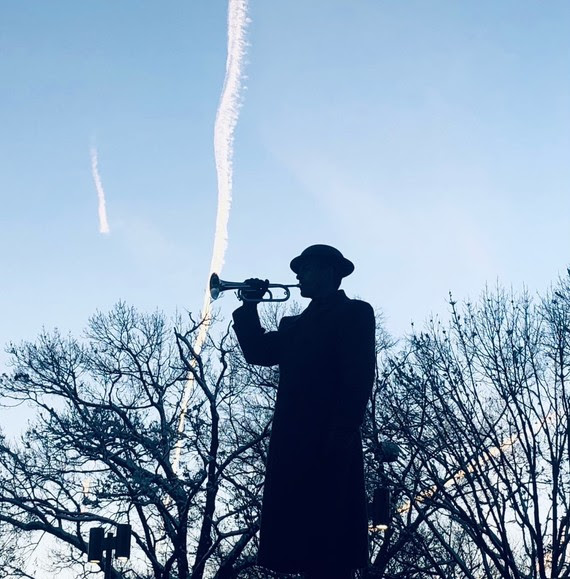
Taps Bugler with sky

Sponsored by The Doughboy Foundation, a bugler in World War I uniform sounds Taps every evening at 5 p.m., seven days a week, rain or shine, at the National World War I Memorial in Washington, DC. Planning is in progress for a live stream of Daily Taps on YouTube, with the ability to honor specific veterans, groups or organizations for that day, week, or month. Click on this image to learn more, and find out how you can support this effort, and help ensure that this daily tradition will continue at the National World War I Memorial in perpetuity.

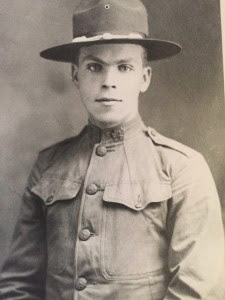
Contrasting lives: WWI Black Veterans Everett Johnson and Robert Chase

Johnson and Chase

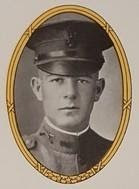
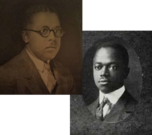
Battery E, 349th Field Artillery Commander Lieutenant Everett Warren Johnson (1896-1964) and one of the non-commissioned officers in his unit, Sergeant Robert Chase (1891-1958), entered the war from similar backgrounds. Johnson volunteered for an officer training program and Chase was drafted, but they fought on the same battlefield and chose similar post-war professions. Click here to read the entire story, and learn just how “War impacted their lives in profoundly different ways.


Unconventional Memorials Created by the Forgotten Female Veterans of World War I

Allison Finkelstein

Why does the memory of World War I remain so much stronger in Great Britain than in the United States?” Seeking the answer to this question led historian Allison Finkelstein “on a long path to the publication of my first bookForgotten Veterans, Invisible Memorials: How American Women Commemorated the Great War, 1917-1945.” Click here to read more, and learn about “significant but too often overlooked aspects of World War I’s history that have renewed relevance today.


New “Hello Girls” musical honors military exploits of women in World War I

Rosemarie Chandler

After spending her childhood on Luke Air Force Base, Rosemarie Chandler finds it fitting that she’s playing one of the first women in combat during World War I in “The Hello Girls” production by the Phoenix Theatre Company. “The Hello Girls” stars Chandler as Grace Banker, a switchboard operator in charge of a corps of women who went overseas during World War I. Click here to read more, and learn how being the child of two military parents gave Chandler an interesting perspective on the challenges faced by the first women in Army service during and after World War I.


Call for Papers: “Lesser-Known Stories
of the Great War: Women, Minorities, Civilians, and the Untold”
Park U/First Division Museum logos

This symposium, hosted by the First Division Museum and sponsored by The
Great War Institute at Park University will be held May 13-14, 2022, at the First Division Museum, 1s151 Winfield Road, Wheaton, IL., 60189. Paper and panel proposals in all fields of history related to “Lesser-Known Stories of the Great War: Women, Minorities, Civilians, and the Untold” are invited. The symposium is particularly interested in proposals for complete sessions, including panelists, chairs, and commentators. All proposals should be submitted no later than March 1, 2022. The symposium encourages aspiring and young historians, including graduate students, to present their work. For questions about submitting a proposal, please contact us at gsrcentre@park.edu.


Orange County NY Historian hosting Europe trip to pay tribute to 369th New York Infantry Regiment in World War I

Harlem Rattlers logo

Orange County Historian Johanna Yaun will host a trip to Belgium and France next year to honor the soldiers who served in the 369th New York Infantry Regiment. The trip will take place from July 10 -19, 2023 and will explore locations that served as notable backdrops during World War I. Harlem’s Rattlers, the 369th New York Infantry Regiment, later nicknamed the Harlem Hellfighters, was a regiment of soldiers of African American descent from New York City, the Hudson Valley and other parts of the county. Click here to read more, and find out how you can join this limited-space tour to sites of significance related to the 369th. 


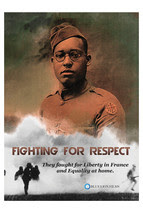
Fighting For Respect – African Americans in World War I France

Fighting For Respect

Blue Lion Films, Inc, the authors of the award-winning documentary ‘Paris Noir – African Americans In The City Of Light’ has launched a new film in their series examining the African American experience in France. ‘Fighting For Respect – African Americans in WWI‘ digs deep into the often overlooked yet compelling story of 200,000 Black soldiers willing to fight for democracy abroad while it was violently refused them at home. The film shows why their story still matters today. Click here to read more, and learn how this film grew out of director Joann Burke’s “deep passion and commitment to tell the exciting but also heartbreaking stories of African American soldiers during WW1.”


The Great Forgotten: A Television Series Honoring Nurses Who Served in WWI

The Great Forgotten logo

Kacie and Karen Devaney are a mother-daughter team who wrote an original full length play entitled The Great Forgotten, the story of the American nurses who served in France during World War I, which had a sold-out run in the 2015 New York City International Fringe Festival. After years of aiming for Broadway, the team changed course and dived into “the arduous climb of transitioning from playwrights to television writers.” The result? Click here to read more, and find out how the duo pushed through the challenges of the last two years to go “from play to Pilot, to a fully fleshed out season with nine episodes’ ideas and a detailed Show Bible Long and Short,” and learn what comes next.


Group is closer to finding remains of World War I soldier from McKean County

Cpl. James Uber

James L. Uber has been missing in action since Oct. 8, 1918, and the Meuse-Argonne Offensive in France in World War I. However, since his dog tag made its way to the Pennsylvania National Guard Museum in 2019, a group of volunteers have a pretty good idea of where the young corporal is buried. Click here to read the full Pennsylvania newspaper’s interview with the Doughboy MIA team that is closing in on accounting for Uber, one of over 4,000 Americans still MIA from World War I.


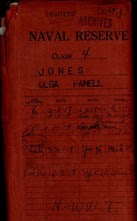
Mustering Out: the Navy’s First Black Yeowomen

Olga Jones service record

Writing on the National Archives’ Rediscovering Black History web site, researcher Cara Moore Lebonick takes a look at the first Black yeowomen to serve in the U.S. Navy who were later referred to as the “Golden Fourteen.”  Known as  Yeoman (F) (also as Yeowoman and Yeomanette), these pioneers in Naval service were headed by Armelda H. Greene, who enlisted August 13, 1918 becoming the first Black Yeoman (F). Click here to read more about how Greene and those that joined after her formed a WWI Navy active unit consisting of all Black females – the first Black female non-nursing unit of the Navy.


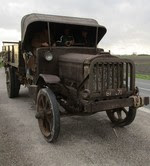
Driving a 1918 Liberty B truck back to the Western Front under its own power. What could possibly go wrong?

Liberty TRuck

We are taking a couple of trucks over to Belgium for the Armistice commemorations, would you like to come?” That sounded like a good idea to Tim Gosling in 2018, but as his memoire of the trip reveals, that didn’t last. The first clue that the trip might be an adventure was “when the transporter was unable to take the Liberty all the way to Belgium so it would have to be unloaded at the channel tunnel and then driven under its own power from Calais to Ypres.” And then…no, we won’t spoil the story. Click here to read the whole tale of a memorable journey in a century-old American truck that was, looking back at it from three years later, “a remarkable exercise and great fun.”


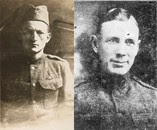
Halyburton and Grimsley: The Story of America’s first POWs in World War I

Halyburton and Grimsley

On the night of November 2, 1917, Company F of the 16th Infantry Regiment, First Infantry Division, held off a night raid from German forces at Bathlémont, France, and sustained the first of many combat casualties of the American Expeditionary Forces in World War I (1917-1918).  Among these casualties were Sergeant Edgar M. Halyburton and Private Clyde Grimsley, who were captured by the Germans and became some of the first American prisoners of war (POW) in the conflict. Click here to read the entire article, and learn how both men performed their military duties with distinction in the POW camps until liberated at war’s end.


The Decision That Changed The World – America’s Entry Into World War I

The Approaching Storm cover

World War I? Why are you writing about that war?” says Neil Lanctot, “was an all-too-common attitude I encountered when I shared with family and friends that my new book would explore America’s path to involvement in the Great War.” But Lanctot knew there was a long-overlooked story to tell: “How did America come to make the fateful decision to join the Allies in 1917, a decision that actually changed the course of the 20th century?” Click here to read more, and see how a focus on some key characters in the process led to interesting discoveries on America’s path to involvement in World War I.


Battle Of Argonne Forest: America’s Deadliest Battle

Argonne Plan of Attack

The Meuse-Argonne Offensive was a critical Allied forces operation of World War I, during the Hundred Days Offensive. It lasted for a bloody 47 days, starting on September 26th of 1918 and ending on November 11th by armistice. Writing on the Rebellion Research web site, Tony Cao analyzes the American effort in the epic struggle. Click here to read the entire article, and learn how “At Argonne, undertrained American Doughboys learned how to conduct mobile warfare through bloody experience.”


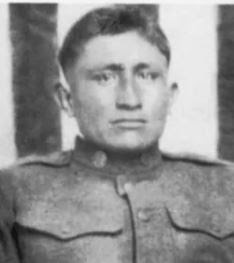
Windows On The Past

Sam Swaskegame

Historic photos are fractions of time frozen forever. They are windows on the past.” Jim Hinckley takes a look through one such window–photo of the Mohave County Courthouse at the dedication of a World War I memorial in 1928–and shows how the image is a key that unlocks some fascinating facts. Click here to read the entire article and learn about rare WWI memorials dedicated to  brave warriors, and how the experience of the war changed the county


Family Research and Service Projects Lead to Better Understanding of Doughboy Heroes

Russell Silverthorn

On November 13, 2021, I met my great uncle who died in France during World War One,” says Ann Silverthorn. She adds: “To be more exact, I met the young man who personified my uncle in a local play called A Doughboy’s Story.” American Legion Post 494 in Girard, PA was the site of this meeting, which was the end of (or perhaps a waypoint on) a “rewarding journey.” Click here to read the entire article, and learn how family history research sparked an interest in WWI, which led to remarkable commemorative efforts for the centennial of the war.


Doughboy Family Memories Etched in Architectural Art

Benjamin Dunham

When Ben Dunham encountered the etching in an antique booth in New Bedford, he thought it looked familiar. Then I signaled to my wife and asked, “Doesn’t this look like one of the cathedrals done by the brother of your great grandmother’s second husband?” The distant relative was the British artist James Alphege Brewer, and Dunham’s purchase of the etching with that tenuous familial link led to a cascade of collecting, and a book: Etched in Memory: The Elevated Art of J. Alphege BrewerClick here to read the entire story, and learn about the significance of this and other Brewer etchings in regard to the Doughboys of World War I.


Arlington National Cemetery’s Tomb of the Unknown Soldier Centennial Commemoration

Tomb Soldier 11112021

In 2021, Arlington National Cemetery (ANC) served as the designated government leader of the Tomb of the Unknown Soldier Centennial Commemoration, recognizing the 100th anniversary of the Tomb’s creation at ANC on November 11, 1921. The ANC team produced a wealth of content for the public about the history and meanings of the Tomb of the Unknown Soldier, much of which focused on World War I, which will be shared with Dispatch readers in the coming months.  Click here to read more, and learn about  ANC’s amazing Commemorative Guide to the Tomb of the Unknown Soldier


Mrs. Dawson’s Wartime Memories

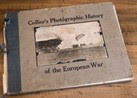
Dawson book

“It was a thoughtful gift; the giver knew that I had an interest in the history of the Great War and it was a book full of World War 1 photography. It was over a hundred years old but in bad shape. The binding was broken and unravelling, and the cover almost fell off when I opened it.”  But Thomas Emme was not discouraged. Click here to learn how his painstaking restoration of the WWI volume rescued a book that was “Too special to throw out, too damaged to keep.


Doughboy MIA for February 2022

Leonard Charles Aitken

A man is only missing if he is forgotten.

Our Doughboy MIA this month is1st LT Leonard Charles Aitken.

Born in Reno, Nevada on 10 June 1897, Leonard Aitken grew up in California, where he joined the California National Guard at 18 years of age. When the trouble broke out with Mexico, he reported for duty in June 1916 and served along the border with the hospital corps, attending elements of what would, a year later, become the 160th Infantry, 40th Division. Following America’s declaration of war on Germany, on 7 April 1917, Aitken reported to the Officers Training School at San Diego and upon graduation was shipped to France in August 1918 as a 2nd lieutenant with the 158th Infantry, 40th Division. There, on 20 October 1918, he was sent as a replacement officer to the 372nd Infantry, 93rd Division, then holding a section of the line in the Alsace sector near Hill 607. On 7 November, while leading his platoon on a night action, Aitkens and his men captured several prisoners but unknowingly walked into the line of fire of a German machine gun nest, which opened up on them, killing or capturing all but two enlisted men of the patrol and freeing the prisoners. Without hesitation Lieutenant Aitken immediately advanced against the position with the intent of eliminating it, but he was shot twice in the chest and killed in the endeavor. The end result was that they captured 1 officer (Aitkens) and 22 men; however, the date of Aitkens’ death is given as 8 November 1918.

Following the Armistice, Graves Registration Service (GRS) officials went on the search for Aitkens’ remains, but had little luck. Their hardest clue was a report that German officers had buried Aitkens with full military honors “in the church yard of the tiny hamlet of La Paive, some 40 miles east of Epinal, France.” There being no town by that name anywhere in that area, this was almost certainly actually the town of La Pariee which is indeed in the area of the action of 7 November. Nothing was ever found however, and his remains continued to be unlocated in the years following the war. As investigations continued, in January 1924, GRS sent a letter to Aitkens’ father requesting a civilian dental chart, but also admitting in the letter that in all probability he was among the Unknown burials, though how this information was considered is not stated in his surviving file. A final attempt at some kind of identification came in December 1926 when the case files of Aitkens and one other officer from the 372nd Infantry were checked against a set of Unknown remains at the Meuse-Argonne Cemetery morgue. It was a long shot, however, as the remains being checked came from a French cemetery in the Marne sector some 300 kilometers northwest of where both officers in question were at the time of their deaths. Not surprisingly, neither officer’s remains were a match and Aitkens’ case was officially closed in 1932 without resolution.

Would you like to help solve Lt. Aitken’s case? Please consider a donation to Doughboy MIA and help us make as full an accounting of our American service personnel still listed as missing in action from WW1 as possible. Can you spare just ten dollars? Give ‘Ten For Them’ to Doughboy MIA and help us make a full accounting of the 4,423 American service personnel still listed as missing in action from WW1. Make your tax deductible donation now, with our thanks.


Merchandise from the Official
Doughboy Foundation WWI Store
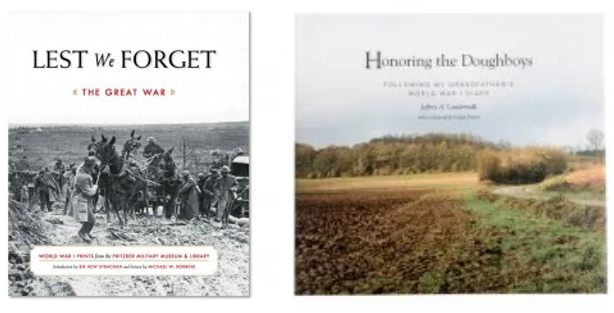
Books --Lest We Forget & Honoring the Doughboys

Lest We Forget: The Great War World War I Prints from the Pritzker Military Museum & Library. One of the nation’s premier military history institutions pays tribute to the Americans who served and the allies they fought beside to defeat a resourceful enemy with a lavishly illustrated book.  It is an official product of the United States World War One Centennial Commission and is a tribute to those who served in the Army, Navy, Marine Corps, and what would become the Air Force. It serves as a lasting reminder that our world ignores the history of World War I (and the ensuing WWII) at its peril―lest we forget.

Honoring the Doughboys: Following My Grandfather’s World War I Diary is a stunning presentation of contemporary photographs taken by the author that are paired with diary entries written by his grandfather, George A. Carlson, who was a soldier in the U.S. Army during World War I. Jeff Lowdermilk followed his grandfather’s path through France, Belgium, Luxembourg, and Germany and returned with these meticulously crafted photographs and his own engaging stories that bring the diary to life for contemporary readers. Lowdermilk’s passion for World War I and military history began as a young boy when he listened to his grandfather tell his stories about serving as an infantryman– a “Doughboy”–in Europe during the Great War.

Proceeds from the sale of these books will help finish the new National World War I Memorial in Washington, DC.

This and many other items are available as Official Merchandise of the Doughboy Foundation.


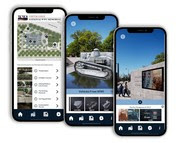
Apps image Feb 2022

Click or scan the QR Code below to download the Virtual Explorer App for the National World War I Memorial, and explore what the Memorial will look like when work is completed.

QR Code for Virtual Explorer App download


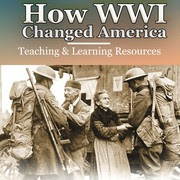
Education Thumb Drive image

Free Self-Contained WWI History Web Site on YOUR computer

Sources, lessons, activities, videos, podcasts, images

We have packaged all the content we created for “How WWI Changed America” into a format that is essentially a web site on a drive. Download the content onto any drive (USB, external, or as a folder on your computer), and all the content is accessible in a web site type format even without an internet connection. Click here to learn more, and download this amazing educational resource for home or classroom use.


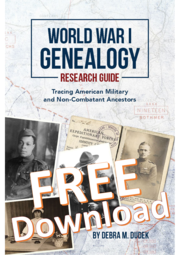
Genealogy book FREE DOWNLOAD


you can help - shop using amazon smile


Doughboy MIA


Pershing Sponsors

Pershing Sponsors


Sergeant Henry Veal, II

A Story of Service from the Stories of Service section of ww1cc.org

Henry Veal, II

Submitted by: Johnette Brooks {granddaughter}

Sgt Henry Veal, II served in World War 1 with the United States Army . The dates of service are: Known 30 APR 1918 – 30 AUG 1918.

Story of Service

18 FEB 1895, Henry was born in the Spring Hill District 2 of Milledgeville, GA. He was the baby son of eleven (11) children of Henry Veal, I and Lucy Ann Hearst of Deepstep, GA. Henry, II’s father was a minister and a farmer. Henry, II (Sr.) grew up a few doors down from his future bride, Mamie Solomon on the highway that would later (13 AUG 2011) be named in their honor.

He joined Green Pastures Baptist Church as a youth and attended school until the 5th Grad . On 5 JUN 1917, Henry registered for the WWI Draft.

He was inducted in Milledgeville GA on 29 APR 1918 and was entrained on 30 APR at Camp Gordon in the 157th Depot Brigade until September 21, 1918. he departed Newport News VA on the USS Mercury headed for Brest, France.

Seven (7) days after boarding the ship, he was promoted to Sgt. on 21 OCT 1918 and then Mess Sergeant to the White Officers on the same day. He served overseas in France from 13 Oct 1918 to 13 AUG 1919 and was honorably discharged from the Army on August 30, 1919. He was reduced back to the rank of Private on 27 FEB 1919 while still serving in France, likely to avoid paying the Sergeant’s pension upon his discharge. Seven (7) days after returning from France, he received his final Army payment of $4,278.95.

Read Sergeant Henry Veal, II’s entire Story of Service here.

Submit your family’s Story of Service here.


Honor the Stories of Service of ALL Who Served.

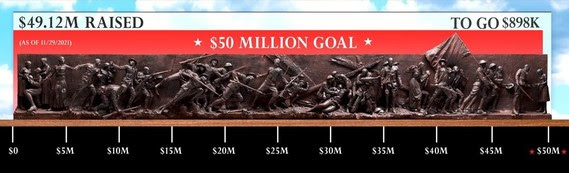
Do Your Bit to Help Build the new National World War I Memorial.

Fundraising Progress Maquette 11292021


Friend Stand with us and support our veterans through the winter

An item from the organization formerly known as There But Not There that may be of interest to members.


View this email in your browser
Hello Friend
Join us in supporting veterans through the winter
During the cold, dark nights as we lean into February, it’s never been more important to consider the lives of so many veterans braving the elements and suffering from homelessness, addiction and mental or physical health issues.

It is our mission to ensure that every veteran is cared for and supported throughout the year, and we urge you to join us in doing what you can to help. Whether it be through donations, fundraising, or simply raising awareness across the UK; we value your ongoing support.

Are you ready for The Great Tommy Sleep Out?
The Great Tommy Sleep Out is a fundraising challenge designed to collectively raise awareness and show support to the thousands of veterans that are experiencing homelessness in the UK right now. During the month of March, we are asking for your support by braving a cold night camping out under the stars while fundraising for our most vulnerable veterans.
SIGN UP FOR THE GREAT TOMMY SLEEP OUT
Huge thank you to the Veterans’ Foundation
The Veterans’ Foundation has provided unwavering support to RBLI in recent times, awarding generous grants to our Lifeworks programme and Scotland’s Bravest Manufacturing Company. These grants have helped deliver employment support and one-to-one welfare and development for ex-servicemen and women across the UK.
“I have no doubt that I genuinely benefit from an understanding ear and the belief that my welfare is first and foremost in any discussions I have had about my work and/or disability. I appreciate that this level of support can only be provided as a direct result of the extra funding we receive from the Veterans’ Foundation and those who play the Veterans’ lottery.” – Carl, Veteran, Royal Navy Submariner
Luxury Dementia Care Home – Gavin Astor House
Our luxury care home, Gavin Astor House, focusses on high quality care to each and every resident and has recently undergone a complete refurbishment. This means additional beds, specialist living quarters, and around the clock support from our team of health care professionals.

This brand new renovation also enables us to provide dedicated and trusted care specifically to those suffering from dementia – and we are encouraging those who are interested to book a tour to see for themselves.

BOOK A TOUR
The new BBMC website is now LIVE!
Britain’s Bravest Manufacturing Co. (BBMC) is a leading social enterprise of RBLI, and the UK’s leading signage maker with a team of over 100 people; 70% of whom are veterans from the Armed Forces, those with a physical or mental disability, or both.

The new website has been developed to create a more fluid and customer-friendly experience, allowing visitors to navigate through pages with ease and learn more about our history, values, products and services; further highlighting BBMC’s status as a market-leader and ground-breaking social enterprise.

VISIT THE BBMC WEBSITE
Does your company have a Payroll Giving scheme?

Did you know 7th-13th February 2022 is Payroll Giving week?

Payroll Giving is an easy, tax-efficient way of making regular donations to your favourite charities straight from your gross pay. Donating this way means the tax you would have paid on your contribution also goes to RBLI. Even small, regular donations can make a big difference to our Armed Forces Veterans.

It’s quick and FREE for companies to setup Payroll Giving and is considered to be an important part of their Corporate Responsibility. Show your support by speaking to your Payroll team and giving to RBLI this Payroll Giving week.

LEARN MORE ABOUT PAYROLL GIVING
Thank you so much for your ongoing support for RBLI.
Facebook
Instagram
Twitter
Copyright © 2022 Royal British Legion Industries, All rights reserved.

Our mailing address is:
Royal British Legion Industries, Hall Road, Aylesford, Kent, ME20 7NL

Registered Charity Number:
England & Wales: 210063
Scotland: SC048795