Category Archives: Canadian Studies Program UC Berkeley

Student Research Panel tomorrow (RSVP required); research prizes & grants now open

A reminder of this online event tomorrow from a fellow Canadian organization in the Bay Area.


Canadian Studies Announcements
IN THIS ISSUE:
Event Tomorrow, April 21: Student Research Roundtable (RSVP required)
Rita Ross Undergraduate Prize now accepting applications
Fulbright Canada now accepting applications
COVID-19 Podcast feat. Canada’s consul-general in SF
EVENT TOMORROW
Student Research Roundtable
Colloquium | April 21 | 12:45 p.m. | Online | RSVP required
Learn about some of the fascinating student research Canadian Studies is fostering at UC Berkeley thanks to support from our donors. This live presentation will showcase projects from two recent fellowship recipients. Please RSVP at canada@berkeley.edu. If you require an accommodation for effective communication, please let us know with as much advance notice as possible.
Good Time, Bad Time: Socioeconomic Status and the Cultural Repertoires of Time Scarcity in Retirement
Boróka Bó, doctoral candidate in sociology and demography
We tend to think of retirement as a great equalizer when it comes to relief from the pernicious time scarcity characterizing the lives of many individuals in the labor force. Puzzlingly, this is not the case. Using established research, long-term participant observation, and in-depth interviews with Toronto residents, I show that socioeconomic characteristics are important determinants of retiree time scarcity. Neighborhood disadvantage gets under the skin via time exchanges that are forged by both neighborhood and peer network characteristics. For the advantaged, the experience of time scarcity is protective for well-being in later life, as it emerges from managing a relative abundance of choices. For the disadvantaged, the later life experience of time scarcity is shaped by cumulative inequality, further exacerbating inequalities in well-being. The final section of my talk offers an analysis and interpretation of my findings, putting retiree time scarcity in conversation with the broader literature on socioeconomic status and well-being.
Healing Through Language: Revitalization in the Wendat Confederacy
Fallon Burner, undergraduate history major
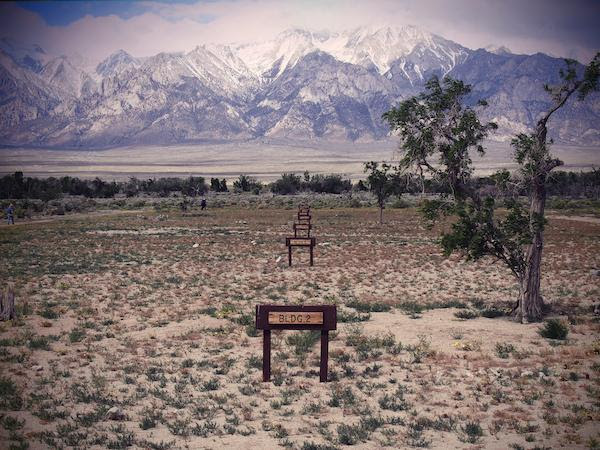
Language is at the core essence of identity. My honors thesis examines the history of the languages of the Wendat Confederacy (Huron), showing the vital role that language plays in the Indigenous community, how its history is tied to issues of erasure and survival, and the role that language revitalization projects have in addressing transgenerational trauma. The Wendat Confederacy straddles the US-Canada border with nations in Québec, Ontario/Michigan, Kansas, and Oklahoma. Distance and multiple language barriers provide challenges for language revitalizers.
There is a strong need in the field of history for narratives which are from an Indigenous perspective. This can be achieved through a methodology utilizing the languages themselves and oral histories. I spent the summer of 2019 conducting oral history interviews with Wendat and Wyandot(te) language revitalizers, in order to create an archive of Wendat perspectives on language revitalization. I also conducted archival research on the Wendake reserve in Québec, and had one-on-one language instruction in the Waⁿdat and Wendat languages. Part of my mission is to erase the erasure of Indigenous voices by contributing more Indigenous perspective primary sources to the historical narrative for future scholars.
Rita Ross Undergraduate Prize In Canadian Studies Now Open
The Rita Ross Undergraduate Prize in Canadian Studies was established to honor Dr. Rita Ross, longtime associate director of the UC Berkeley Canadian Studies Program, and supports undergraduate students pursuing a research topic related to Canada in a UC Berkeley class or independent study project. The prize is awarded annually to the student who has written the best undergraduate research paper or produced the best original project that engages with topics, people or events related to Canada. Decisions about awards are made by the Thomas Garden Barnes Chair in Canadian Studies in consultation with other faculty affiliated with the Canadian Studies program.
Eligibility: The prize competition is open to any UC Berkeley undergraduate student in good academic standing, in any college or discipline.
The prize is awarded at the end of the Spring semester. The recipient receives a certificate and an award of $250.
Application for 2019-2020
Deadline: May 22, 2020
The Canadian Studies Program invites applications from undergraduate students in good standing at UC Berkeley for the Rita Ross Undergraduate Prize in Canadian Studies. Applicants should upload the following to the Canadian Studies Program through the official application form on the Canadian Studies homepage.
  • A copy of an original paper or project produced in a UC Berkeley class or independent study during the 2019-2020 academic year.
  • A cover letter providing information about the class for which the work was produced, including course name, number, and instructor’s name, and how the work relates to Canada.
  • A letter of support by the course instructor or faculty mentor highlighting the strengths of the work.
2021/22 Fulbright US Scholar Program Now Open
Join the more than 600 Fulbright Canada alumni by applying for one of our awards! For 2021/2022, Fulbright Canada is offering close to 50 Research opportunities at top Canadian Institutions in more than 10 different fields. Our grants support research with colleagues across Canada for a 4 to 9 month period. Applications will be accepted through September 15th, 2020.
To be eligible for a Fulbright Grant, you must fulfill the following criteria:
  • Be a U.S. citizen (permanent residence is not sufficient).
  • Hold a Ph.D. (except for the Business Chair) or equivalent professional/terminal degree.
  • Applicants who have resided abroad for five or more consecutive years in the six-year period preceding the application deadline are ineligible. A period of nine months or more during a calendar year constitutes a full year.
  • Recipients of a Fulbright Scholar award are eligible to apply for another award two years after the date of completion of the previous award.
Please see here for detailed eligibility requirements, or click here to apply. For more information, we invite you to see a 4-minute video presentation about our opportunities and a 10-minute video on the different awards.
COVID-19 Across Borders Podcast with Canada’s Consul General in San Francisco
Canada’s Consul General in San Francisco, Rana Sarkar, recently gave a podcast interview with Ottawa-based The 2020 Network to discuss how the pandemic is affecting his work and day-to-day life in Northern California. The in-depth discussion also touched on Canada-U.S. collaboration on recent border restrictions, emergency preparedness, supply chain management and the rescue and repatriation of citizens from cruise ships. Canadians in the U.S. can get the latest COVID-19 related info here.
Canadian Studies Program
213 Moses Hall #2308 WEBSITE | EMAIL
Canadian Studies Program | Univ. of California, Berkeley, 213 Moses Hall #2308, Berkeley, CA 94720


External event: COVID-19 forum with Consul-General Rana Sarkar, this Thursday

An event from one of our fellow Canadian organizations in the Bay Area.


SPECIAL EVENT
Online Live Forum with Consul-General Rana Sarkar On COVID-19 For Bay Area Canadians
Forum | April 16 | 4:00 p.m. | Online
We are pleased to share that this Thursday, Consul General Rana Sarkar will be participating in an online live forum hosted by the Bay Area’s Digital Moose Lounge. In a conversation moderated by Canadian Immigration Attorney Pavan Dhillon, the consul-general will discuss current updates from Canada and address efforts made by the Government of Canada to fight the effects of COVID-19 both at home and abroad. Senior Consular Officer Marni Kellison will be available during the event to answer any consular-specific questions about visas, passports, immigration, and logistical protocols affecting Canadian citizens in the Bay Area.
If you would like to attend, please RSVP to programs@digitalmooselounge.com to receive the Zoom meeting details.
We hope that you will be able to join this informative community event. If you would like more information, please contact the Digital Moose Lounge directly.
Canadian Studies Program
213 Moses Hall #2308 WEBSITE | EMAIL
Canadian Studies Program | Univ. of California, Berkeley, 213 Moses Hall #2308, Berkeley, CA 94720


News and events – Student Research Panel, COVID-19 resources, & more

Note these upcoming events from a fellow Canadian organization in the Bay Area.


Canadian Studies Announcements
IN THIS ISSUE:
Upcoming event: Student Research Roundtable, April 21 (RSVP required)
Updated safety and travel resources from the Canadian Consulate
External Event Tomorrow: Covid-19 and the Northern Border (hosted by the Wilson Center, Washington, DC)
In the News: Faculty affiliate Beth Piatote interviewed by the Los Angeles Review of Books
UPCOMING EVENT
Student Research Roundtable
Colloquium | April 21 | 12:45 p.m. | Online | RSVP required
Learn about some of the fascinating student research Canadian Studies is fostering at UC Berkeley thanks to support from our donors. This live presentation will showcase projects from two recent fellowship recipients. Please RSVP at canada@berkeley.edu. If you require an accommodation for effective communication, please let us know with as much advance notice as possible.
Good Time, Bad Time: Socioeconomic Status and the Cultural Repertoires of Time Scarcity in Retirement
Boróka Bó, doctoral candiate in sociology and demography
We tend to think of retirement as a great equalizer when it comes to relief from the pernicious time scarcity characterizing the lives of many individuals in the labor force. Puzzlingly, this is not the case. Using established research, long-term participant observation, and in-depth interviews with Toronto residents, I show that socioeconomic characteristics are important determinants of retiree time scarcity. Neighborhood disadvantage gets under the skin via time exchanges that are forged by both neighborhood and peer network characteristics. For the advantaged, the experience of time scarcity is protective for well-being in later life, as it emerges from managing a relative abundance of choices. For the disadvantaged, the later life experience of time scarcity is shaped by cumulative inequality, further exacerbating inequalities in well-being. The final section of my talk offers an analysis and interpretation of my findings, putting retiree time scarcity in conversation with the broader literature on socioeconomic status and well-being.
Healing Through Language: Revitalization in the Wendat Confederacy
Fallon Burner, undergraduate history major
Language is at the core essence of identity. My honors thesis examines the history of the languages of the Wendat Confederacy (Huron), showing the vital role that language plays in the Indigenous community, how its history is tied to issues of erasure and survival, and the role that language revitalization projects have in addressing transgenerational trauma. The Wendat Confederacy straddles the US-Canada border with nations in Québec, Ontario/Michigan, Kansas, and Oklahoma. Distance and multiple language barriers provide challenges for language revitalizers.
There is a strong need in the field of history for narratives which are from an Indigenous perspective. This can be achieved through a methodology utilizing the languages themselves and oral histories. I spent the summer of 2019 conducting oral history interviews with Wendat and Wyandot(te) language revitalizers, in order to create an archive of Wendat perspectives on language revitalization. I also conducted archival research on the Wendake reserve in Québec, and had one-on-one language instruction in the Waⁿdat and Wendat languages. Part of my mission is to erase the erasure of Indigenous voices by contributing more Indigenous perspective primary sources to the historical narrative for future scholars.
From the Canadian Consulate:
COVID-19 Resources for Canadian Citizens
Last week, the Canadian Studies Program hosted a town hall with Consul-General Rana Sarkar of the Canadian Consulate in San Francisco-Silicon Valley, covering Canada’s response to the coronavirus pandemic and what it means for Canadians abroad. For those of you who couldn’t make it or wanted additional information, the consulate has shared these helpful tips to help Canadians living in the San Francisco Bay Area navigate this crisis:
TOMORROW: COVID-19 and the Northern Border (external event)
Panel | April 14 | 11:00 a.m. PT | Online
The Canada Institute at the Woodrow Wilson International Center for Scholars in Washington, DC will host an expert panel discussion tomorrow to give an update on the novel Coronavirus, and how Canada and the United States are working together during this crisis. In the wake of the novel outbreak, Canada and the United States agreed to temporarily restrict all non-essential travel across their shared border for the first time since September 11, 2001. This new agreement, enacted in order to protect the health and safety of their citizens, restricts travel for tourism and recreation and allows for the continuation of business travel crucial to our integrated supply chains.
Currently, $2.7 billion worth of goods crosses the Canada-U.S. border every day; yet, with markets plummeting, business closures, and an increase in unemployment, we may be headed for continued economic downturn. How is COVID-19 affecting businesses on both sides of the border? How long can we expect this to last? And what else can be done to maintain our strong economic ties? During the call, speakers will discuss the details of the temporary border agreement and the impact COVID-19 has on trade between the two nations. This event will be broadcasted via teleconference on the event’s website.
Learn more and RSVP for the panel here.
IN THE NEWS
“Language Is A Casualty of War”: Canadian Studies Faculty Affiliate Beth Piatote Discusses Her Writing and Indigenous Language Revitalization
Beth Piatote, a Canadian Studies faculty affiliate and professor of Native American studies at UC Berkeley, was featured in an interview in the Los Angeles Review of Books this week. Dr. Piatote, who is Nez Perce and is enrolled with Colville Confederated Tribes, published her début short story collection, The Beadworkers, last year. She is also involved in the revitalization of the Nez Perce language, and the stories, poems, and play included in The Beadworkers interweave Nez Perce language and form to tell the diverse stories of Native people facing conflicts that stretch back generations.
Read the full interview in the Los Angeles Review of Books.
Canadian Studies Program
213 Moses Hall #2308 WEBSITE | EMAIL
Canadian Studies Program | Univ. of California, Berkeley, 213 Moses Hall #2308, Berkeley, CA 94720


Events & News, plus special coronavirus town hall with Consul-General Rana Sarkar

A newsletter from a fellow Canadian organization in the Bay Area.  Pay particular attention to the town hall with our local Consul General, Rana Sarkar.


Canadian Studies Announcements
IN THIS ISSUE:
Special event: COVID-19 Q&A with Canadian Consul General, April 7 (RSVP required)
From the Canadian Embassy: COVID-19 safety and travel tips
Event: Student Research Roundtable, April 21
In the News: Berkeley faculty research on inequality in Canada
– SPECIAL EVENT –
Town Hall with Canadian Consul-General Rana Sarkar on Canada’s Coronavirus Response
Town Hall | April 7 | 12:45 p.m. | Online
Canadian Studies in pleased to host a special town hall forum with the Rana Sarkar, the current consul-general of Canada in San Francisco and Silicon Valley. Mr. Sarkar will discuss the Canadian government’s response to the ongoing COVID-19 pandemic, with a special focus on issues affecting the Bay Area, such as the border closure and evacuation of Canadians from the Grand Princess.
To RSVP for this event, please reply to canada@berkeley.edu.
From the Canadian Embassy:
COVID-19 Safety Information for Canadian Citizens
Thank for your patience while we attempt to respond to the unprecedented demand for additional information and support. We have a created an information and resource page to answer some of the most frequently asked questions. Please check this page regularly for updates to allow us to focus on assisting Canadians requiring urgent assistance. If you require additional consular assistance, please contact us by email at ccs.scc@international.gc.ca. You can also follow our social media channels (TwitterFacebook and Instagram) for ongoing guidance.
Returning to Canada
The Government of Canada has created a temporary financial assistance program to help Canadians impacted by COVID-19 return home. For more info, please consult the FAQ page for the Emergency Loan Program for Canadians Abroad.
All Canadians outside the country should register with the Registration of Canadians Abroad service, and make sure their contact information is complete and up to date. This will allow consular officials to contact you, provide updates and confirm your situation.
Staying in Touch through the Arts
In lieu of our planned film screening of Under Thin Ice, we’ve shared a Q&A with Canadian filmmaker Jill Heinerth. The full film is available to watch for free as part of the #DCEFF2020 online festival from March 17-31, 2020.
In Canada, the National Arts Center teamed up with Facebook to present #CanadaPerforms, an online concert series to support Canadian artists and musicians. Performances will be shared on the NAC’s Facebook page for audiences to watch and enjoy.
UPCOMING EVENTS
Student Research Roundtable
Colloquium | April 21 | 12:30 p.m. | Online
Learn about some of the fascinating student research Canadian Studies is fostering at UC Berkeley thanks to support from our donors. This live presentation will showcase projects from two recent fellowship recipients: Fallon Burner, an undergraduate history major, and Boróka Bó, a doctoral candidate in sociology & demography.
IN THE NEWS
Is Income Inequality Increasing in Canada? Research by Berkeley Economist Emmanuel Saez Says “Maybe.”
New research by economists Emmanuel Saez of UC Berkeley and Michael R. Veall of McMaster University confirms that income inequality has risen in Canada since the 1980s; while the average Canadian income barely increased between 1987-2017, those in the top 1% doubled or even tripled their earnings. However, that’s not the whole story: in fact, overall inequality has decreased since the recession of 2009. The reasons behind initial surge – and its reversal – remain unclear, but have broad policy implications.
Read more about the research in Policy Options.
Canadian Studies Program
213 Moses Hall #2308 WEBSITE | EMAIL
Canadian Studies Program | Univ. of California, Berkeley, 213 Moses Hall #2308, Berkeley, CA 94720


Online colloquium now available!

Note this creative alternative from one of our fellow Canadian organizations in the Bay Area.


Online Colloquium Now Available:
Meet Our Second Postdoctoral Finalist!
The Canadian Studies Program is excited to launch our first-ever online colloquium, featuring our second postdoctoral finalist, Dr. Rebecca Wallace. This special pilot event has two parts, so please read these instructions carefully.
The fist link below contains a ~45-minute recording of Dr. Wallace’s lecture, which can be viewed at any time. After watching the lecture, use the second link at our regular colloquium time tomorrow, March 24, at 12:30 p.m. (PT) to join us for a live Q&A with Dr. Wallace about her research. Please view the recorded lecture before engaging in the Q&A.
If you have any technical questions, experience trouble connecting, or would like to share comments on this format, please contact us at canada@berkeley.edu.
Framing Deservingness in Canadian News Media
Dr. Rebecca Wallace, Queen’s University
Lecture | March 23 | On-demand | Online
Research on the framing of social assistance in Canadian media suggests that news coverage is “race-coded”, whereby Indigenous and immigrant welfare recipients are frequently portrayed as more or less deserving than non-Indigenous, native-born Canadians across a number of deservingness criteria. What are the effects of these frames on public opinion toward social assistance recipients, and support for redistribution more generally? And how do these frame effects potentially differ based on the recipients’ assumed race or country of origin?
This presentation reports the results of a custom-designed framing experiment that aims to understand how news frames affect attitudes toward Indigenous and immigrant recipients of welfare. The findings indicate that while the frames can have a significant impact on perceptions of recipients’ deservingness, the effects are conditioned by the beneficiaries’ identity as an Indigenous or immigrant recipient. Results, implications, and future research will be discussed.
Rebecca Wallace received her Ph.D. in political studies at Queen’s University. She holds a B.A.H. (with distinction) and an M.A. in political studies from the same institution. Rebecca’s research focuses on Canadian politics, broadly examining welfare chauvinism toward different racial minority groups and its manifestation in Canadian news media. Rebecca is a doctoral fellow at the Institute of Intergovernmental Relations and a research assistant for the Canadian Opinion Research Archive, and held a Joseph Armand Bombardier CGS Doctoral Fellowship from the Social Science and Humanities Research Council (2016-2019).
Note: The linked video contains copyrighted material and should not be downloaded, reproduced, or shared without the author’s explicit permission.
Live Q&A With Dr. Wallace
March 24 | 12:30 p.m. (PT) | Online
Join Dr. Wallace for a live Zoom session where she will answer your questions about her research. This Q&A presupposes that you have seen her recorded lecture.
You do not need to have a Zoom account to join, but we recommend testing the link below five minutes before we start to check your connection. When you join the meeting, please mute your computer or phone microphone. We will use the chat and “raise hand” functions to collect question from video participants, and will call on those joining by phone.
Please note that the following link is for desktop/laptop computer use only. If you are connecting by mobile or would prefer to call in, please see below.
Other ways to join:
If you are using a smartphone, please use this one-tap mobile link (US only).
+16699006833,,531302352# US
To call in by phone, dial +1 669-900-6833 (US) or +1 778-907-2071 (Canada), and enter Meeting ID: 531 302 352.
If you are calling in from a country other than the US or Canada, please consult this list to find your local dial-in number.
Canadian Studies Program
213 Moses Hall #2308 WEBSITE | EMAIL
Canadian Studies Program | Univ. of California, Berkeley, 213 Moses Hall #2308, Berkeley, CA 94720