Tag Archives: Legion Magazine

Win an IPAD this week!

From the Legion Magazine.


Artificial intelligence: Transforming the battlefield

From the Legion Magazine.


WW II Deluxe Collection!
Front lines
Artificial intelligence: Transforming the battlefield

Artificial intelligence:
Transforming the battlefield

Story by Stephen J. Thorne

Artificial intelligence will have a profound impact on militaries around the world, and Canada is ideally positioned to wage the evolving wars of tomorrow, says the head of the Canadian Forces Intelligence Command. In an interview with Legion Magazine ahead of a Canadian Military Intelligence Association conference on the subject in Ottawa on Oct. 23, Rear Admiral Scott Bishop said Canadians have been studying AI for decades and now stand at the technology’s forefront.

READ MORE

Military Milestones
Korean War - Military Minute

October 17, 1952
Taking back Hill 355

Hill 355, about 40 kilometres south of Seoul, South Korea, was so named by the United Nations military coalition during the Korean War because it was 355 metres above sea level. The troops called it Little Gibraltar because, like the British fortress for which it was named, it commanded the highest ground overlooking supply lines. Whoever controlled it had the upper hand in the sector.

Canadians saw a lot of action on and around Hill 355, defending the front lines and pushing back heavy enemy assaults. Every Canadian battalion saw service there at some point.

Following heavy bombardment in November 1951, the Chinese wrested control from American troops. The Chinese “shelled for a long, long time,” recalled Gunner Noel Knockwood in a Heroes Remember video. The Royal 22nd Regiment held its defensive position under the hill despite being surrounded, until the Americans could get it back.

The counterattack began with bombardment.

“I remember I was called back to my gun (a 105 mm howitzer), and we began counter-fire onto the enemy. After that, when we would meet up with the infantry boys…they told us that ‘If it weren’t for the artillery, we wouldn’t be here today,” recalled Knockwood.

Sixteen Canadians were killed, 44 wounded and three taken prisoner. More bitter attacks were to come.

Bombardment at the beginning of October 1952 signalled that the Chinese were preparing another major strike.

On Oct. 17, the Royal Canadian Regiment came under heavy artillery attack. By Oct. 22, defences were badly damaged, telephone wires were cut and ammunition storage pits were caved in.

An attack was expected, so all night, one man stood watch in each fighting slit, according to an account written by the Canadian Army Historical Section.

The Chinese launched an attack Oct. 23 which was so fierce that some Canadians were forced to withdraw. “The last troops to leave the position were not the Chinese,” said the account. Men from two platoons “had held out to the traditional ‘last round,’ and then played dead.”

Allied tank and mortar fire was ordered up to pepper Hill 355 as well as the area to the west and the valley to the north.

A counterattack was called at about midnight, and the Hill was retaken on Oct. 24, at a cost of 18 Canadian dead, 43 wounded and 14 taken prisoner.

The Chinese attacked again several times in November, but no ground was yielded.

Canadian Woods Collection
This week in history
This Week in History

October 19, 1814

The Americans defeat the British in the Battle of Cook’s Mills, the penultimate engagement fought on Canadian soil during the War of 1812. The victory is short-lived, however, as the Americans eventually withdraw back to the United States.

READ MORE

Hearing Life

FREE SHIPPING for Fall!

From the Legion Magazine.


Policing the Medak Pocket

From the Legion Magazine.


WW I Deluxe Collection!
Front lines
Policing the Medak Pocket

Policing the Medak Pocket

Story by Stephen J. Thorne

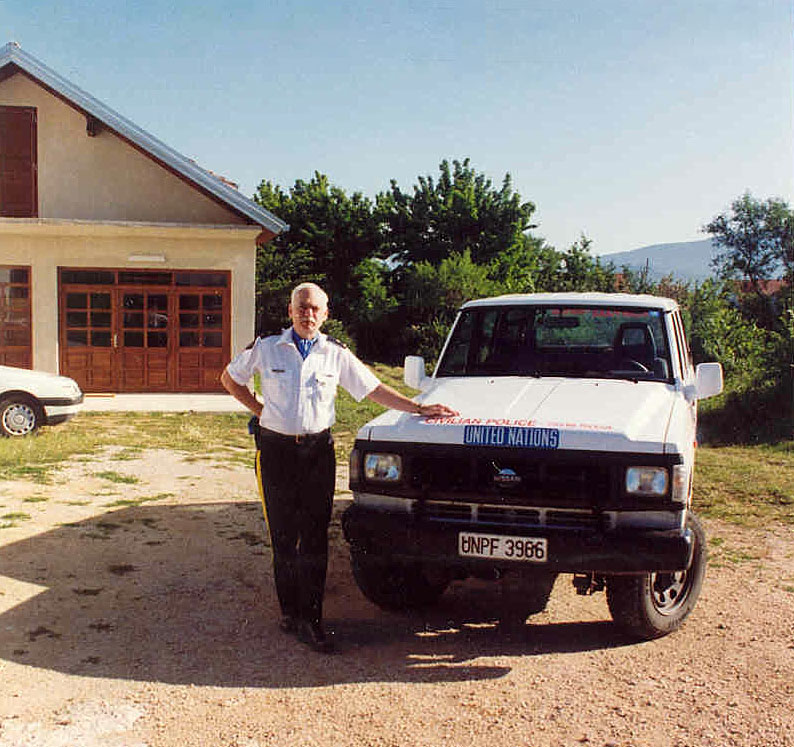
It was the autumn of 1993 and in the aftermath of the bloody confrontation in Croatia’s Medak Pocket, RCMP Inspector Bob Munro and his team of international police officers were looking for evidence of war crimes. The two sides—Croatians and Serbians—claimed they only killed combatants after Yugoslavia broke up, but the evidence proved otherwise. As he pored through forensic photos, it was clear to Munro that many of the dead were unarmed civilians, all execution victims.

READ MORE

WW I Collection 5-Volume Set
Military Milestones

October 11, 1918
Wallace Algie’s sacrifice

After occupying Cambrai, France, Canadian troops continued the Hundred Days Offensive, engaging in the attack on Iwuy, eight kilometres to the northeast, on Oct. 11, 1918.

German machine gunners laid down heavy fire from secure positions atop a railway embankment and behind groups of houses in the town.

Lieutenant Wallace Lloyd Algie of Toronto saw more machine guns being brought to bear on the Canadian position. Collecting nine volunteers, he charged a gun post, killed the gunner, and turned the weapon on the enemy, allowing his men to cross the railway embankment.

Then he rushed a second machine gun, killed its crew, captured an officer and 10 men and cleared his end of the village. After showing the volunteers how to use the captured guns, Algie went back for reinforcements. While running ahead of these men toward the houses sheltering the German gunners, Algie was shot. It was the beginning of a counterattack.

Algie’s men held their position, despite an attack by four tanks, until the 27th Battalion was able to seize the village and rout the enemy.

Algie was awarded the Victoria Cross “for most conspicuous bravery and self-sacrifice…. His valour and personal initiative in the face of intense fire saved many lives and enabled the position to be held,” says the extract from the London Gazette in January 1919.

He was given a battlefield burial, and later moved to a Commonwealth War Grave in the Niagara Cemetery at Iwuy.

Newspaper accounts of the day bring life to his profile. Algie, a bank employee before the war, was of Scottish descent and as a boy loved tales of military exploits, particularly of the Indian Mutiny and Crimean War.

While on leave, he visited the ancestral home of the Algies in Scotland and saw the monument to Covenanter martyrs James Algie and Thomas Park. The pair was tried and executed in 1685, in a period known as the Killing Times, for refusing to take an oath not to take arms against King Charles II. Covenanters were Presbyterians upset by the monarch reneging on his 1650 Oath of Covenant. It was an agreement to establish Presbyterianism as the Scottish national religion and recognize the church’s authority in English civil law, in exchange for support during the civil war and restoration of the monarchy, which had been suspended after the execution of King Charles I in 1649.

More than 200 years later, Wallace Algie also gave up his life for a cause he believed in.

Pocket Pal Notepad and 2019 Calendar
This week in history
This Week in History

October 13, 1812

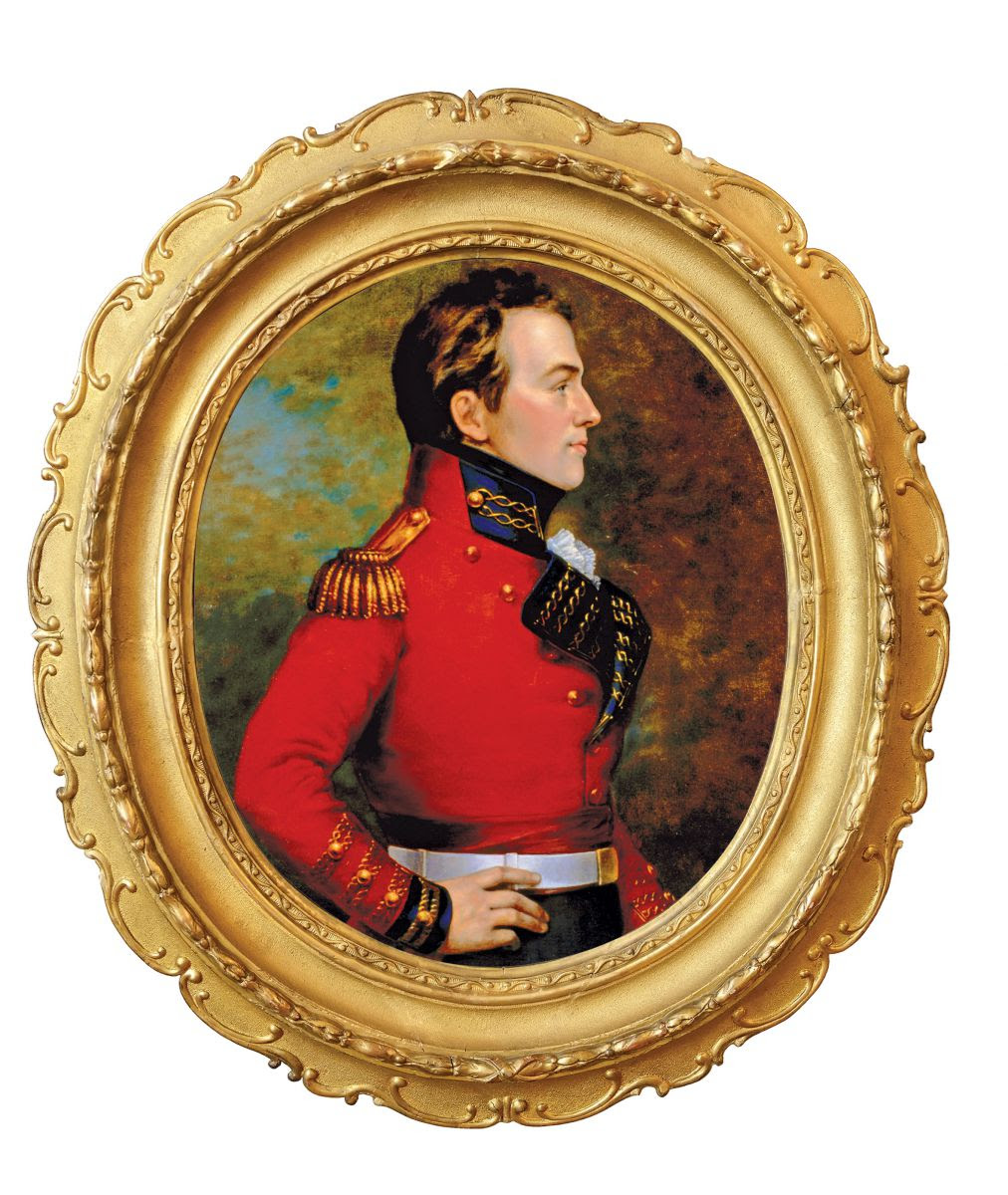
British Major-General Sir Isaac Brock is killed at the Battle of Queenston Heights.

READ MORE

Revera

Claim your $5 Reward Thanksgiving Gift!

From the Legion Magazine.


Legion Magazine SHOP!
WW II Collection only $75.99!
For the Fallen | $44.99
Canadian Woods Puzzle

BUY

PUZZLE
Canadian Woods
Only 24.99

Stainless Steel Water Bottle

BUY

WATER BOTTLES
Stainless Steel
Only 29.99

O Canada Placemats

BUY

PLACEMATS
25-Pack
Only 29.99

Pocket Pal Notepad
Yes I am from Canada Mailing Labels
$5 Cash Reward! Use Coupon Code: REWARD4