Monthly Archives: October 2020

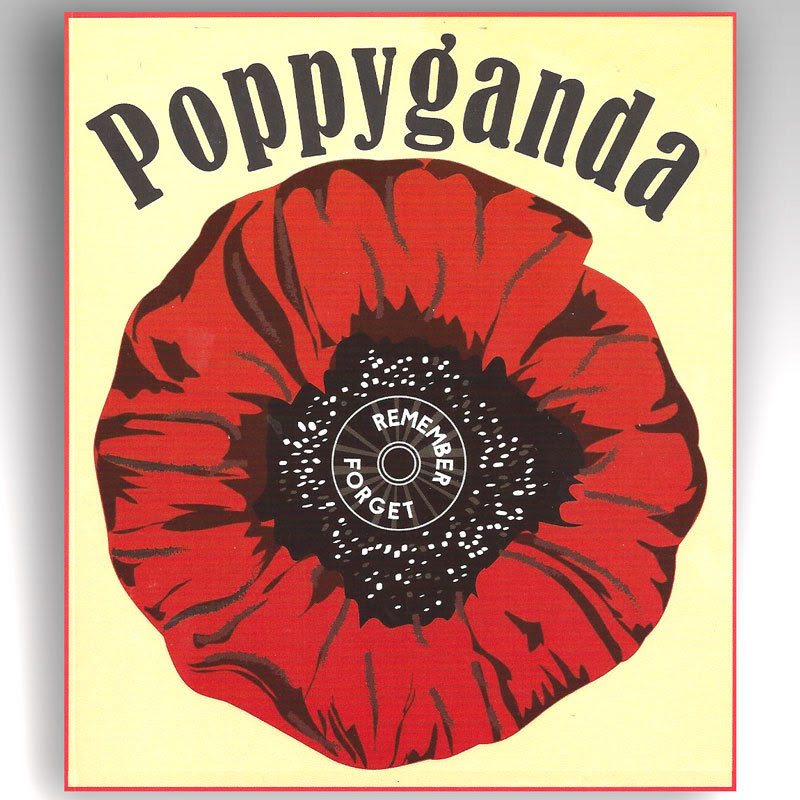
WWI Webinar Series: “POPPYGANDA: The Historical & Social Impact of a Flower”

Note these up-coming webinars from the World War One Centennial Commission.


WWI Webinar Series

Building the National WWI Memorial
In Washington, D.C.

Dough Foundation with WWI Commission logo

Friday October 09, 2020 , 1p Eastern •  “Poppyganda: The Historical & Social Impact of a Flower

Poppyganda square


Friday, October 09, 2020 @ 1pm Eastern

2020 Webinar Series
“Poppyganda”

with Author Mathew Leonard


“Poppyganda: The Historical & Social Impact of a Flower”
features Dr. Mathew Leonard, author of the book by the same title.

The Poppy is an enduring symbol of WWI. It is an icon that embodies a century of attitudes toward that incredible conflict, however, the poppy’s association with warfare predates 1914 and its legacy is still evolving today.

Dr. Mathew Leonard is a modern conflict archeologist at the University of Bristol in the UK – a very interesting field in its own right.

In 2015 he authored “Poppyganda” which is not only a very clever book title, but also a very clever book as he charts the history of the flower of remembrance through its role from the conflict on the western front until today.

We will also introduce you to the “Bells of Peace” National Bell Tolling program, show you how to pledge, organize, and to Toll The Bell on the 11th hour of the 11th day of the 11th month in remembrance of those who served in WWI . We will also preview our free Bells of Peace Participation App that will help you be a part of our community of remembrance.


Click to Register


Bonus Feature

immigrant in wwi

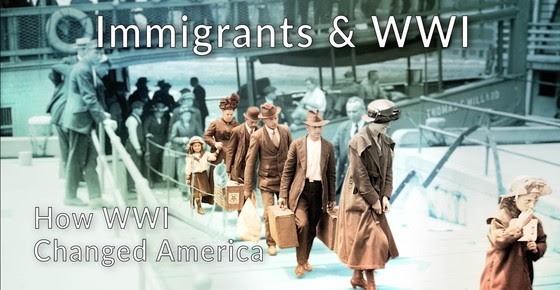
As a bonus feature we will close the webinar with the short 6 minute documentary “Immigrants and WWI” from our How WWI Changed America teaching and learning resources.

DID YOU KNOW: Between 1880 and 1910, 17 million immigrants came to the United States; when WWI broke out, nearly 15% of the population was foreign born. Many of the immigrants were from nations embroiled in WWI. This fostered a deep concern by America’s leaders that getting involved in the war would tear us apart.

Register and watch later:

If you are back at work, or can’t make it live for ANY reason, please register anyway and we will point you to the video of the webinar over the weekend.

Click to Register


View videos from our Previous 2020 Webinar Series


Diversity in the Boardroom: A Conversation w/ Shellye Archambeau

Note this up-coming webinar featuring the Canadian Consul General for San Francisco


Dear Canadian Community & Friends of Canada,


I’m writing on behalf of Consul General Rana Sarkar to invite you to an exciting virtual event.


Next Thursday, October 15th at 10AM PDT, join us as we welcome Fortune 500 Boardmember and Author Shellye Archambeau for an important online discussion about corporate culture in Silicon Valley and across the border, the importance of inclusive leadership environments, and strategies to break down barriers to entry & encourage inclusive innovation landscapes. This event comes in the wake of the publication of Ms. Archambeau’s latest book: “Unapologetically Ambitious: Take Risks, Break Barriers, and Create Success on Your Own Terms.”


You can register for the webinar for free here. We look forward to seeing you there!

All of the best,


Wade Wallerstein

Technology & Events Curator | Foreign Policy and Diplomacy Service
Coordinateur de la Technologie et des Événements | Service de la politique étrangère et de la diplomatie
Consulate General of Canada | Consulat général du Canada


Wade.Wallerstein@international.gc.ca
Office : +1 (415) 568 4351
Mobile :  +1 (415) 619 0804
580 California Street, Suite 1400

San Francisco, CA 94104
Global Affairs Canada | Affaires mondiales Canada
Government of Canada | Gouvernement du Canada

Tomorrow: Migrant worker rights during COVID; other October events & news

A reminder of these events, including one tomorrow, from a fellow Canadian organization in the Bay Area.


Canadian Studies Announcements
In this issue:
  • Event tomorrow: Migrant farmworker rights during COVID-19
  • Meet Canadian Studies: Board Member Kirk Miller
  • In the news: Ass’t VC David Jeu to retire from Berkeley, return to Canada
  • Upcoming event: Hildebrand Graduate Research Colloquium
  • Upcoming event: COVID-19’s impact on people with disabilities in Canada
EVENT TOMORROW
Social Movements and Legal Mobilisation in Times of Crisis: Migrant Farm Worker Rights in Canada
Lecture | October 6 | 12:30 p.m. | Online – RSVP here
The COVID-19 pandemic has disproportionately affected migrant farm workers. Former Hildebrand Fellow Vasanthi Venkatesh, a professor of law at the University of Windsor specializing in social movements and immigration, gives context to the crisis by showing how the pandemic has overlaid itself onto existing systemic racial discrimination against migrant farm workers embedded in law and policy. She also shows how migrant farm worker advocates have responded to the crisis by exposing the racial capitalism of the Canadian agricultural economy, using radical narratives to challenge these systems.
RSVP to canada@berkeley.edu to receive a webcast link.
Meet Canadian Studies: Board Member Kirk Miller
Kirk Miller is an architect, developer, and longstanding supporter of the Canadian Studies program. A native of Alberta, Kirk moved to the United States to attend architectural school at UC Berkeley. After graduation, he established a successful architectural career in San Francisco, where he remains involved in regional development conversations and the Bay Area Canadian expatriate community. We talked to Kirk about his history with Canadian Studies and life as a Canadian in California; read the full interview here.
On his connection to Canada:
My grandparents immigrated to the Canadian prairies when the prairies were still part of the Northwest Territories. My maternal grandparents homesteaded. My paternal grandfather helped build the railroads.
I was raised in Red Deer, Alberta. At 17 years of age, after running out of challenges in Red Deer, I went “East” to the Collège Militaire Royal de Saint-Jean, 25 miles south of Montreal. I also studied political science and sociology at the University of Alberta. Not knowing what I wanted to do, I turned down an offer to pursue graduate studies in poli sci and taught high school for a couple of years. I moved to Quebec City. It was there I was further immersed in French Canadian culture, lived in the Vieux Quartier (within the walls), and studied architecture at Université Laval.
How he came to Berkeley:
Quebec was going through the “Quiet Revolution” while I was at Laval. That caused me to look for a new venue to continue my architectural studies. The UC Berkeley College of Environmental Design had just started a new program where the graduate school offered a professional master’s degree if you had an undergraduate degree in any field.
Coming to Berkeley changed my life. I was forced to think outside the box, or even without a box. Cal was coming off of the Free Speech Movement. It was (and is) a thought leader. The architectural curriculum had a plethora of advanced and thought-provoking courses.
Why he supports Canadian Studies:
I have always been very interested in research (both my wife and brother are academics). Given the depth, breadth, and interdependence of Canada’s relationship with the US, there is an increasing need to study all aspects of the relationship and to strengthen it. The Canadian Studies program is on the right path. Irene Bloemraad {Program Director} and David Stewart {Board Chair} have formed a synergistic leadership unit for the future of the program. Now it is a matter of implementation, and the adjustments that are made during that implementation.
In the News
Ass’t Vice Chancellor David Jeu to Retire from UC Berkeley
The Canadian Studies Program would like to wish a fond farewell to David Jeu, assistant vice chancellor of International Relations at UC Berkeley. David will be retiring at the end of this month after ten years of service to the university.
As head of the Office of International Relations, David has been instrumental in helping Canadian Studies form critical fundraising relationships and tap streams of philanthropy to support our program. David has always been a trusted partner for our program, thanks not only to his thirty years of experience in nonprofit management but also to his background as a Canadian. Prior to joining Berkeley, David was Director of Global Development at the University of Alberta and his connections in Canada have been invaluable to the program.
David and his family will be returning to Canada to rejoin their children and soon-to-be grandchild. He leaves behind a remarkable legacy at Berkeley, and we wish him well in his future endeavours.
Right: David Jeu and Canadian Studies program director Irene Bloemraad at a Canadian federal elections watch party at UC Berkeley, 2015.
Upcoming Events
Hildebrand Graduate Research Colloquium
Colloquium | October 20 | 12:30 p.m. | Online – RSVP here
Learn about the research Canadian Studies funds through our Edward Hildebrand Graduate Research Fellowships, as recipients present short overviews of their projects. Participating scholars are Desirée Valadares, (“Idling No More: Reading Japanese Canadian World War II Road Camps Alongside Specters of Indigeneity on the Hope-Princeton Highway in British Columbia, Canada”) and Martha Herrera-Lasso Gonzalez (“Regionalizing NAFTA: Theaters of Translation in Mexico City and Quebec”).
External Event: COVID-19 and Global Inequalities
Lecture | October 29 | Time TBA | Online
The impact of the COVID-19 pandemic has fallen disproportionately on marginalized communities, among these people with disabilities. University of Windsor Law professor Laverne Jacobs, an expert in disability rights law who was Canadian Studies’ inaugural Fulbright Chair in 2014, will be part of a panel discussing the impact of the pandemic on Canadians with disabilities.
The lecture is part of “COVID-19 and Global Inequalities”, an innovative online course offered by Berkeley Law featuring faculty and students from around the world. Following the lectures, participants will be able to discuss the social inequalities relating to COVID and disability in a variety of jurisdictions.
RSVP information will be announced at a later date.
Canadian Studies Program
213 Moses Hall #2308
Canadian Studies Program | Univ. of California, Berkeley, 213 Moses Hall #2308, Berkeley, CA 94720

The October Crisis of 1970 – 50th Anniversary ⚜️

This is an interesting item from the Legion Magazine.


The October Crisis
The October Crisis


TIMELINE

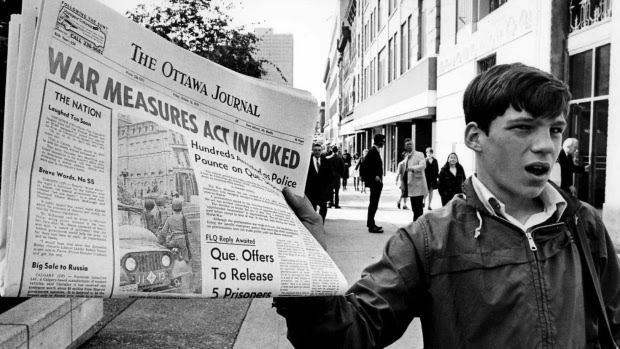
This timeline highlights the main events leading up to and at the height of the October Crisis, when the FLQ – a separatist group promoting an independent Quebec – kidnapped a cabinet minister and a British trade commissioner, prompting the federal government to enact the War Measures Act.

READ MORE

The October Crisis

MEMOIRS

We invited readers from across Canada to submit their memories. What event was most vivid? Where were they? What were they doing? 

READ MORE

The October Crisis


FACE TO FACE

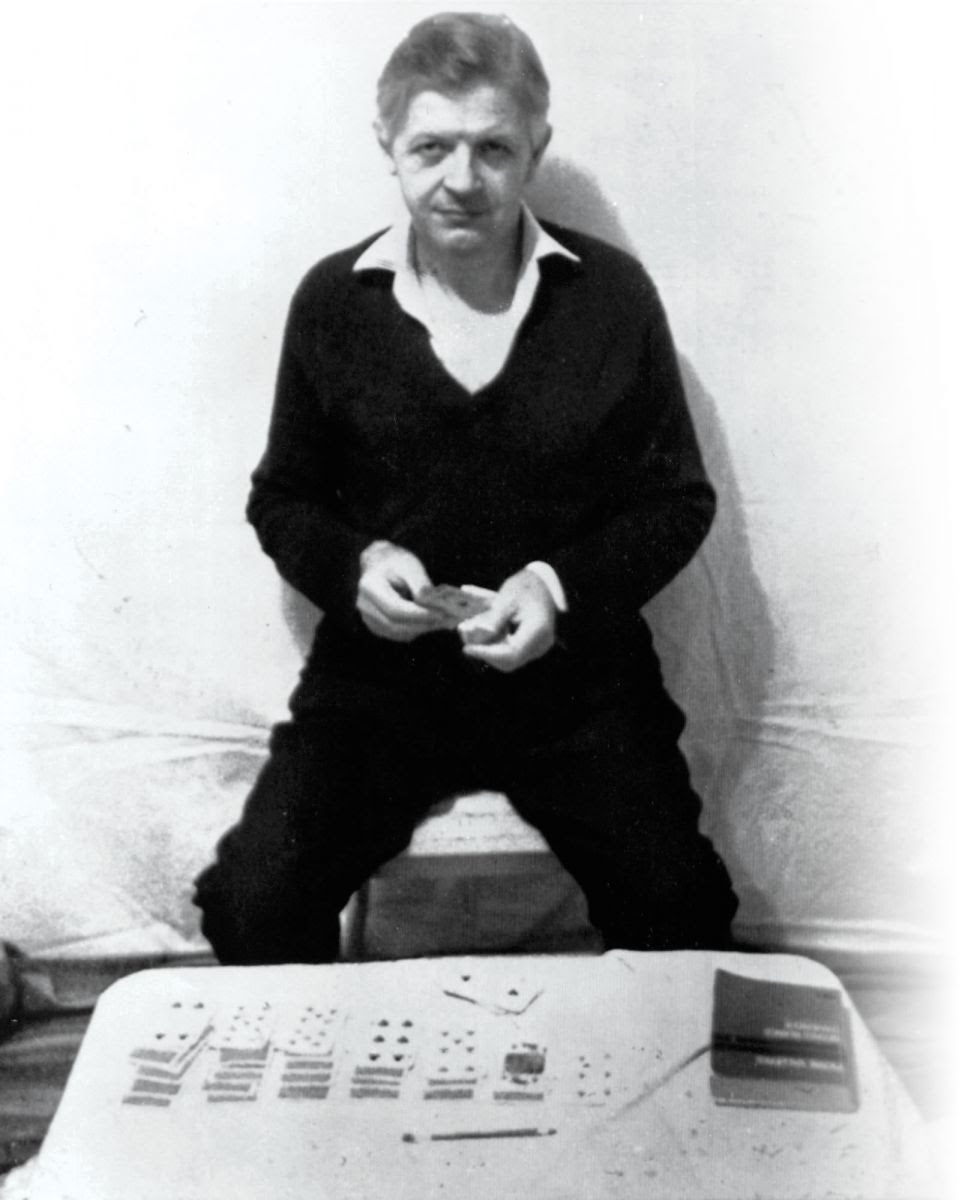
Should the James Cross kidnappers have been granted safe passage to Cuba?

READ MORE

The October Crisis


ARTIFACTS

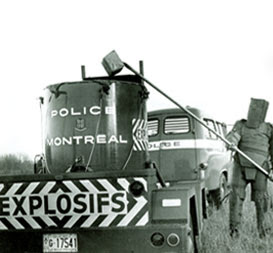
The FLQ embraced violence to achieve political and social reform—armed robbery, bombings, hijackings, kidnappings and murder. Eight people were killed in the violence, dozens maimed and hundreds injured.

READ MORE

This week in history

October 5, 1970

British Trade Commissioner James Cross was kidnapped in Montreal, Quebec. Ransom demands from the Liberation cell of the FLQ included the release of 23 “political prisoners”; $500,000 in gold; broadcast and publication of the FLQ Manifesto; and an aircraft to take the kidnappers to Cuba or Algeria.

What happened next?

READ MORE

Legion Magazine