Author Archives: Michael K. Barbour

Unknown's avatar

About Michael K. Barbour

Michael K. Barbour is the Director of Faculty Development and a Professor of Instructional Design for the College of Education and Health Sciences at Touro University California. He has been involved with K-12 online learning in a variety of countries for well over a decade as a researcher, teacher, course designer and administrator. Michael's research focuses on the effective design, delivery and support of K-12 online learning, particularly for students located in rural jurisdictions.

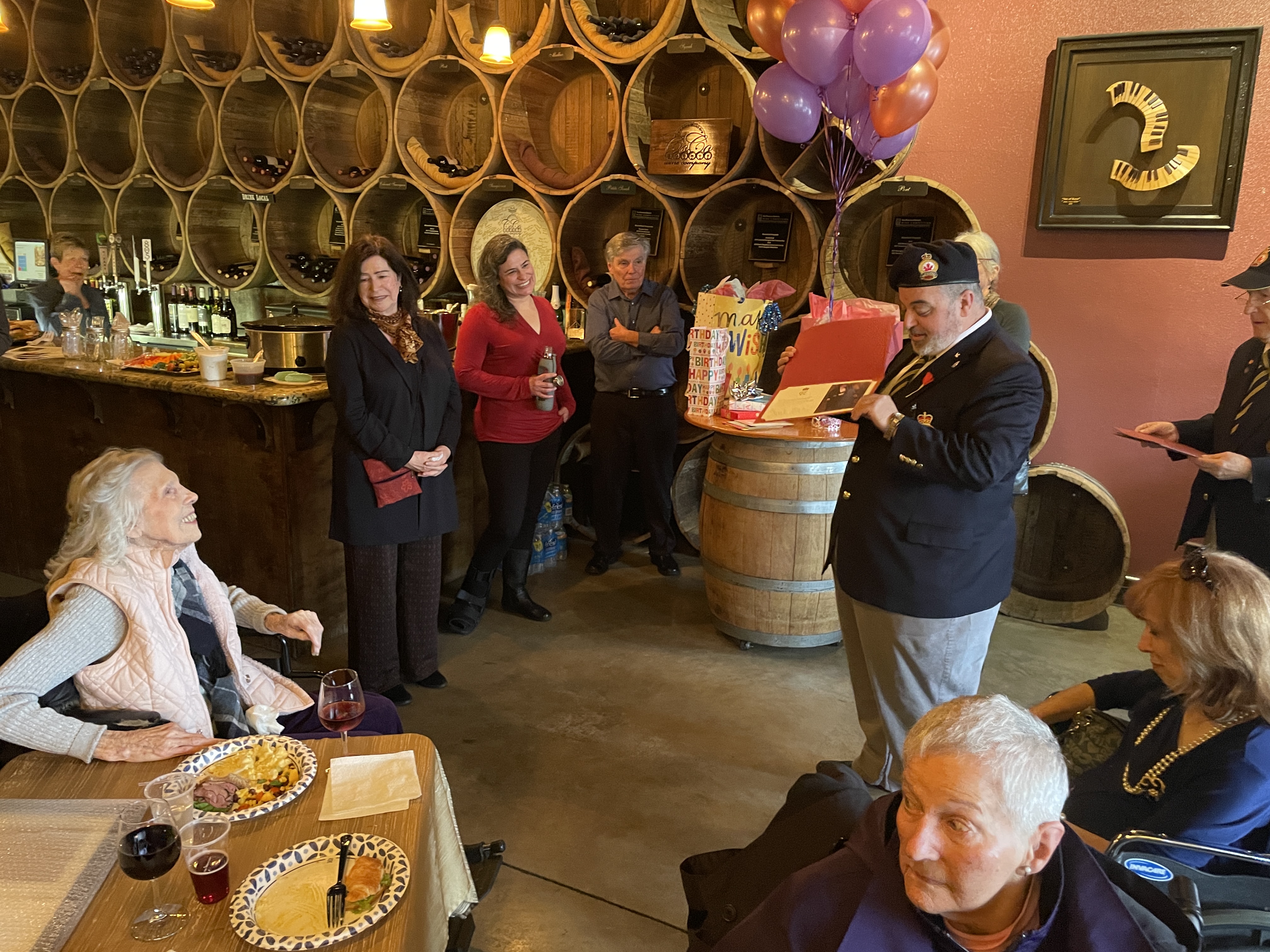
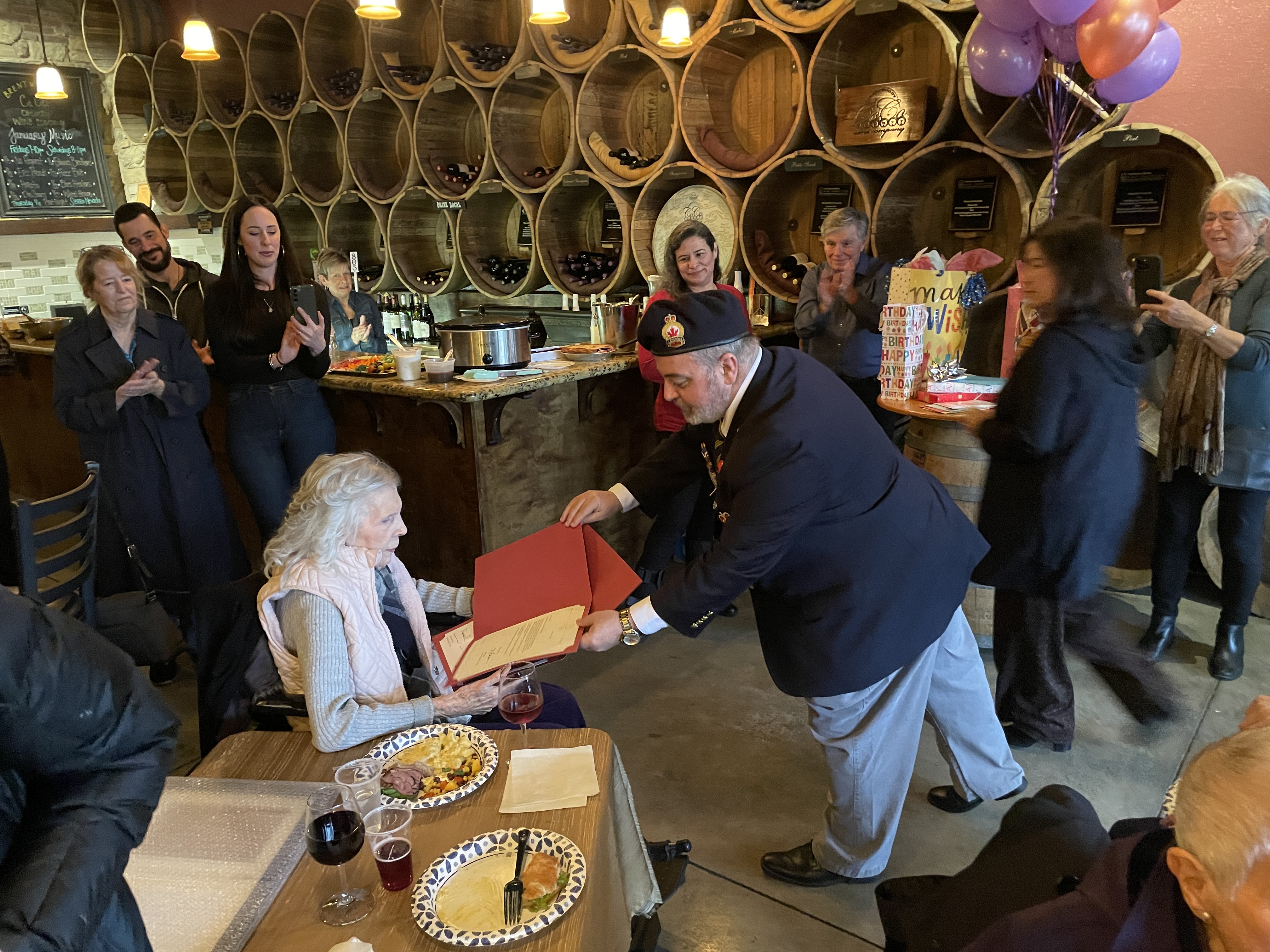
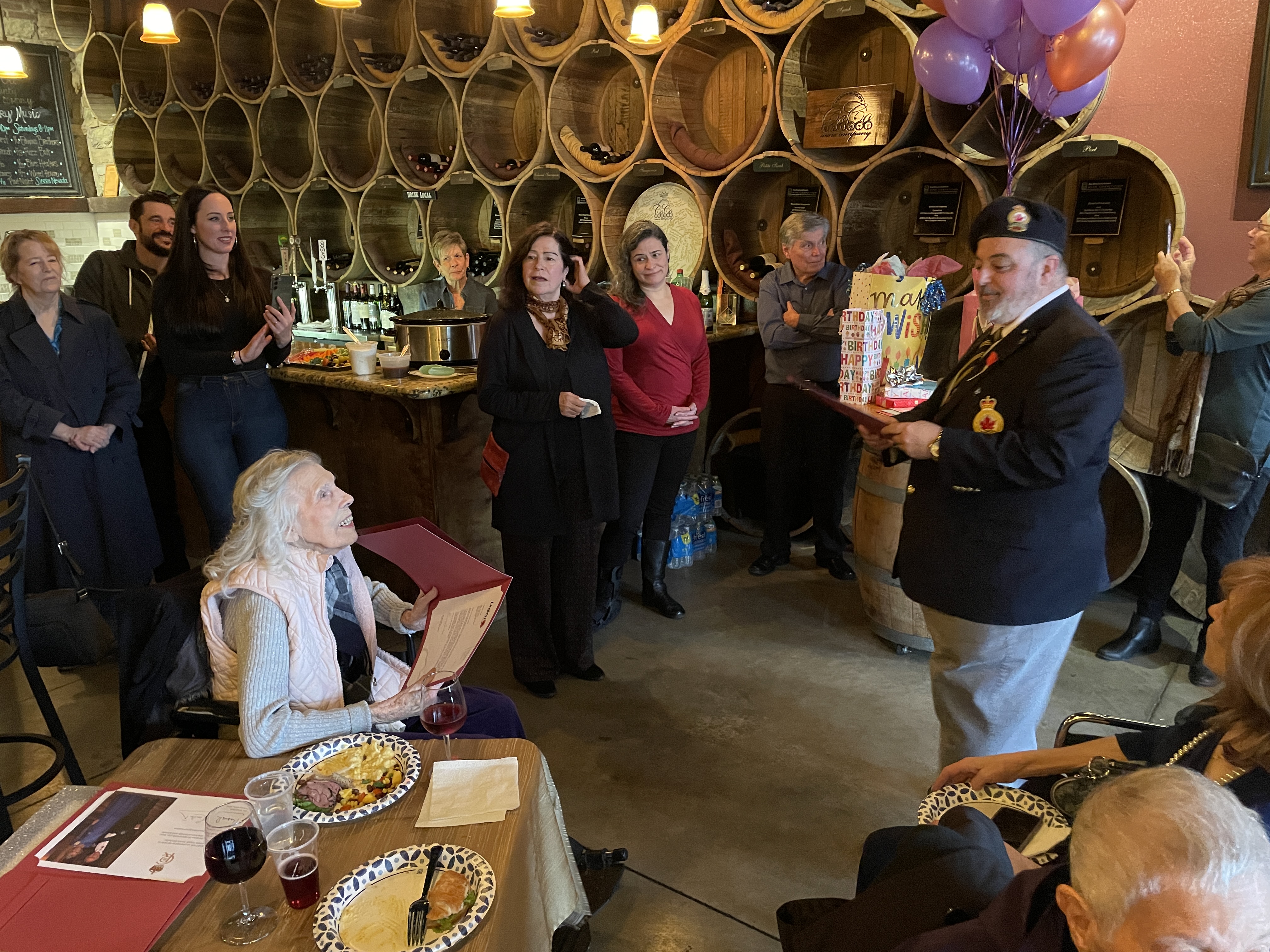
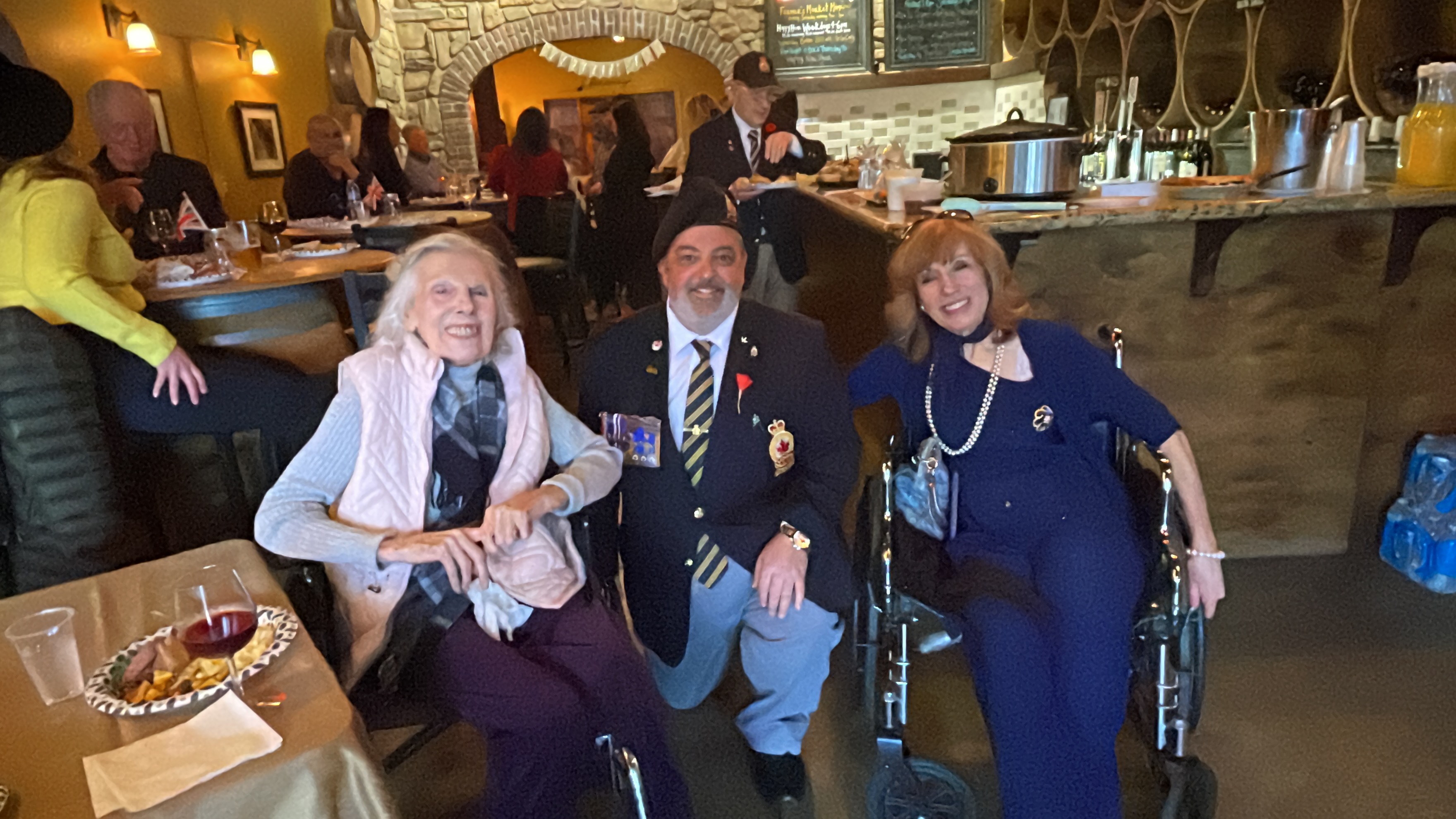
Joan Para’s 100th Birthday Gathering

On Tuesday, 16 January, members of Branch 25 (San Francisco) of the Royal Canadian Legion – along with her family and friends – celebrated the 100th birthday of Joan Para.  Joan Para is Branch 25’s last remaining World War II veteran. She was born in 1924 in Lowestoft, England. Following aptitude testing in Honiton, Devon to determine which jobs they would be best suited, Joan was assigned to Army Communications during World War II.  She then went on Bradford, near Leeds, for training and was eventually stationed in London, near Buckingham Palace. Joan served from 1942 to 1946.

Below are some pictures and videos from yesterday’s event – and you can read more about Joan and her service in these previous entries:

The Langemarck Myth: How WW I Germany turned loss into propaganda victory

An item from the Legion Magazine.


Front Lines
Front Lines

Stephen J. Thorne

The Langemarck Myth: How WW I Germany turned loss into propaganda victory

STORY BY STEPHEN J. THORNE

Eleven kilometres north of the First World War icon of Ypres in Flanders, Belgium, more than 44,000 Germans lie buried in a sprawling walled cemetery at the site from which the Kaiser’s army launched the first gas attack in modern warfare.

The remains of 24,917 German war dead rest in a mass grave alongside the entrance to Langemarck German war cemetery, including flying ace Werner Voss, a squadron mate and close friend of Manfred von Richthofen (the Red Baron).

READ MORE

25% off 2024 Calendar
Military Milestones
Military Milestones

Wikimedia

The Second World War’s strangest weapon

STORY BY PAIGE JASMINE GILMAR

At the end of the Second World War, Japan dreamt up one of the most bizarre weapons of early 20th-century warfare. It launched 9,000 of them across the Pacific Ocean from November 1944 to April 1945 and the idea was as unexpected as it was inefficient; it had created the balloon bomb.

They aren’t often seen as dangerous weapons, but Japanese balloon bombs, called Fu-Go, were diabolical—at least in theory. Carrying a 33-pound fragmentation shell, the device was meant to cause widespread fire, essentially aiming to wreak havoc on American morale and the North American war effort when delivered in great numbers. Only 10 per cent of them reached the continent, however. And on Jan. 12, 1945, a teenager spotted one of the floating bombs near Regina, the first of eight to land in Saskatchewan.

READ MORE

Member Benefit Partner

Arbor Alliance

Happy New Year! 🎉​ Our Spring events lineup is here!

A newsletter from one of our fellow Canadian organizations in the Bay Area.


Canadian Studies Announcements

In This Issue:

Upcoming Events

  • Negotiating the “Double-Minded Vocabulaire”: Montreal’s Jewish Communities and Contemporary Quebec
  • Preview our Spring calendar!

Academic Opportunities

  • Call for papers: Populations rendered “surplus” in Canada

Important: Are you receiving all our emails?

Recent changes to Google’s authentication procedures may mean that our newsletters were getting sent to spam for gMail and bMail users. This issue should be resolved, but please check your spam folders and mark any emails from us as trusted!

UPCOMING EVENTS

Negotiating the “Double-Minded Vocabulaire”: Montreal’s Jewish Communities and Contemporary Quebec

Tues., January 30 | 12:30 pm | 223 Philosophy Hall | RSVP

Montreal’s 90,000-strong Jewish community presents unique features that differentiate it from the Jewish populations of other North American cities. Even those aspects that it shares – a large Ashkenazic immigration in the early 20th century, broad and successful upward mobility, and the development of strong educational, cultural, and service institutions – have been achieved in a city once divided by language, religion, and geography (the English-speaking, largely Protestant business west versus the French-speaking, overwhelmingly Catholic proletarian and lower middle-class east), now a secular, multicultural metropolis whose official language is French but with the highest rate of citizens who speak at least three languages of any North American city. The departure of many Ashkenazic Jews in the 1970s and 80s in the face of the Quebec independence movement has been partially offset by the arrival, since the 1950s, of Sephardic Jews, at first from North Africa, and more recently from Israel and France. At the same time, Montreal received one of the world’s largest populations of Holocaust survivors and has become a world center for Hasidic Judaism.

Today, Montreal Jewish institutions speak increasingly of the city’s Jewish communities, in recognition of this remarkable internal diversity. How do these developments challenge the vision and missions of Montreal’s historical Jewish institutions? How is the question of Jewish identity in Montreal shaped by the concern in Quebec for the flourishing of the French language and the codification into law of a concept of laïcité, or secularism, more in line with European views than with the prevailing notions of multiculturalism in North America? How do Montreal’s Jewish communities articulate their identities and sentiments of belonging in response to the range of ways, variously inclusive and exclusive, that Quebec identity is asserted in the linguistic, cultural, and political spheres?

ABOUT THE SPEAKER

Dr. Robert Schwartzwald is a professor in the Département de littératures et de langues du monde at the Université de Montréal, where he directed the graduate certificate program in Jewish studies from 2016-2022. He received his M.A. in comparative literature from the University of Toronto, and a Ph.D. in Québécois literature from Université Laval. His publications explore interfaces between literary and national articulations of modernity with special attention to issues of sexual representation and intercultural relations. He is a former editor of the International Journal of Canadian Studies / Revue internationale d’études canadiennes and a recipient of the Governor-General’s International Award for Canadian Studies.

This event is cosponsored by the Center for Jewish Studies and Department of French.

… And save the date for these other great events!

March 2: Program director Richard A. Rhodes will lead a conference celebrating the release of the late David Pentland’s Proto-Algonquian Dictionary.

March 12: Agricultural economist Catherine Keske (UC Merced) will discuss her research on creating a secure, sustainable, and just food system in the boreal ecosystems of Newfoundland and Labrador.

April 16: Historian Jarett Henderson (UC Santa Barbara) will talk about what the criminalization of male-male sexuality in 19th-century Canada reveals about the politics of gender and settler masculinity under colonial rule.

April 30: Grad student Hildebrand Fellows Claire Chun and Madeleine Morris will give short presentations on their Canadian Studies-funded research into how Canadian visual artists grapple with the complexities of national and ethnic identity.

ACADEMIC OPPORTUNITIES

Call For Papers: Populations Rendered “Surplus” in Canada

Deadline: April 15, 2024

Social Sciences, an open-access, peer-reviewed journal, has put out a call for papers for a special edition in Canadian studies. Titled Populations Rendered “Surplus” in Canada, this issue seeks to address the challenges faced by Canada’s displaced, marginalized, erased, racialized, and disadvantaged populations.

The edition will be guest edited by Christina Keppie, director for the Center for Canadian-American Studies at Western Washington University. Submissions from all fields and disciplines related to the social sciences are encouraged, and a multi- or interdisciplinary approach is welcome.

Click here to learn more.

Canadian Studies Program

213 Philosophy Hall #2308

WEBSITE | EMAIL | DONATE

Facebook  Twitter
Canadian Studies Program | Univ. of California, Berkeley213 Philosophy Hall #2308Berkeley, CA 94720