Author Archives: Michael K. Barbour

Unknown's avatar

About Michael K. Barbour

Michael K. Barbour is the Director of Faculty Development and a Professor of Instructional Design for the College of Education and Health Sciences at Touro University California. He has been involved with K-12 online learning in a variety of countries for well over a decade as a researcher, teacher, course designer and administrator. Michael's research focuses on the effective design, delivery and support of K-12 online learning, particularly for students located in rural jurisdictions.

RAF Wick Gate Guardian Project

As many of our members are former air force, this RCAF Association item may be of interest to some.


The RCAF Association Trust Fund has formally offered its support to the Royal Air Force (RAF) Wick Gate Guardian (Spitfire Restoration) Project. RAF Wick was home to many RAF units and squadrons four of which were Royal Canadian Air Force. You can learn much by visiting YouTube at the following link: 

https://youtu.be/To3GNmUkkZ0

Some 379 personnel lost their lives while operating from RAF Wick, including 34 members of the RCAF.

One particular casualty whose loss is now a central figure in the RAF Wick Gate Guardian Project is Flying Officer Alastair Gunn, RAFVR, who flew photo reconnaissance Spitfires from Wick. He was shot down over Norway, near Trondheim, while looking for the battleship Tirpitz. He was captured, and sent to Stalag Luft III as a prisoner-of-war. While there he was one of 75 men behind the “Great Escape” and Alastair was one of 50 executed by Adolf Hitler – a war crime for which the coward avoided prosecution himself when he committed suicide, as Berlin fell to the allies.

The RCAF Association Trust Fund supports this important project to restore Alastair Gunn’s Spitfire, which was recovered from a peat bog in Norway in July 2018.

If you would like to donate to this very special project, please visit the RCAF Association Trust canadahelps.org donation page here at this link. All proceeds will be forwarded to the Wick Trust in the UK, to help them reach their goal of 60 thousand pounds sterling.

This e-mail was sent from Royal Canadian Air Force Association (rcaf_list@airforce.ca)

Disputed probe names suspected Anne Frank betrayer

An item from the Legion Magazine.


Legion Magazine
Front Lines
Disputed probe names suspected Anne Frank betrayer

 Disputed probe names suspected Anne Frank betrayer

Story by Stephen J. Thorne

A team of historians and investigative experts has identified a primary suspect in the betrayal of Jewish diarist Anne Frank and her family. But others close to the story say the evidence is too weak to reach such conclusions.

READ MORE

O Canada Journal
O Canada Journal
Military Milestones
The lost nuke of British Columbia

The lost nuke of British Columbia

Story by Sharon Adams

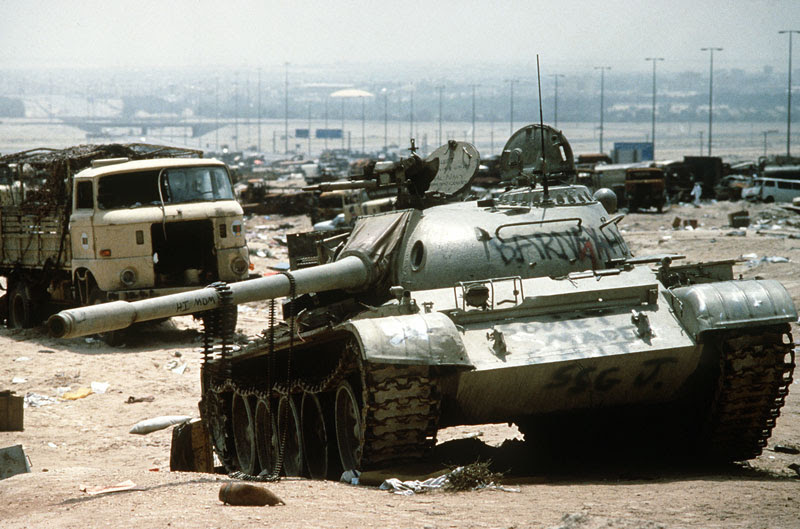
In September 1949, U.S. President Harry Truman announced the Soviet Union had detonated an atomic device. Early in the following year, U.S. air crews were practising in case they were ever called upon to bomb the Soviet Union.


READ MORE

Arbor Alliance
Canvet Publication Ltd.

Bell Let’s Talk Day

Today’s Bell Let’s Talk Day highlights the ways that we can support ourselves and those we care about through actions like listening, being there, and talking.

We know that this isn’t an easy task. If you are stuck and don’t know where to turn, the Legion’s Veteran’s Service Network can help.

Our Service Officers are trained professionals who will listen and work with Veterans and their families to find the support that they need.

Learn more about this service that is free for Veterans and their families: https://www.legion.ca/support-for-veterans/mental-health-ptsd

#BellLetsTalk

Vimy Inspires Tomorrow

An item from Canada’s History magazine, on behalf of the Vimy Foundation, that may be of interest to members.


Sponsored
View this email in your browser
Dear Michael K. Barbour ,

The Vimy Foundation is placing history at the forefront of community leadership.

Through the new education program, Vimy Inspires Tomorrow, youth ages 13 to 17 can apply lessons from history to create transformative community projects, for a chance to earn a $1,500 project grant.

Six activities drawing on different aspects of First World War history demonstrate how Canadians of different ages, backgrounds, and military ranks took on leadership roles, and the impact of their decisions, actions, and contributions during and after the war. The activities will enable participants to examine, discuss, and exercise key leadership skills, all of which can be applied to their daily lives as they become leaders of tomorrow.

Youth who complete one or more activities can submit a one-page proposal for a community project to be eligible for additional leadership training and a $1,500 community project grant.

facilitator’s guide is also available with information about the activities, which are designed to adapt to online or in-person formats.

The deadline to submit a one-page proposal is March 31, 2022, but the activities are available all year round.

PARTICIPATE TODAY!
Share Share
Tweet Tweet
Forward Forward
© 2022 Canada’s History, All rights reserved.
You are receiving this email as a member or friend of Canada’s History. / Vous recevez ce courriel parce que vous êtes membre ou parce que vous appartenez à la communauté d’esprit de la Société Histoire Canada.Our mailing address is:

Canada’s History

Main Floor Bryce Hall, 515 Portage Avenue

Winnipeg, MB R3B 2E9

Canada

New faculty affiliate studies politics of climate change; mapping the future of the Arctic

A newsletter from a fellow Canadian organization in the Bay Area.


Canadian Studies Announcements
In this issue:
  • Upcoming panel discussion: “Models for Repatriation of Indigenous Cultural Property from First Nations, Canada”
  • New faculty affiliate, Daniel Aldana Cohen, studies politics of climate change
  • External event: “Canadian Minister of Northern Affairs Dan Vandal: Building A Strong, Sustainable North”
  • External event: Book talk on Bootlegged Aliens: Immigration Politics on America’s Northern Border
UPCOMING EVENT
Panel Discussion: Models for Repatriation of Indigenous Cultural Property from First Nations, Canada
Tuesday, February 8 | 12:30 pm | Online | RSVP here
How can repatriation be built from mutual respect, cooperation and trust? North American museums and institutions have historically engaged in the collection and categorization of Indigenous cultural property and knowledge without the consent or active involvement of Indigenous people. The Native American Graves Protection and Repatriation Act (NAGPRA) was enacted in 1990 to return Native American “cultural items” to lineal descendants and culturally affiliated American Indian tribes, Alaska Native villages, and Native Hawaiian organizations. Despite this and further state legislation, many institutions including the University of California, have obfuscated or denied repatriation claims. Across the border, the Canadian government does not currently have legislation addressing the repatriation of Indigenous Ancestors and cultural heritage, but is working to create national support for repatriation through legislation Bill C-391. Some Canadian provinces have passed repatriation acts or provincial museum polices that have facilitated the return of ancestors and belongings. This panel discussion seeks to learn from what is being done in Canada. What is the cultural and nuanced work that builds successful repatriations? How can repatriation and indigenizing the institution from within preserve and strengthen tribal cultural heritage?
Join Canadian Studies affiliate Sabrina Agarwal (Professor of anthropology and chair of the UC Berkeley NAGPRA Advisory Committee) in conversation with Dr. Louis Lesage (Director, Nionwentsïo Office, Huron-Wendat Nation), Lou-Ann Neel (Curator and Acting Head of Indigenous Collections and Repatriation Department, Royal BC Museum), and Michelle Washington (Repatriation Specialist, Royal BC Museum) to explore these questions and hear about their experiences in repatriation.
Image: Kwakwaka’wakw house posts from British Columbia in the Hearst Museum of Anthropology, UC Berkeley.
New Faculty Affiliate Daniel Aldana Cohen Studies Politics of Climate Change
Canadian Studies is pleased to welcome professor Daniel Aldana Cohen, an assistant professor of sociology, as our newest program affiliate.
Professor Cohen joined the Berkeley faculty in July 2021. He completed his undergraduate schooling at McGill University, where he was also editor of the McGill Daily, and received a master’s and doctorate in sociology from New York University. He is also an Azrieli Global Scholar with CIFAR, a Toronto-based organization that provides support for outstanding early-career researchers studying the most important questions facing science and humanity.
Professor Cohen’s research focuses on the politics of climate crises, investigating the intersections of climate change, housing, political economy, social movements, and inequalities of race and social class in the United States and Brazil. He conducts comparative qualitative research on social movements and elite climate policymaking, as well as creating equitable, practical pathways to a low-carbon emissions future.
Professor Cohen is director of the Socio-Spacial Climate Collaborative, or (SC)2, a hub for critical social science research on climate change, and is a founding co-director of the Climate and Community Project. He has served as a policy advisor to several nonprofits and American political campaigns. His writing has appeared in publications including Nature, The Guardian, The Washington Post, Jacobin, and Vox, and he co-hosts the Dissent magazine affiliated podcast Hot & Bothered: A Climate Podcast for the 99%. He co-authored the book A Planet to Win: Why We Need a Green New Deal (2019), and is currently working on his next book, Street Fight: Climate Change and Inequality in the 21st Century City. Professor Cohen can be found on Twitter at @aldatweets.
EXTERNAL EVENTS
Canadian Minister of Northern Affairs Dan Vandal: Building a Strong, Sustainable North
Friday, February 4 | 10 am PT | Online | RSVP here
The Government of Canada, Indigenous peoples, and 6 territorial and provincial governments came together to develop Canada’s Arctic and Northern Policy Framework, a transformative vision of the future where northern and Arctic people are thriving, strong and safe. The Framework includes goals relating to eight overarching themes—people and communities, strong economies, comprehensive infrastructure, environment and biodiversity, science and Indigenous knowledge, global leadership, safety, security and defence, and reconciliation. It incorporates regional and distinctions-based lenses while integrating domestic and international dimensions. Canada’s Minister of Northern Affairs, Daniel Vandal, will discuss federal, Indigenous, and community-driven partnerships and programs to address short-term and long-term climate change adaptation and mitigation, supporting healthy ecosystems in the Arctic and North in a conversation by moderated by Jothsna Harris.
Book Talk: Bootlegged Aliens: Immigration Politics on America’s Northern Border
Friday, February 18 | 12 pm PT | Online | RSVP here
Join Professor Ashley Johnson Bavery for a discussion of her new book, Bootlegged Aliens. The book explores immigration on America’s northern border before World War II, situating Detroit, Michigan as America’s epicenter for unauthorized immigration. In this industrial center, thousands of Europeans crossed the border from Canada each year, prompting nativist backlash and complicating the labor politics of the automobile industry. This event is jointly hosted by the Center for Comparative Immigration Studies at UC San Diego and UCLA Center for the Study of International Migration. UCLA professor Tobias Higbie will join as a discussant.
Ashley Johnson Bavery is assistant professor of history at Eastern Michigan University. Her work has appeared in the Journal of Urban History and the Journal of American History and her book, Bootlegged Aliens: Immigration Politics on America’s Northern Border (2020) won the First Book Award from the Immigration and Ethnic History Society.
Tobias Higbie is a professor of history and labor studies at UCLA, the chair of the Labor Studies and the associate director of the Institute for Research on Labor and Employment. His research explores social movements, migration, and the politics of community in the United States. Higbie’s most recent book, Labor’s Mind: A History of Working Class Intellectual Life (2019), recovers the social world of self-educated working people and the politics of working-class identity during the early 20th century.
Canadian Studies Program
213 Moses Hall #2308
Canadian Studies Program | Univ. of California, Berkeley, 213 Moses Hall #2308, Berkeley, CA 94720