Author Archives: Michael K. Barbour

Unknown's avatar

About Michael K. Barbour

Michael K. Barbour is the Director of Faculty Development and a Professor of Instructional Design for the College of Education and Health Sciences at Touro University California. He has been involved with K-12 online learning in a variety of countries for well over a decade as a researcher, teacher, course designer and administrator. Michael's research focuses on the effective design, delivery and support of K-12 online learning, particularly for students located in rural jurisdictions.

Last call for Thanksgiving! 🦃 Plus: Nat’l Day of Reconcilliation; Quebec election

An update from one of our fellow Canadian organizations in the Bay Area.


Canadian Studies Announcements

In This Issue:

Upcoming Events:

  • 5th Annual Canadian Family Thanksgiving
  • Book talk: Converging Empires: Citizens and Subjects in the North Pacific Borderlands, 1867–1945
  • Graduate student discussion with Prof. Andrea Geiger

Canadian News

  • Canada marks second National Day of Truth and Reconciliation
  • What Quebec’s election could mean for Canada

LAST CHANCE TO BUY TICKETS!

5th Annual Canadian Family Thanksgiving

Saturday, October 8 | 5:00 pm

Clark Kerr Campus, UC Berkeley | Buy tickets here

Canadian Studies is pleased to partner with the Digital Moose Lounge for our fifth annual Canadian Thanksgiving dinner! Join us for a special meal celebrating the Bay Area’s Canadian community, as you mingle with your fellow SF Bay Canadians while enjoying entertainment and a delicious turkey dinner.

Tickets may be purchased through the Digital Moose Lounge.

Book Talk: Converging Empires: Citizens and Subjects in the North Pacific Borderlands, 1867–1945

Wednesday, October 19 | 12:30 pm | 223 Moses | RSVP here

Andrea Geiger will discuss her new book, Converging Empires: Citizens and Subjects in the North Pacific Borderlands, 1867–1945 (University of North Carolina Press, 2022). Making a vital contribution to our understanding of North American borderlands history through its examination of the northernmost stretches of the U.S.-Canada border, the book highlights the role that the North Pacific borderlands played in the construction of race and citizenship on both sides of the international border from 1867, when the United States acquired Russia’s interests in Alaska, through the end of World War II. Imperial, national, provincial, territorial, reserve, and municipal borders worked together to create a dynamic legal landscape that both Indigenous and non-Indigenous people negotiated in myriad ways as they traversed these borderlands. Adventurers, prospectors, laborers, and settlers from Europe, Canada, the United States, Latin America, and Asia made and remade themselves as they crossed from one jurisdiction to another.

Within this broader framework, Geiger pays particular attention to the ways in which Japanese migrants and the Indigenous people who had made this borderlands region their home for millennia negotiated the web of intersecting boundaries that emerged over time, charting the ways in which they infused these reconfigured national, provincial, and territorial spaces with new meanings. To see the North Pacific borderlands only as a remote outpost that marked the westernmost edges of the U.S. or British empire, is to miss not only the central place it occupied in the lives of the Indigenous peoples whose home it continues to be, but the extent to which it functioned, in the eyes of Japanese entrepreneurs, as an economic hinterland for an expanding Japanese empire, as well as the role it played in shaping wartime policy with regard to citizens and subjects of Japanese ancestry in both Canada and the United States.

Andrea Geiger is professor emerita of history at Simon Fraser University. Her research interests include transpacific and borderlands history, race, migration, and legal history. She received a J.D. and Ph.D. in history from the University of Washington, and is the author of the award-winning Subverting Exclusion: Transpacific Encounters with Race, Caste, and Borders, 1885–1928.

This event is co-sponsored by the Berkeley Interdisciplinary Migration Initiative (BIMI), the Center for Race and Gender, and the Department of History.

Graduate Student Discussion with Andrea Geiger

UC Berkeley students with a research interest in Professor Geiger’s work are welcome to attend a small group discussion with the speaker following her public presentation. For more information, please email canada@berkeley.edu.

CANADIAN NEWS

Canada Marks Second National Day of Truth and Reconciliation

On Friday, Canada marked its second National Day for Truth and Reconciliation. The holiday commemorates the children who passed through Canada’s residential school system, and honours the survivors and their families. The commemoration originates from “Orange Shirt Day”, an indigenous-led grassroots awareness campaign. It was elevated to a federal statutory holiday last year, following the discovery of hundreds of unmarked graves at former residential school sites.

Canada’s Indian residential school system operated from the late 19th century through the mid-20th century. It aimed to assimilate Indigenous people into European-Canadian society by removing children from their families and severing their connections to their communities and culture. Attendance was compulsory for Indigenous children from 1894 until 1947, and over 150,000 children are believed to have been enrolled between 1831 and the closure of the last school in 1998. Conditions in the schools were often horrific, and children suffered from poor sanitation, malnutrition, and physical and sexual abuse. The number of students who died at the schools remains unclear due to poor record-keeping, with estimates ranging from 3,000-30,000 children.

In a statement published Friday, Prime Minister Trudeau asked Canadians to “come together to reflect on the legacy of residential schools.” He called it the nation’s “shared responsibility” to understand the ongoing impacts of the schools on survivors and their families, and to work to addressing these wrongs. To that end, he noted several programs the Government has implemented, including the appointment of an Independent Special Interlocutor for Missing Children and Unmarked Graves and Burial Sites and introducing new legislation to create a National Council for Reconciliation.

What Quebec’s Election Could Mean for Canada

Quebeckers headed to the polls today to elect the new members of their province’s legislature, the National Assembly. While results have yet to be released, recent polling shows the governing Coalition Avenir Québec (CAQ), led by current premier François Legault, cruising to an easy victory. The final projection from 338Canada has the CAQ winning a comfortable 39% of the vote, which translates to 77% of legislative seats.

In an article published in CTV News last month, political scientist Daniel Béland, director of the McGill Institute for the Study of Canada and frequent Berkeley Canadian Studies collaborator, spoke to some potential national effects of this election. Legault and the CAQ have worked to increase Quebec’s autonomy from the federal government, and the party has opposed many of Trudeau’s policies. While a CAQ victory is all but assured, Béland says the margins are important: a strong victory would “not be good news for Justin Trudeau.”

A particular point of contention between Trudeau and Legault is immigration. Legault has vocally opposed the Liberals’ target of 430,000 immigrants per year, equal to about 1% of Canada’s total population. Liberal policymakers argue that immigration is necessary to sustain the Canadian economy. Last quarter, Canada saw its highest quarterly population growth since 1957, 95% of which was due to international migration.

Legault calls the Liberals’ policies “extreme”, and has promised to limit Quebec’s acceptance of new immigrants to 50,000 people per year. In controversial comments, the premier suggested that increasing levels of non-Francophone immigrants would damage “social cohesion” and threaten Québécois culture. Opponents called his words “divisive” and “hurtful”, and accused the CAQ of weaponizing anti-immigrant sentiment for politics. The CAQ immigration minister recently apologized after being criticized for falsely stating that “80% of immigrants… don’t work, don’t speak French, and don’t adhere to the values of Quebec.”

Other opponents worry about how the CAQ’s push for autonomy extends to the Canadian Charter of Rights and Freedoms. Some high-profile laws sponsored by the current government have been accused of violating the Charter, notably Bill 21, which instituted a ban on the wearing of religious symbols by state employees, and Bill 96, which expanded the scope of French language laws. While these laws are mostly popular in Quebec, they have been harshly criticized from other parts of Canada, as well as by Quebec’s English-speaking and religious minorities. They are nevertheless exempt from review by the Canadian Supreme Court due to the National Assembly invoking Section 33 of the Charter (the Notwithstanding Clause). This clause, unique to Canadian law, allows a province to suspend fundamental rights for a limited period, which can be renewed indefinitely.

In the CTV article, human rights lawyer and McGill professor Pearl Eliadis decried this move as a “unilateral attempt… to change our fundamental Charter and constitutional values.” She warns that if this practice becomes commonplace, the Charter will soon lose its relevance in Canadian law and society. This was the case for several years after the passage of the charter in the 1980s, when the Parti Québécois invoked the clause for every piece of legislation they passed to ensure that no law could be challenged based on Charter rights. A CAQ government will likely continue to employ the Notwithstanding Clause.

Image: François Legault. Source: Lea-Kim Chateauneuf, Wikimedia Commons.

Canadian Studies Program
213 Moses Hall #2308
Facebook  Twitter
Canadian Studies Program | Univ. of California, Berkeley213 Moses Hall #2308Berkeley, CA 94720

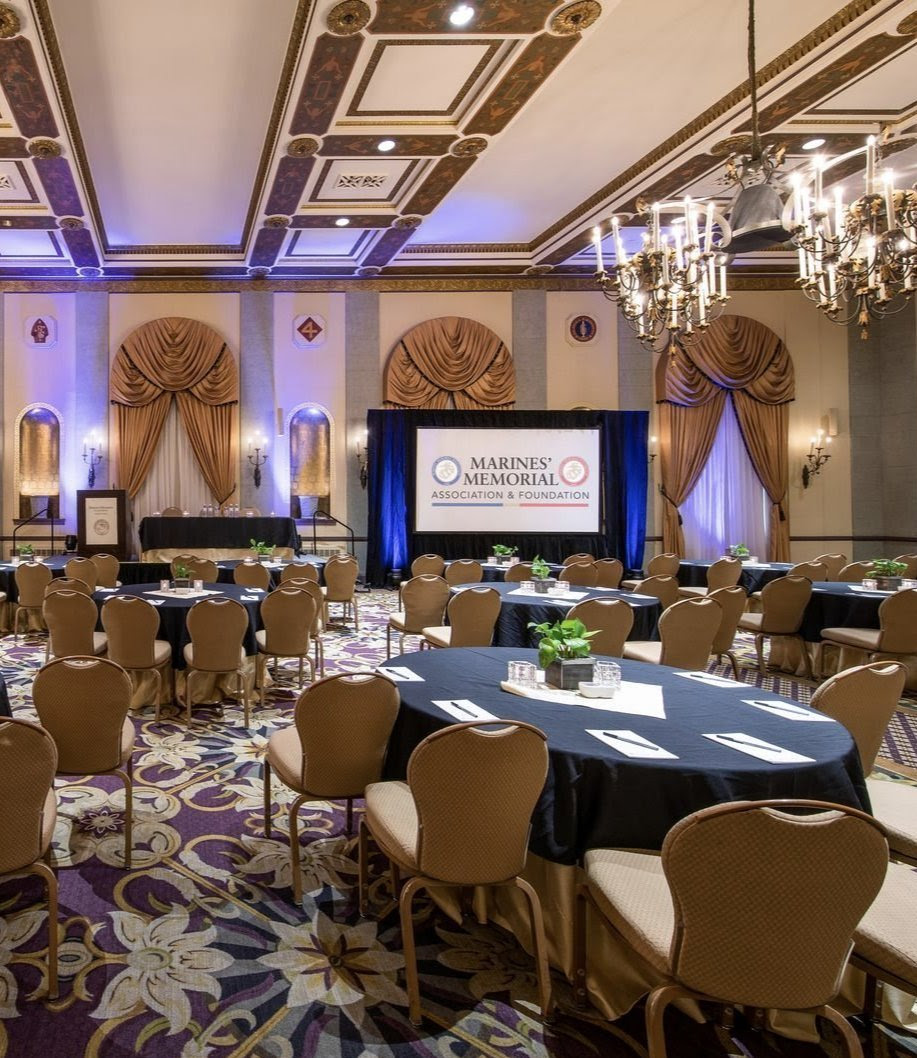
Your Marines’ Memorial Club & Hotel News for October 2022

An item from a fellow veterans organization in the Bay Area.


What’s Your Why?

An update from the Wreaths Across America organization that may be of interest to members. Note that our cadets always have a specific fundraising link to support their efforts with the sale of wreaths each year.  As soon as we have that information, it will be pass along to the membership.


MMHeader

Dear Comrade,


Here at Wreaths Across America headquarters in Maine, it has been a month full of fellowship, sharing, learning, and teaching. I’ve been thinking about the heartfelt stories that are shared in answer to one question: “What is your why?”


Read my message about finding your “why” by clicking on the button below.

karensignature

Karen Worcester

Executive Director

New: Veterans Day TEACH Curriculum

We’ve added Veterans Day Lesson Plans for grades Kindergarten through 12th to our Curriculum.


How will you help TEACH the next generation? Access our resources by clicking on the button below and together we can TEACH future generations the value of freedom.

TEACH1[1]

What Do 2nd Graders Think About Veterans and Patriotism?

TEACH the next generation the value of freedom!

Thank you to the 2nd graders at Eliot Elementary School in Maine. These kids have a good start, but there is so much for them to learn as they begin using our new curriculum. We would love to hear from students across the country about what these words mean to them.

Tune In – Save the Date for our next Roundtable Discussion!

Roundtable Discussion on Veteran Healin g - GRAPHIC (1920 √ó 1080 px) (1)[4]

Wreaths Across America Radio proudly presents the next episode in its series of roundtable discussions focused on veteran healing through sharing stories of resilience, purpose, and success. Join us Thursday, October 13, 2022, at 12 PM ET! The roundtable will focus on the recalibrated warrior, and how finding purpose can benefit not only in your own journey of resilience but help connect with others working to overcome similar challenges. Read more about the discussion below.

Broadcast a Message to Your Military Family Member

Wreaths Across America Radio wants to hear from you! If you have someone in your life that is deployed, let them know you are thinking of them with Wreaths Across America Radio. There are two ways to get your message to your military family member – first, the good old-fashioned telephone! Call and leave your message at 888-348-3352, say your name, the name of your service person, and your message to them. The second way to get your message to us is via email. Create a voice recording of your message and send it via e-mail to waaradio@wreathsacrossamerica.org.

Find A Location Near You

Looking to get involved this Wreaths Across America Day?


You can find a location to participate at with our Location Finder

anc

Featured Merchandise

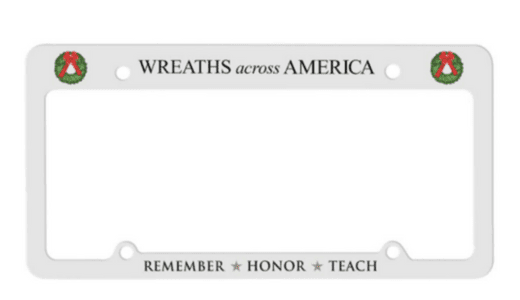
License Plate Frame

Show your support during fundraising events, parades, among your group members, or when you’re running errands with our License Plate Frame!

Make sure to follow Wreaths Across America official channels on social media for the most up-to-the-minute news on the mission throughout the year:

Facebook
LinkedIn
Twitter
Instagram

Wreaths Across America, PO Box 249, Columbia Falls, ME 04623, United States, 877-385-9504

News Release: Congressional Gold Medal Awarded to WWII Merchant Marine Veterans, October 2, 2022

An item from the Merchant Navy Commemorative Theme Project that may be of interest to members.


Dear Sir/Madame,

Please find attached the News Release: Congressional Gold Medal Awarded to WWII Merchant Marine Veterans, October 2, 2022, for reference.

My very best regards,

Stéphane Ouellette
President and Chief Executive Officer
Merchant Navy Commemorative Theme Project (MNCTP)/
Founder/President
Colonel John Gardam Lifetime Achievement Award

E-mail: ouellettes@rogers.com
Website: www.alliedmerchantnavy.com

Attachment: News Release: Congressional Gold Medal Awarded to WWII Merchant Marine Veterans, October 2, 2022.pdf