Author Archives: Michael K. Barbour

Unknown's avatar

About Michael K. Barbour

Michael K. Barbour is the Director of Faculty Development and a Professor of Instructional Design for the College of Education and Health Sciences at Touro University California. He has been involved with K-12 online learning in a variety of countries for well over a decade as a researcher, teacher, course designer and administrator. Michael's research focuses on the effective design, delivery and support of K-12 online learning, particularly for students located in rural jurisdictions.

WWI DISPATCH January 2021

An item from the World War One Centennial Commission.


View this in your browser

Header 10292020

January 2021

First Pour video image

On this date, the 58-foot long, 38-figure Memorial centerpiece sculpture titled “A Soldier’s Journey” reached a new milestone on its journey, as the sculpture’s first elements were cast into bronze in a “First Pour.” Click on the image above to view the video.

Honoring America’s WWI servicemen and women “in a noble and timeless medium fitting to their service.”

January 19, 2021 was a significant day for the new National World War I Memorial in Washington, D.C. On this date, the 58-foot long, 38-figure Memorial centerpiece sculpture titled “A Soldier’s Journey” reached a new milestone on its journey, as the sculpture’s first elements were cast into bronze in a “First Pour.” Click here to read more about, and watch a video of, the “First Pour” of the memorial sculpture at Pangolin Editions Foundry in the United Kingdom.


Education Webinar February square

New Education Webinar: Strategies and Tools for Teaching World War I in 2021

Calling All Educators… and Learners!

Please join our panel of World War I Educators on Friday, February 26, 2021, 1pm EST,: to learn some of the best practices now available for teaching World War I History in “classrooms, online, and hybrid,” all of which will be a part of 2021.

We assembled a small group of educators from different areas and parts of the country to explore issues about teaching WWI from a real-world practical perspective:

  • How teachers are adapting in teaching especially social studies, during the Pandemic.
  • How do differing State standards affect teaching WWI
  • Best practices, clever ideas, and limitations when teaching WWI
  • Is teaching WWI through advanced placement (AP) European History & World History an option;
  • How local WWI memorials can provide community engagement learning;
  • Feedback from students about what works;
  • and more.

Also on the agenda, we will introduce you to some of the education tools created by the Doughboy Foundation during and after the Centennial of WWI, including the USB thumb drive Website “How WWI Changed America;” specific WWI handouts for the classroom and to prompt learning and conversation; plus the innovative “WWI Memorial Virtual Explorer App” that provides an interactive augmented reality field trip to the new WWI Memorial in Washington, D.C.;  and more.

Click here to register today to attend this FREE 2021 webinar for educators and learners about the challenges, opportunities and importance for teaching and learning about “The War That Changed the World”.

 “WWI Education Webinar: Strategies and Tools for Teaching (and Learning) WWI in 2021” on Feb 26, 2021 1:00 PM EST

 https://attendee.gotowebinar.com/register/1274955613107522318

 After registering, you will receive a confirmation email containing information about joining the webinar.


Doc Hall’s WWI Casualty Records

Doc Hall

In the Spring of 2011, the late James “Doc” Hall (left) visited the National Archives at College Park, Maryland, to search for World War ll KIA records of the 35th Infantry “Cacti” Regiment, in which he served in Vietnam. During his visit, Hall came across the Graves Registration records for WW l. The names he uncovered reflected the profound diversity of those who served in the Great War: immigrants, native Americans and boys from cities and farms were called to serve. Hall’s discovery of a KIA named “Isaac His Horse Is Fast” fascinated him. Hall contacted two fellow Vietnam combat veterans, Richard “Dick” Arnold and William “Bill” Henson, and proposed an ambitious project: photographing the WW l records and recording their critical data to a spreadsheet. As Henson recalls: “None of us fully understood what we were to experience.” Click here to read the entire article about how three Vietnam veterans set off on a mission to remember those who preceded them in the nation’s service a century ago.


Candy Bar Market Exploded After WWI

Doughboy eating candy bar

Candy bars may seem quintessentially American, but they have origins in the World War I chocolate rations given to European soldiers. The American military followed suit, helping its Doughboys develop a sweet tooth they would bring home after the war. Throughout the 1920s, thousands of small, regional confectioners emerged to meet the demand, creating a candy boom brimming with catchily named bars based on popular expressions, pop culture icons, and even dance crazes. Click here to read more about the chocolate bar explosion, and the effort of new sweets makers to take a bite out of a candy business dominated by Hershey’s, the planet’s biggest chocolate maker.


Why Keep That? exhibition opens at National WWI Museum & Memorial

Why Keep That? snip

Collecting, cataloguing, conserving. The heart of a museum is its collection, but how do Museums make decisions and who gets to answer the question, “Why Keep That?”

Why Keep That?, the latest special exhibition at the National WWI Museum and Memorial, follows the journey of a collection item from the moment it is donated to the Museum, to the decision-making and archival process of our collections staff. To help illustrate, archival staff track the processing and digitization of a collection of 16 objects and share behind-the-scenes information about obtaining the artifacts, processing the items and storing and protecting them. Click here to read more about the exhibition, and how collections largely featuring ephemera – objects usually meant to be thrown away, like ticket stubs, advertisements and written scraps – are now preserved in a museum.


Hard Hat Turns 101; Impact on Industrial Safety Never Gets Old

hard hat 1919

Luckily for industrial workers everywhere, Lt. Edward Wheatley Bullard of the U.S. Cavalry climbed out of the French trenches with an idea that would spark the industrial safety movement: the hard hat. Bullard, the son of a mining equipment supplier, was inspired by the metal helmets Doughboys wore to deflect the hail of bullets raining down on them courtesy of the Kaiser. When he returned home, he invented the first commercially available industrial hard hat, called the Hard Boiled hat. Prior to its invention and subsequent production in San Francisco, gold and copper miners in California and Nevada basically wore leather caps—which might not be all that good at stopping hail, let alone the rocks or tools potentially pouring down on them. Click here to learn more from Bullard’s great granddaughter about how this now 100-year-old equipment was invented and how it has redefined protecting the workforce.


AEF ‘Christmas Package Coupon’ helped soldiers during World War I

Christmas package coupon

The War Department recognized that the United States Army soldiers fighting in France in 1918 were about to endure their second Christmas far from home. To help combat the Christmas blues, each soldier was issued one Christmas package coupon. The soldier filled in his address and sent the coupon home to someone who he thought might send him a Christmas package. Click here to learn more from Linn’s Stamp News about how this system worked, how the Doughboys benefited, and why this bit of WWI ephemera is so rare today.


The Volga Germans in Portland, Oregon during World War I

Charlie Bauer

The outbreak of World War I on July 28, 1914 was met with anxiety and fear by both the Volga German colonists living in Russia and their family and friends who had immigrated to the United States. The war exacerbated Russia’s Germanophobia and Slavophile tendencies. Ethnic Germans living In the United States faced Anti-German sentiment and propaganda reaching extreme levels after America entered the war in April 1917. Click here to learn more about how the war years were an anxious time for the Volga Germans living in Portland, OR. Although they valued their ethnic German heritage and language, they also considered themselves loyal Americans.


Forgotten for 100 Years

Thomas W Regan draft card

Michael T. Naya, Jr. normally writes articles focused on World War II and the Greatest Generation, but when his research introduced him to Kenilworth, NJ  resident Thomas W. Regan, a veteran of World War I, he decided to take time to write about him. Click here to read this thoughtful portrait of “an Irish immigrant who felt the need to serve his country so he answered the call to duty,” whose “story deserves to be remembered especially today.”


Doughboy MIA for Month

Leonard Charles Aitken

A man is only missing if he is forgotten.

Our Doughboy MIA this month is 1st LT Leonard Charles Aitken.  Born in Reno, Nevada on 10 June 1897, Leonard Aitken grew up in California, where he joined the California National Guard at 18 years of age. When the trouble broke out with Mexico, he reported for duty in June, 1916 and served along the border with the hospital corps, attending elements of what would, a year later, become the 160th Infantry, 40th Division. Following America’s declaration of war on Germany, on 7 April 1917, Aitken reported to the Officers Training School at San Diego and upon graduation, shipped to France in August, 1918 as a 2nd lieutenant with the 158th Infantry, 40th Division. There, on 20 October 1918, he was sent as a replacement officer to the 372nd Infantry, 93rd Division, then holding a section of the line in the Alsace sector near Hill 607.

On 7 November, while leading his platoon on a night action, Aitkens and his men captured several prisoners but unknowingly walked into the line of fire of a German machine gun nest, which opened up on them, killing or capturing all but two enlisted men of the patrol and freeing the prisoners. Without hesitation Lieutenant Aitken immediately advanced against the position with the intent of eliminating it, but he was shot twice in the chest and killed in the endeavor. The end result was that they captured 1 officer (Aitkens) and 22 men; however the date of Aitkens’ death is given as 8 November 1918.

Following the Armistice, GRS officials went on the search for Aitkens’ remains, but had little luck. Their hardest clue was a report that German officers had buried Aitkens with full military honors “in the churchyard of the tiny hamlet of La Paive, some 40 miles east of Epinal, France.” There being no town by that name anywhere in that area, this was almost certainly actually the town of La Pariee which is indeed in the area of the action of 7 November. Nothing was ever found however and his remains continued to be unlocated in the years following the war. As investigations continued, in January 1924, GRS sent a letter to Aitkens’ father requesting a civilian dental chart, but also admitting in the letter that in all probability he was among the Unknown burials, though how this information was considered is not stated in his surviving file.

A final attempt at some kind of identification came in December 1926 when the case files of Aitkens and one other officer from the 372nd Infantry were checked against a set of Unknown remains at the Meuse-Argonne Cemetery morgue. It was a long shot, however, as the remains being checked came from a French cemetery in the Marne sector some 300 kilometers northwest of where both officers in question were at the time of their deaths. Not surprisingly, neither officer’s remains were a match and Aitkens’ case was officially closed in 1932 without resolution.

Can you spare just ten dollars? Give ‘Ten For Them’ to Doughboy MIA and help us make a full accounting of 1st LT Leonard Charles Aitken and all the 4,423 American service personnel still listed as missing in action from WW1. Make your tax deductible donation now, with our thanks. Visit www.ww1cc.org/mia today to make your donation, and sign up there to get more information on other ways that you may be able to help.


Official WWI Centennial Merchandise

Jacket and Vest

You can wear your American pride and stay warm this winter with these two Made in the USA garments Inspired by the iconic image of a U.S. Doughboy. This poignant silhouette of a lone soldier in trench warfare serves as a reminder of those who sacrificed so much one century ago.

Sweatshirt features: Navy with white Doughboy embroidery. 80% cotton/20% polyester,  9.5 Oz. High quality heavy weight pre-shrunk fabric. Sweatshirt has ¼  zip pullover with cadet collar and silver metal zipper. Ribbed cuffs and waistband with spandex. Cover-seamed arm holes. Mens’ sizes available Small and Medium.

Vest features: Black with white Doughboy embroidery. 100% spun polyester, 12.5 Oz. Premium anti-piling fleece. Vest has full zip front with two side seam pockets. Mens’ sizes available S – 2XL.

Proceeds from the sale of these items will help to fund the building of the national World War One Memorial in Washington, D.C.

Certificate of Authenticity as Official Merchandise of the United States World War One Centennial is included.

These and many other items are available as Official Merchandise of the United States World War One Centennial.


Memorial Camera

You can keep track of progress at the new National World War I Memorial through construction site time lapse video, or a live video feed from the site. Click here to take a look, and also find out how you can help finish this national tribute to the 4.7 million Americans who served, and the 116,516 who did not come home from World War I.


Virtual Explorer

Click or scan the QR Code below to download the Virtual Explorer App for the National World War I Memorial, and explore what the Memorial will look like when work is completed.

QR Code for Virtual Explorer App download


Education Thumb Drive image

Free Self-Contained WWI History Web Site on YOUR computer

Sources, lessons, activities, videos, podcasts, images

We have packaged all the content we created for “How WWI Changed America” into a format that is essentially a web site on a drive. Download the content onto any drive (USB, external, or as a folder on your computer), and all the content is accessible in a web site type format even without an internet connection. Click here to learn more, and download this amazing educational resource for home or classroom use.


Genealogy book FREE DOWNLOAD


you can help - shop using amazon smile


Poppy Seed Side Ad


Doughboy MIA


Pershing Sponsors

Pershing Sponsors


email us


websitefacebooktwitter


J. Arthur Mayer

A Story of Service from the Stories of Service section of ww1cc.org

J. Arthur Mayer

Submitted by: John A Mayer {Son}

J. Arthur J. Arthur Mayer born around 1893. J. Mayer served in World War 1 with the United States Army. The enlistment was in 1918 and the service was completed in 1919.

Story of Service

Veterans Day has always seemed special to me. My Dad, J. Arthur Mayer, was a WW I veteran and I grew up hearing his reminiscences. On the one hundredth anniversary of Armistice Day I felt compelled to record some of those “rememberies.” Our once close-knit family has spread to the four corners and there is no one left in the immediate family who seems much interested, so I’ll post it here in his memory FWIW. (Yeah, we skipped a generation. Dad was born in 1893, and was 50 before I was born in 1944. I’m the age of my second cousins. Many of my first cousins were WW II veterans.)

Dad was 24 when he was drafted off the farm. He entered active duty in July 1918, and was sent to Camp Pike, Arkansas for basic training, I think for 4-5 weeks. He was one of the older men in his group, and was offered NCO Academy training. But he said it was so hot and humid and generally miserable there that when his group was given the opportunity to “go to Brest”- the debarkation point for the American Expeditionary Force in France – that he volunteered for that. He said it was to escape the misery of Arkansas, but I suspect he also felt some duty to go in place of his older married brothers who were starting families and other married men.

Read J. Arthur Mayer’s entire Story of Service here.

Submit your family’s Story of Service here.


Honor the Stories of Service of ALL Who Served.

Do Your Bit to Help Build the new National World War I Memorial.

Memorial Fundraising Thermometer December 2020


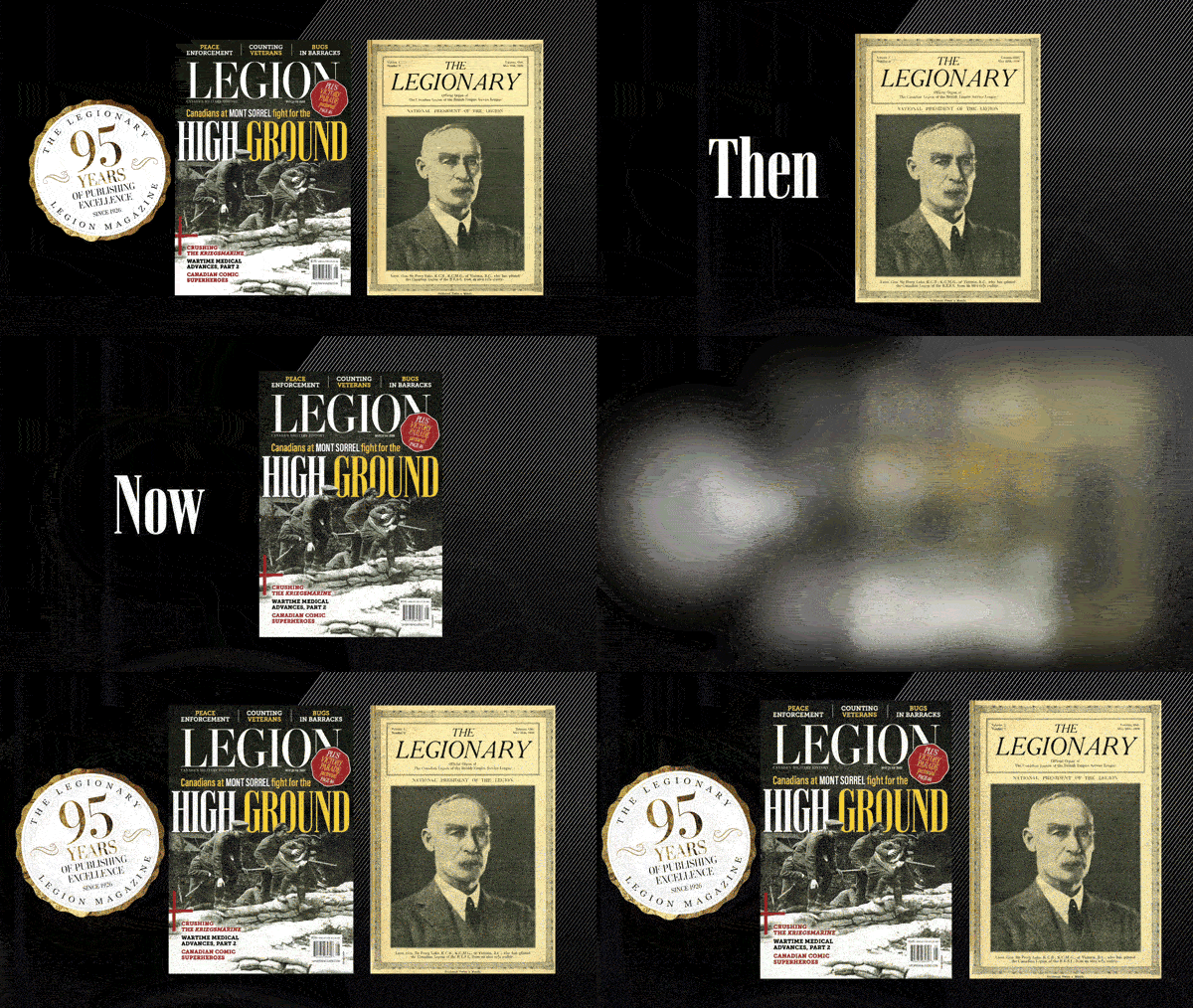
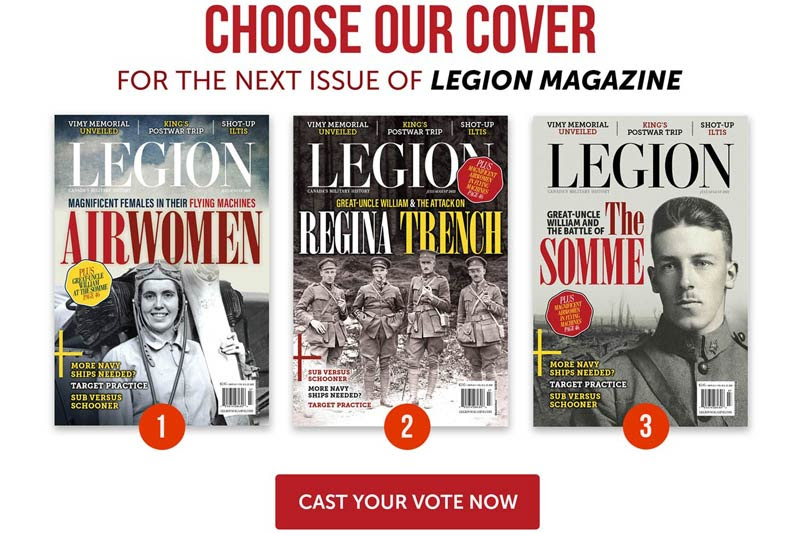
Legion Magazine – A Virtual Memorial Day Service

Our own branch was featured in the recent issue of the Legion Magazine for one of our virtual services.

Click here on on the image to enlarge.

For a PDF version, click legion-magazine_janfeb21.pdf

The service in question was the Commemoration Day/Memorial Day one we hosted on 01 July 2020. To view that service, click here.

Victory by chocolate

An item from the Legion Magazine.


Front Lines
Victory by chocolate

Victory by chocolate

Story by Stephen J. Thorne

Ah, chocolate. Milk, dark, sweet, semi-sweet—no matter. For soldiers in the field, it has for centuries been respite, fuel source, even currency that bought service, purchased lives, symbolized peace and goodwill, and enlisted hearts and minds.

READ MORE

On Sale - Save 50% on 2021 Wall Calendar
Military Milestones
Travels of a wounded soldier

Travels of a wounded soldier

Story by Sharon Adams

At noon on Jan. 17, 1917, a group of comrades were eating a lunch of bully beef and hardtack near Vimy, France, when their dugout was damaged by German shelling.

Their work was cut out for them. They needed a new dugout “so we will have a place for the night,” Private Harry Morris wrote home in a letter to his family, published online by the Canadian Letters and Images Project (http://www.canadianletters.ca).

READ MORE

Canada's Great Naval Battles
This week in history

January 28, 1986

Space Shuttle Challenger explodes after liftoff from Cape Canaveral, Florida.
All seven astronauts on board are killed, including teacher Christa McAuliffe.

READ MORE

Home Equity - CHIP Reverse Mortgage
Legion Magazine

75 Years In The Making: Marines’ Memorial

An item from a fellow veterans organization in the Bay Area.


Marines' Memorial: 75 Years in the Making

As we approach the Diamond Anniversary of the Marines’ Memorial this November, we’re taking the time to reflect on the past 75 years. Through wars, recessions, civil unrest and, most recently, a worldwide pandemic, the Marines’ Memorial has stood resolute and unwavering in honor of all who have served.


The history of our nation and our Armed Forces are the lifeblood of this Living Memorial. Around every corner, in every hall, on every floor, our mission to Commemorate, Educate and Serve shines brightly.


To celebrate, we invite you to join us on this historical commemoration of your Club “Marines’ Memorial: 75 Years in the Making.” From now until November, you will receive monthly emails giving insight into a special part of the history of your Club. The stories told and the memories made under the roof at 609 Sutter are priceless. Thank you for an incredible 75 years!


For the first installment, we wanted to take you back (WAY BACK!) to before World War II and the need for a Living Memorial in San Francisco arose.  This building we know and love was something VERY different before our founding in 1946…

Women's Building

In 1923, the City and County Federation of Women’s Clubs decided to erect a building “at the Southwest corner of Sutter and Mason” and “designed as a club home for the women of the State.” Originally budgeted for $1,000,000, this building took a little more than 3 years to complete, finally costing $1,750,000 with a grand opening held on May 31, 1927.

The purpose of the San Francisco Women’s Club is very much the same as the Marines’ Memorial! The many rooms, auditoriums and dining facilities were for “lectures, forums and discussions of public interest.” Once opened, there was “not a woman in California but will find some features of interest to her…as an exclusive place to dine and entertain…offer personal contact with cultural ideas and people… (and) out-of-town women will find it a comfortable home, admirably situated in the heart of city life.”

First Plank

Women's Building

During World War II, the then-named Western Women’s Club became a part of The United States Naval Reserve (Women’s Reserve), better known as WAVES (Women Accepted for Volunteer Emergency Service). The women of WAVES hosted many members of the United States Marine Corps through WWII until those same Marines purchased the building in early 1946.

Without the women who began the planning for this building in the Roaring 20’s, who knows what our modern-day Marines’ Memorial would look like! Take a look at some of the original newspaper articles about the women’s club below!  To see larger versions of these and other articles, visit our Marines’ Memorial Foundation Facebook page HERE.

Permit Issued

Edna Knight

Building is Finished

Bonds

Donate Join or Renew
Facebook Instagram YouTube Web Site

Marines’ Memorial Association & Foundation

609 Sutter St.

San Francisco, CA 94102

Copyright © 2020, All rights reserved

Berkeley (and US) commit to international engagement: Indigenous arts workshop Thursday

A newsletter from one of our fellow Canadian organizations in the Bay Area.


Canadian Studies Announcements
In this issue:
  • Event next week: Social Diversity, Partisan Identity & the 2019 Canadian Election
  • Important travel update: Negative COVID test now required to enter the US
  • Berkeley unveils new “Principles of International Engagements”
  • US-Canada relations looking up – but challenges remain ahead
  • Last chance to see choral performance Messiah/Complex for free
  • Talk on Indigenous arts with Messiah/Complex co-director Reneltta Arluk
  • Affiliate event in French: “Le système d’immigration canadien”
Event Next Week
Social Diversity, Partisan Identities and the 2019 Canadian Election
February 2 | 12:30 p.m. | RSVP here
Join Professor Allison Harell as she explores the ways in which intergroup dynamics structure vote choice in Canada. Drawing on the 2019 Canadian Election Study, she focuses in particular on how partisan identities and political preferences are anchored in key social cleavages in Canada that structured the way in which the 2019 election campaign played out.
Allison Harell is a professor of political science at the Université du Québec à Montréal and holds the UQAM Research Chair in the Political Psychology of Social Solidarity. She is interested in how social diversity affects the political world, especially the ways in which prejudice influences public opinion formation. Her current research focuses on how intergroup relations influence support for both economic and political solidarity, as well as how intergroup perceptions spill over into electoral politics.
Travel Update: Negative COVID-19 Test Now Required to Enter US by Air
The United States Government has issued an order that as of tomorrow, January 26, all travellers over two year of age must provide proof of a negative COVID-19 test when entering the country by air. The test must be taken within 72 hours of departure, and documentation must be provided before boarding. This order includes travellers who are merely transiting through the United States to another destination. Those authorized to remain in the United States are requested to comply with a 10-day quarantine. Learn more and read the full order here.
UC Berkeley Issues New “Principles of International Engagement”
The UC Berkeley Global Engagement Office has announced a new set of guiding principles that affirm the university’s “unequivocal commitment” to international collaboration and leadership. Under the new principles, the university continues to advocate the free exchange of ideas and people across national borders in a spirit of academic enquiry. The university also commits to creating a welcoming environment for cross-cultural exchange, and to fostering new partnerships and research agreements with international institutions.
The Canadian Studies Program welcomes these new principles, which directly align with our own values and aims.
US-Canada Relationship on Upswing – But Challenges Remain Ahead
Prime Minister Justin Trudeau’s office issued an official statement last week congratulating Joseph Biden on his inauguration as the 46th President of the United States. The Prime Minister stressed the United States and Canada’s longstanding friendship and values and policy goals shared with the new administration. Both leaders seek a reset of relations that came under heavy strain in recent years, and Biden chose Trudeau for his first official call with a foreign leader. However, policy disagreements persist despite the good feelings – in their call, Trudeau expressed “disappointment” with Biden over the president’s decision to cancel the Keystone XL pipeline in one of his first executive actions. Nevertheless, both leaders agreed to meet next month to discuss ways to improve cross-border cooperation, particularly with regards to the continuing COVID-19 pandemic, which both governments consider a “fundamental priority”.
Affiliate/External Events
Last Chance to Stream Messiah/Complex for Free
Ends January 31 | Stream here
Toronto-based opera collective Against the Grain Theater’s award-winning Messiah/Complex wraps up its virtual run this Sunday, January 31. Directed by Joel Ivany and Reneltta Arluk, it presents a fresh take on Handel’s classic Messiah that has garnered praise from critics – including our own reviewer! The performance is available to stream free through this weekend on the company’s website.
Ataramik (Always): A Conversation with Reneltta Arluk
January 28 | 3:00 p.m. PT / 12:00 p.m. ET | RSVP here
The Pardee School of Global Studies at Boston University and the Scott Polar Research Institute at the University of Cambridge invite you to join their Arctic Environmental Humanities Workshop series, co-convened by Boston University’s Adriana Craciun (a past Canadian Studies colloquium speaker) and Cambridge’s Michael Bravo.
For Thursday’s workshop, they will be joined by Reneltta Arluk (Inuvialuit, Dene, Cree), the Director of Indigenous Arts at Banff Centre for Arts and Creativity, and director of the Akpik Theatre. She was the first Inuk and Indigenous woman to direct at the Stratford Festival, where she won the 2017 Tyrone Guthrie – Derek F. Mitchell Artistic Director’s Award. She also co-directed the award-winning and innovative 2020 performance Messiah/Complex, which highlights Indigenous singers and languages of Canada.
Registration is required and free—once registered, you will receive a secure zoom link to hear the presentation and join the conversation afterwards. Learn more and RSVP here.
Conférence: “Le système d’immigration canadien”
February 3 | 4:30 p.m. PT | RSVP here
Note: This event will be conducted in French.
L’immigration a joué un rôle très important dans l’histoire et le développement du Canada en tant que pays. Dans ce programme virtuel, l’Alliance française de Berkeley accueillera deux experts pour mener une discussion sur le système d’immigration du Canada. Ils présenteront comment le système canadien se compare à celui des États-Unis, les avantages et les possibilités associés à l’immigration, ainsi que les défis potentiels.
Les panelistes seront Irene Bloemraad, une sociologue politique et directrice du Programme d’études canadiennes à l’Université de Californie à Berkeley, et Yves Beaulieu, le consul pour la politique étrangère et la diplomatie au consulat général du Canada à San Francisco.
Canadian Studies Program
213 Moses Hall #2308
Canadian Studies Program | Univ. of California, Berkeley, 213 Moses Hall #2308, Berkeley, CA 94720